St David's Day and Welsh Food Traditions
The first of March, marked with cawl, Welsh cakes and leeks. A guide to what is eaten and why the leek matters.
By UK Recipes
13 Aug 2026

Welsh cakes, cawl, bara brith, laverbread and Glamorgan sausages - and how to say them.
The first of March, marked with cawl, Welsh cakes and leeks. A guide to what is eaten and why the leek matters.
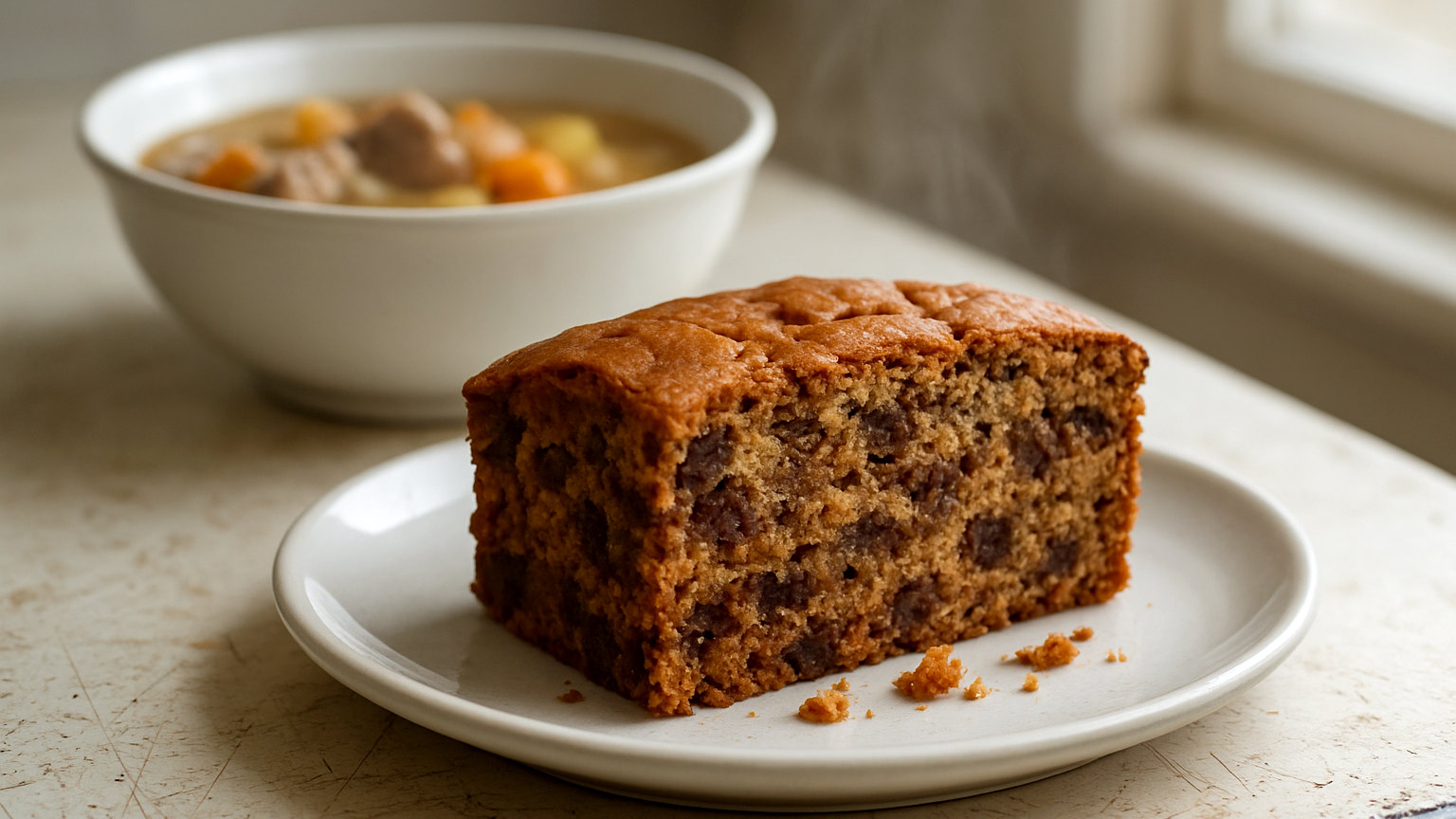
A shallow moist fruit cake baked flat, made so miners could carry a slice underground without it crumbling.
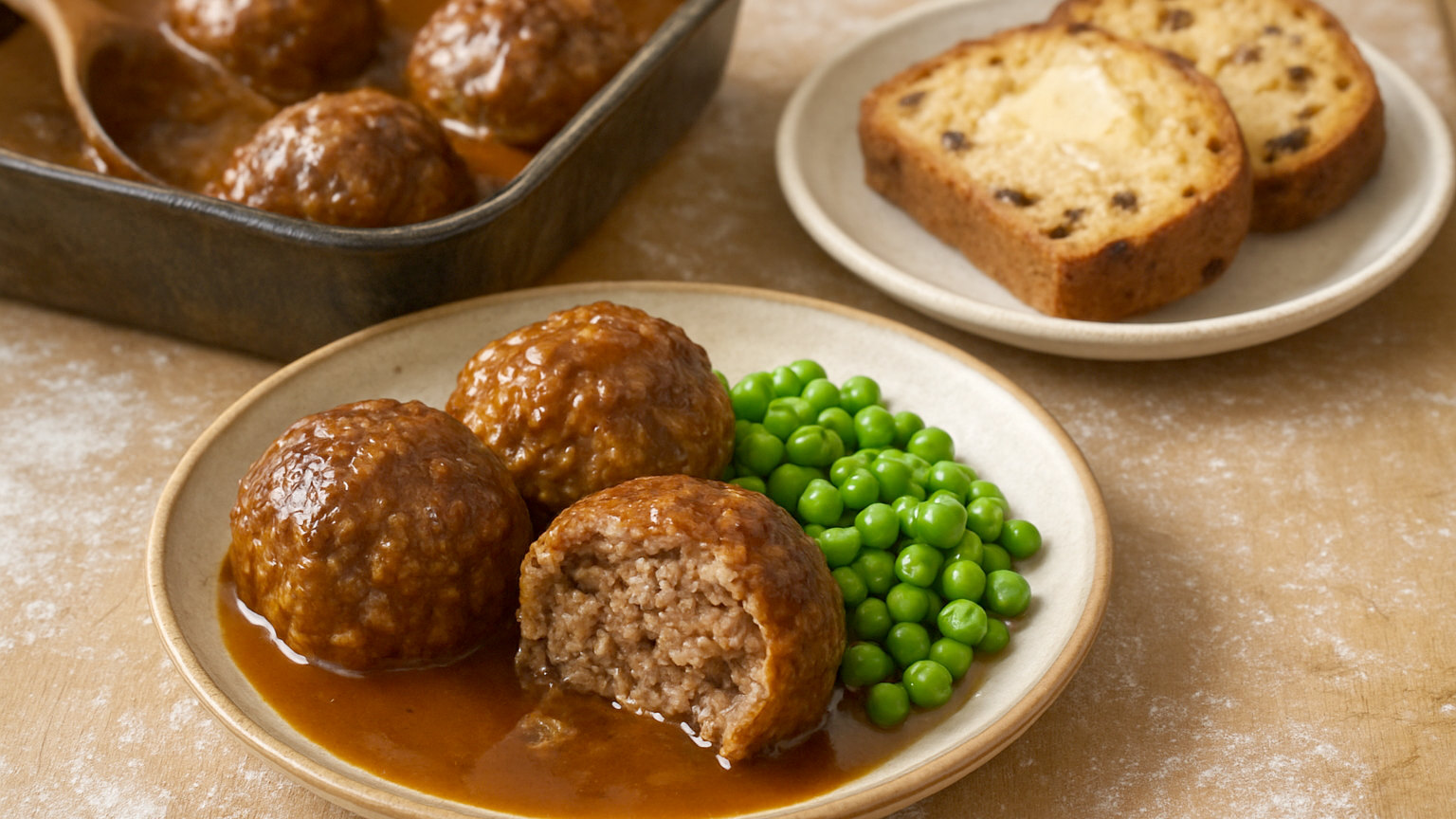
Pork liver and belly minced with breadcrumbs and onion, wrapped in caul fat and baked in gravy. A valleys dish worth reviving.
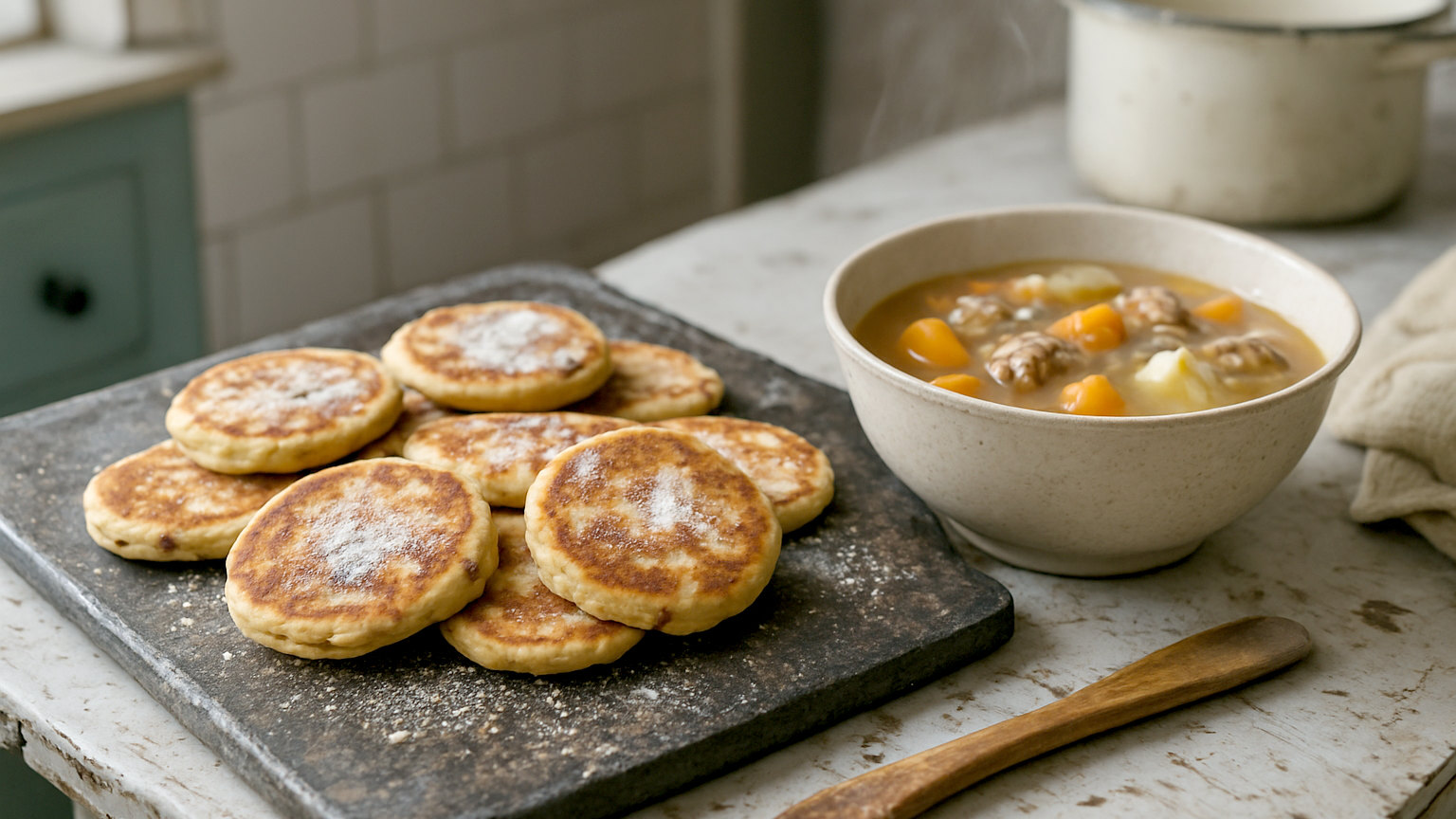
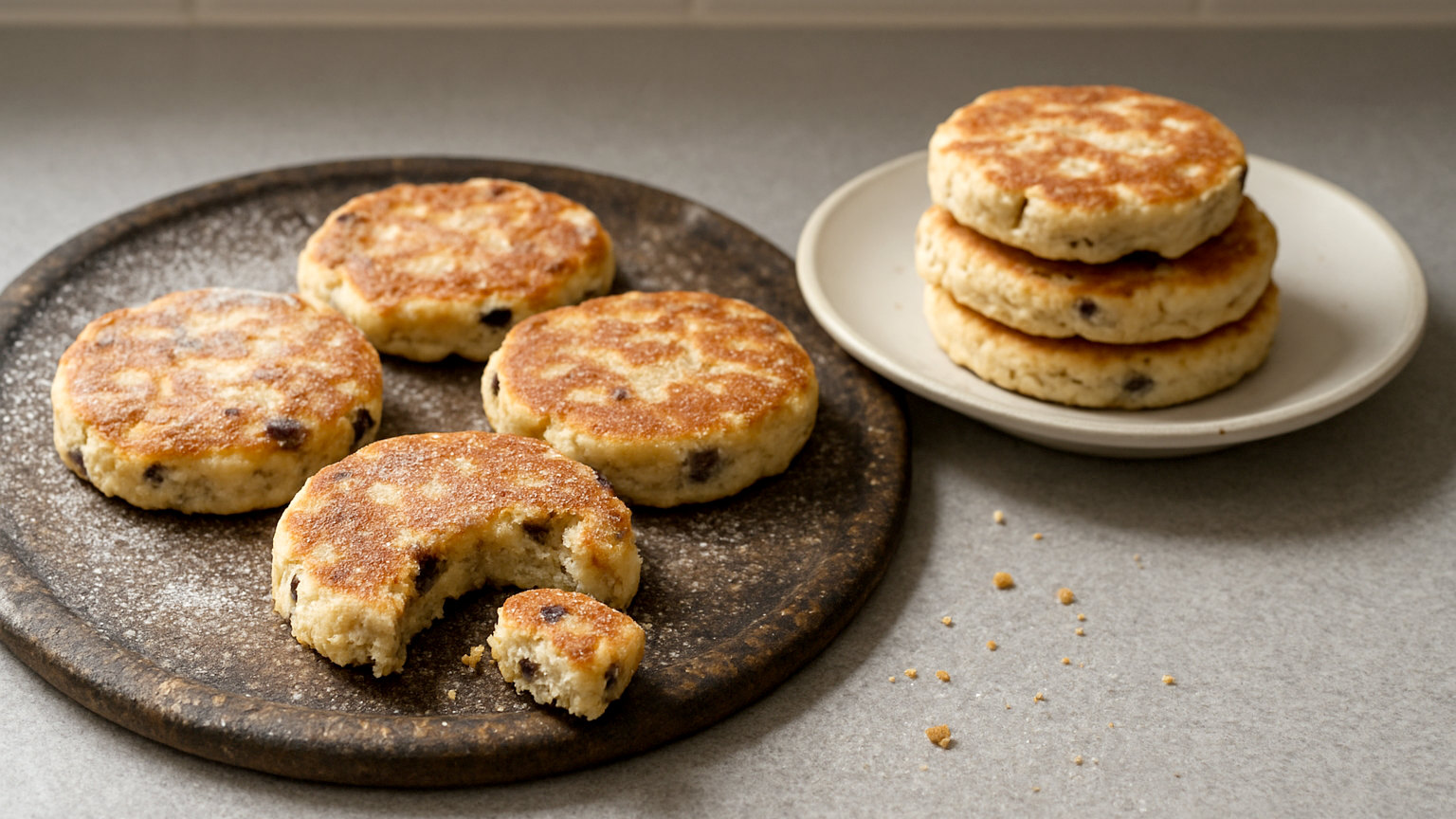
Much of Welsh baking developed without ovens, on a flat iron plate over the fire. That explains the whole tradition.
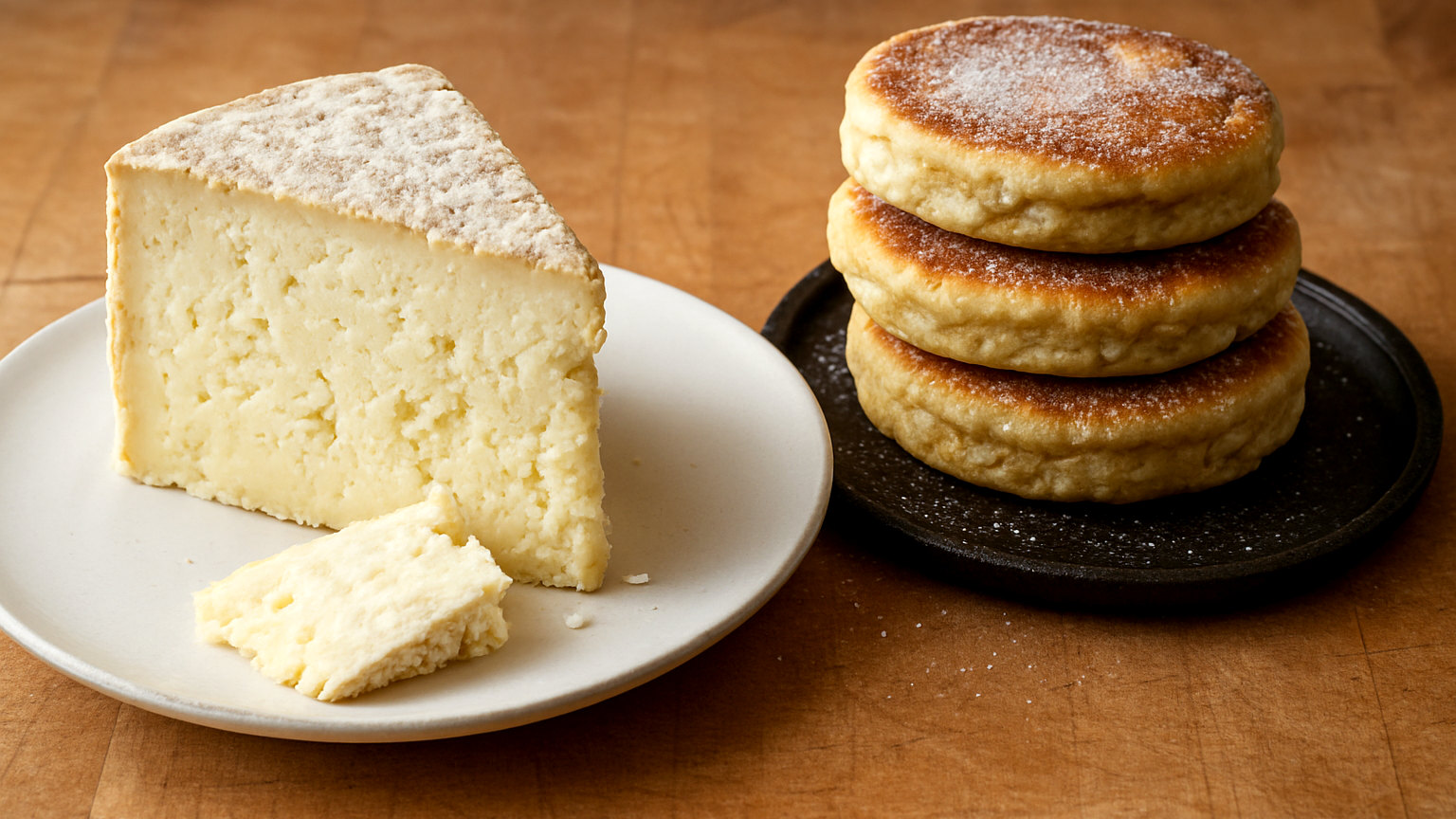
Caerphilly was made for miners to eat underground. The salted rind replaced the salt they lost working.
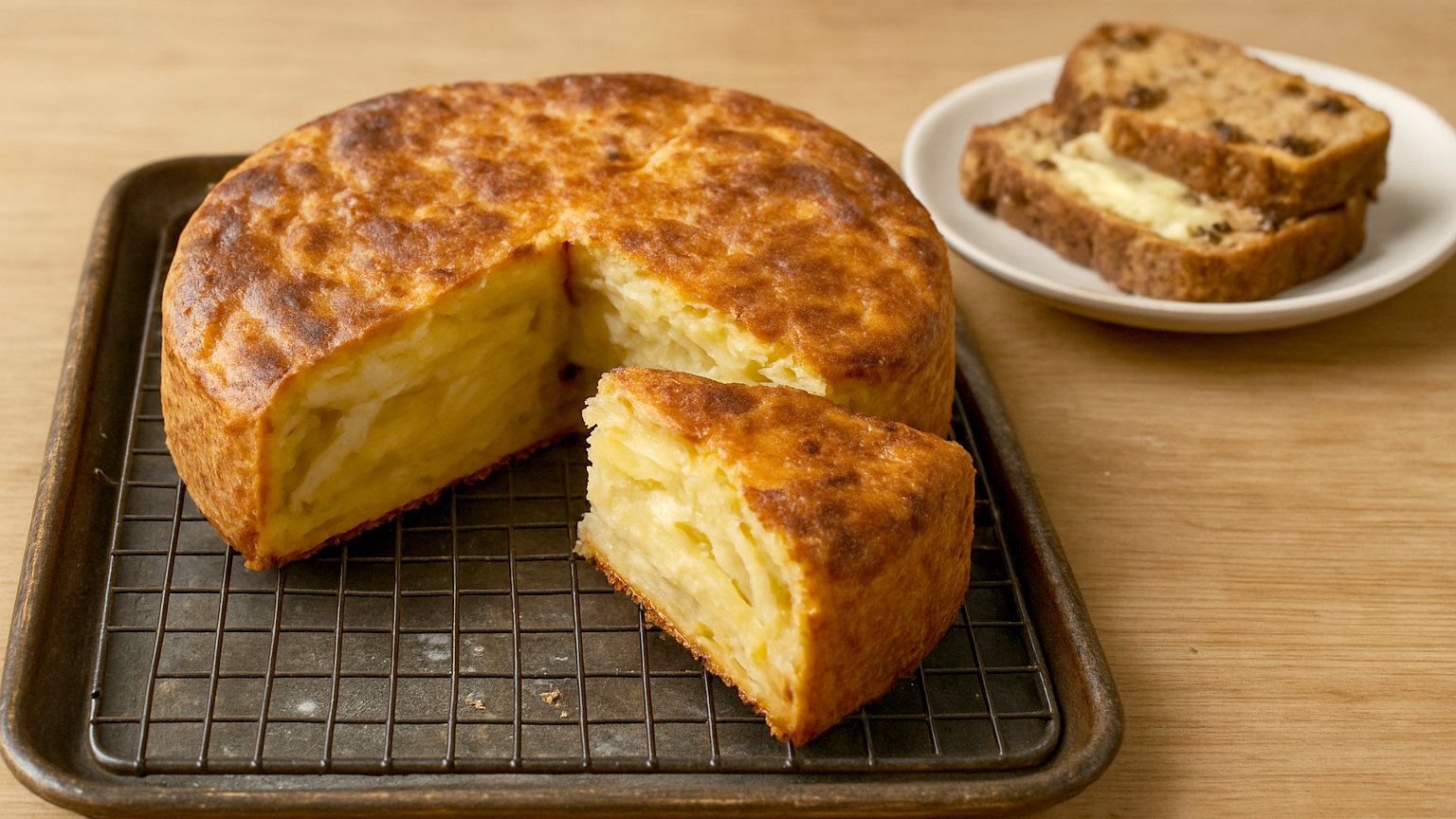
Layers of sliced potato and onion with butter, baked slowly and turned out as a cake. Teisen nionod in Welsh.
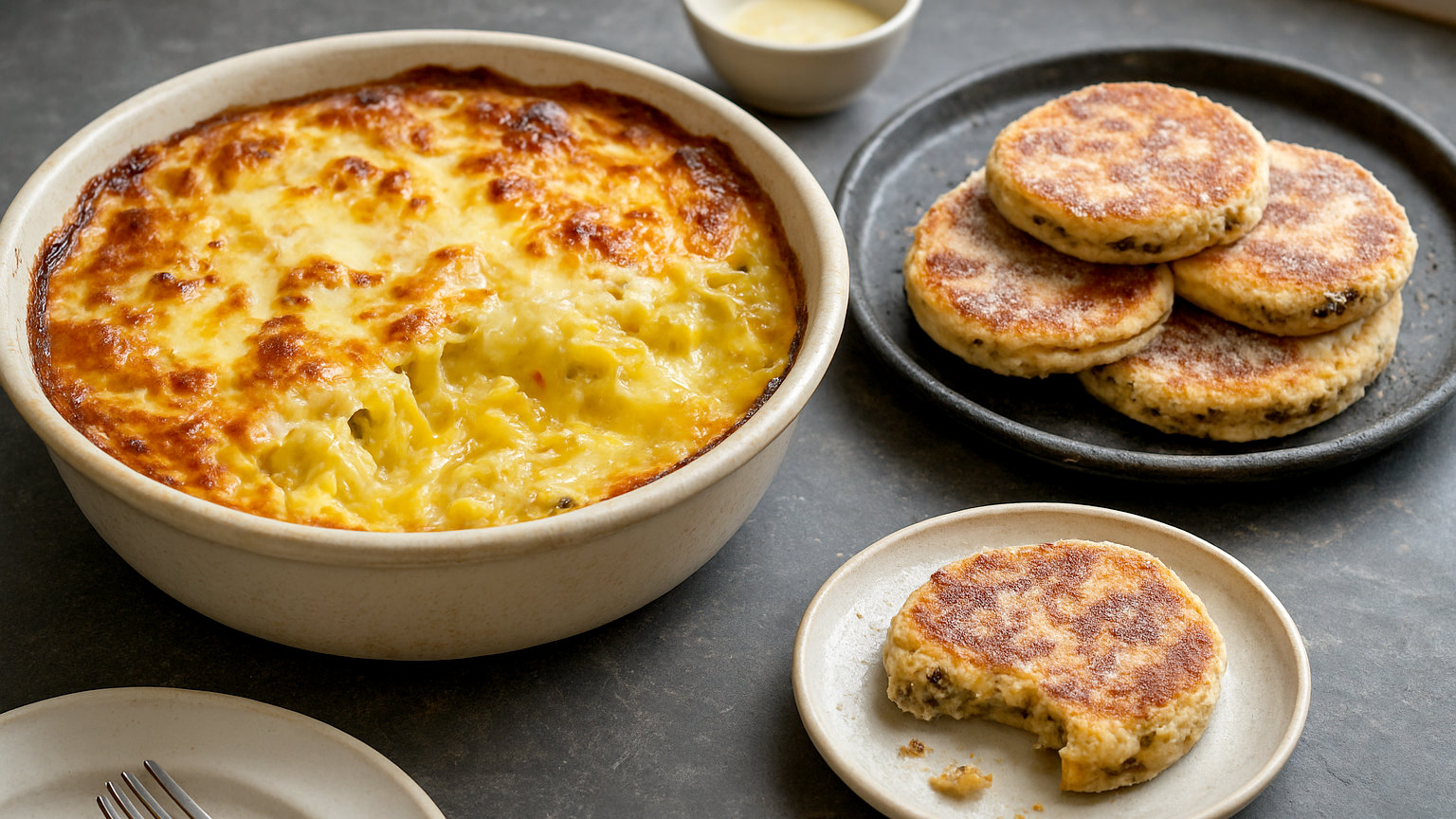
Hard boiled eggs in cheese sauce under a leek and potato mash, baked until browned. A complete supper from four cheap ingredients.
Protected status, mountain grazing and salt marsh pasture. The land the sheep graze on shows up in the meat.
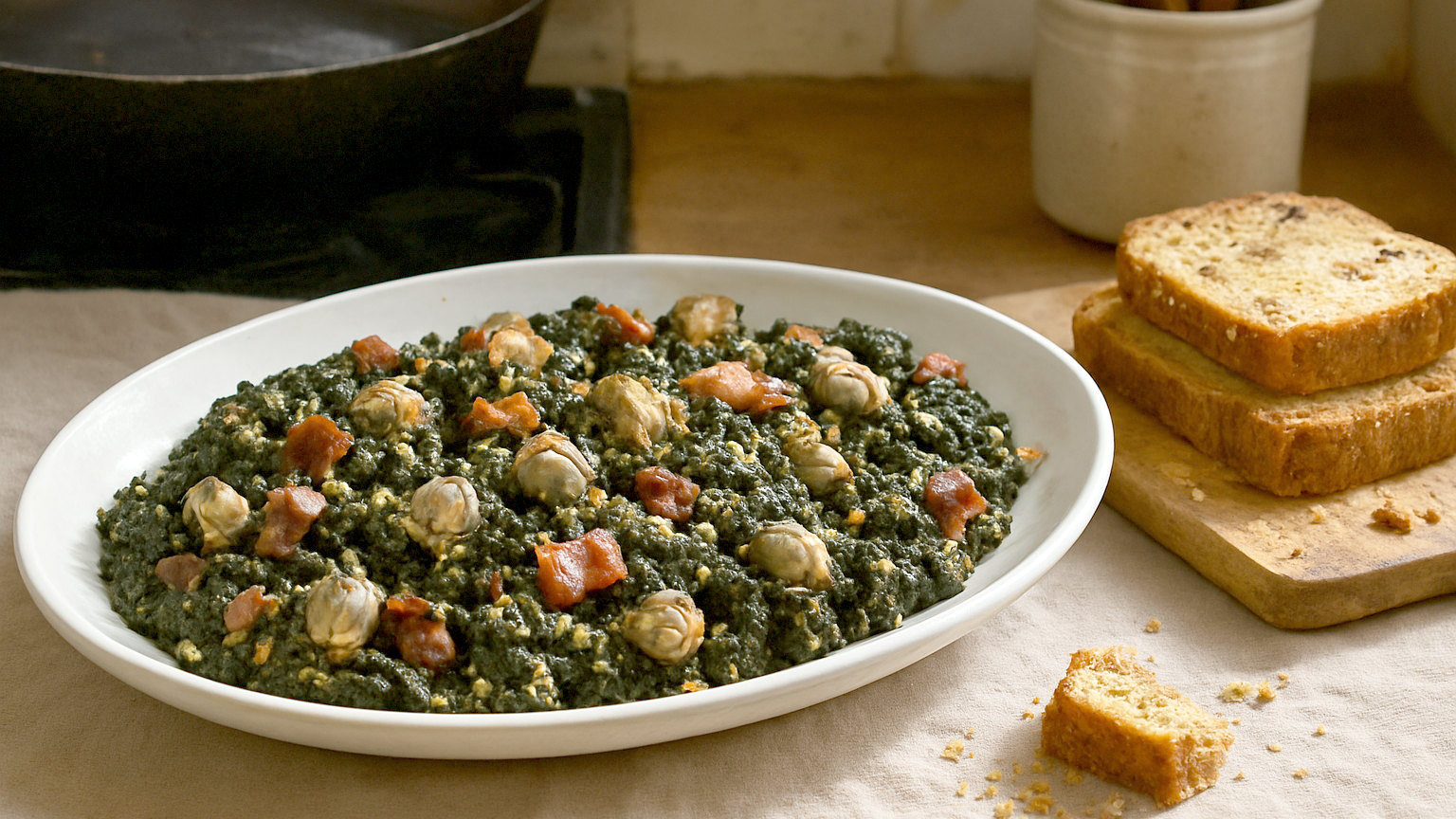
Seaweed puree and cockles fried with bacon and oatmeal. A Gower breakfast and one of the few genuinely unusual British dishes.
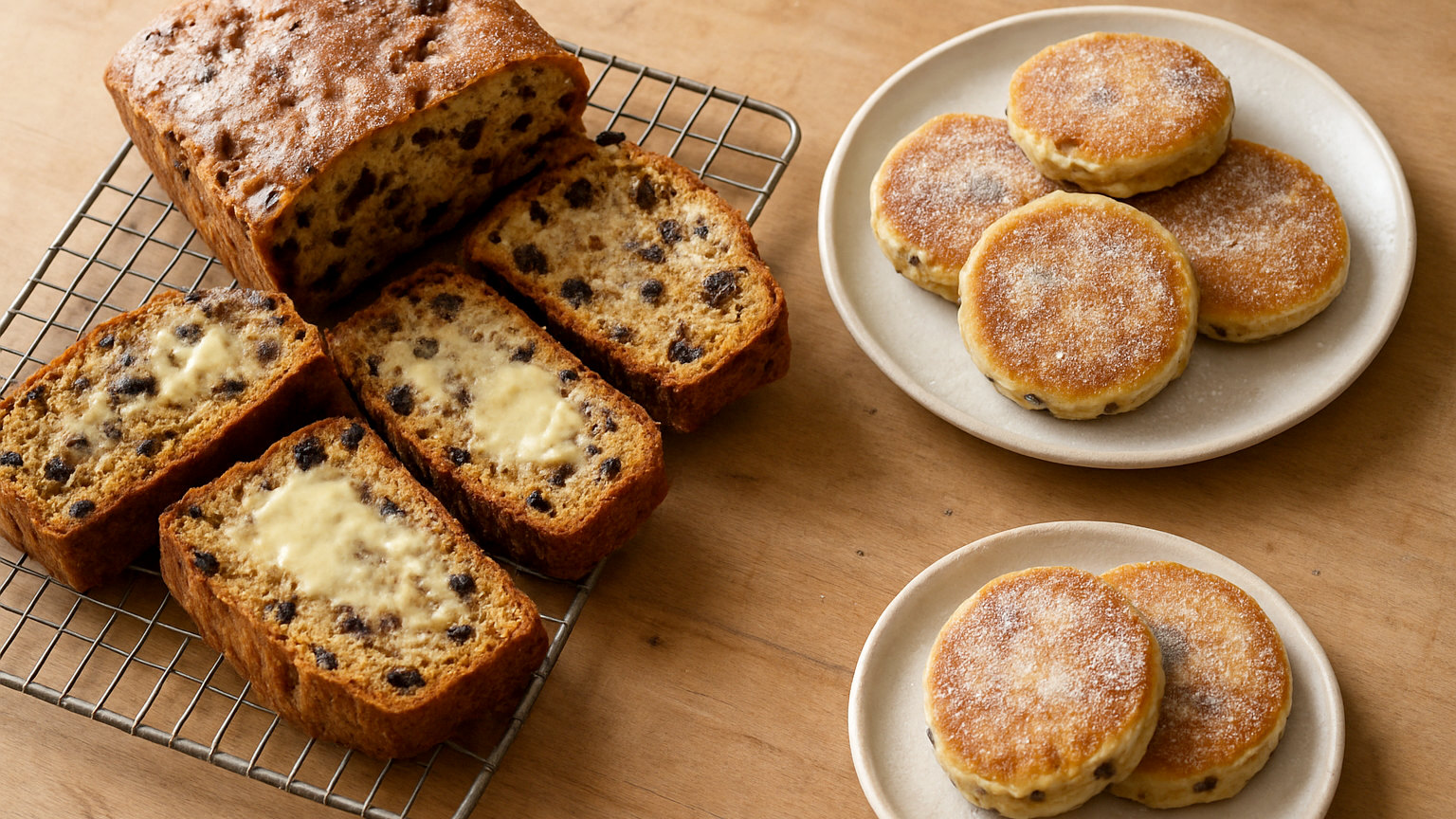
Cooked on a bakestone rather than baked, which is what makes them Welsh cakes rather than scones. About four minutes a side.
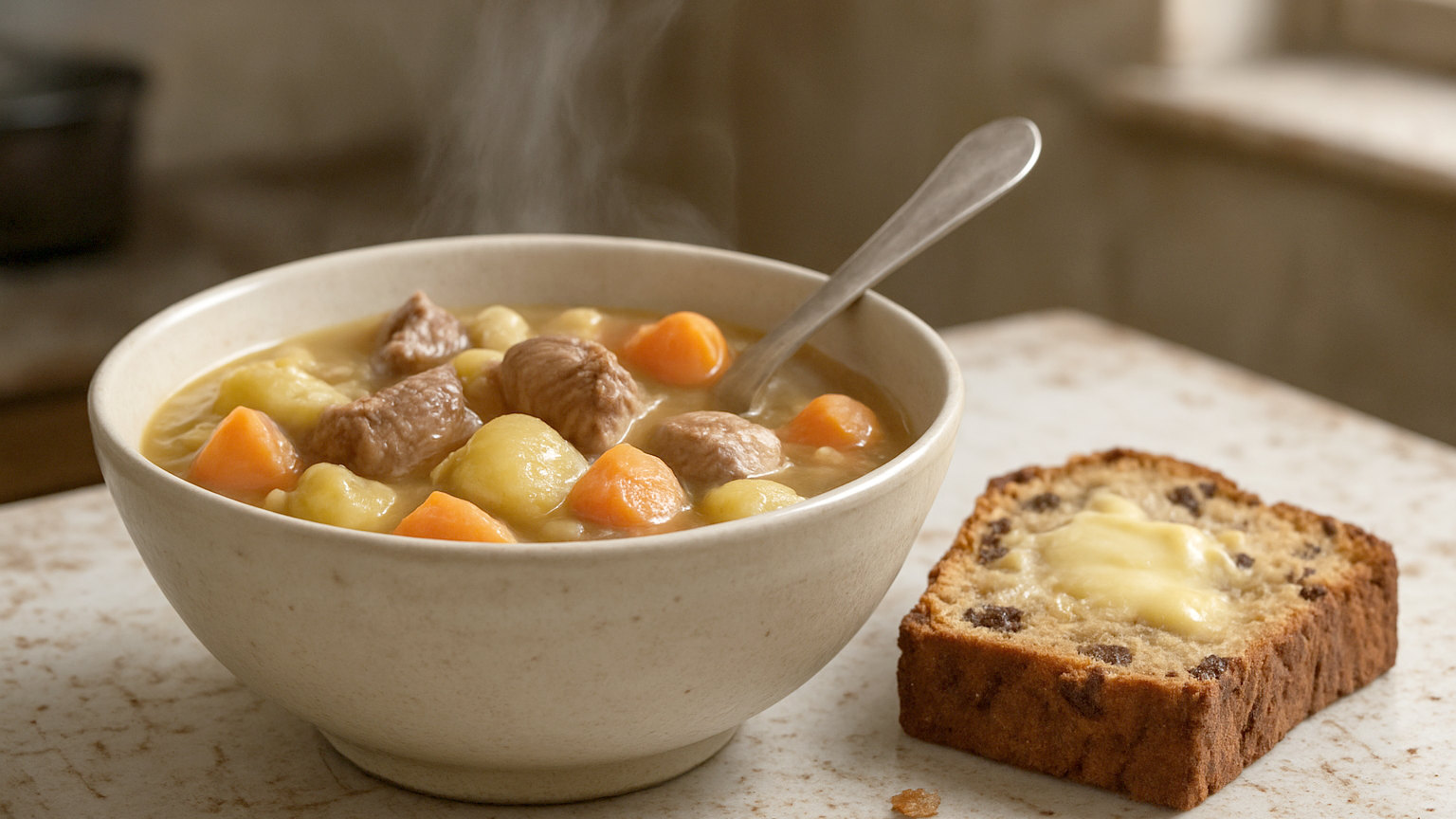
Speckled bread, made by soaking dried fruit in tea overnight. The modern version is a loaf cake rather than a yeasted bread.
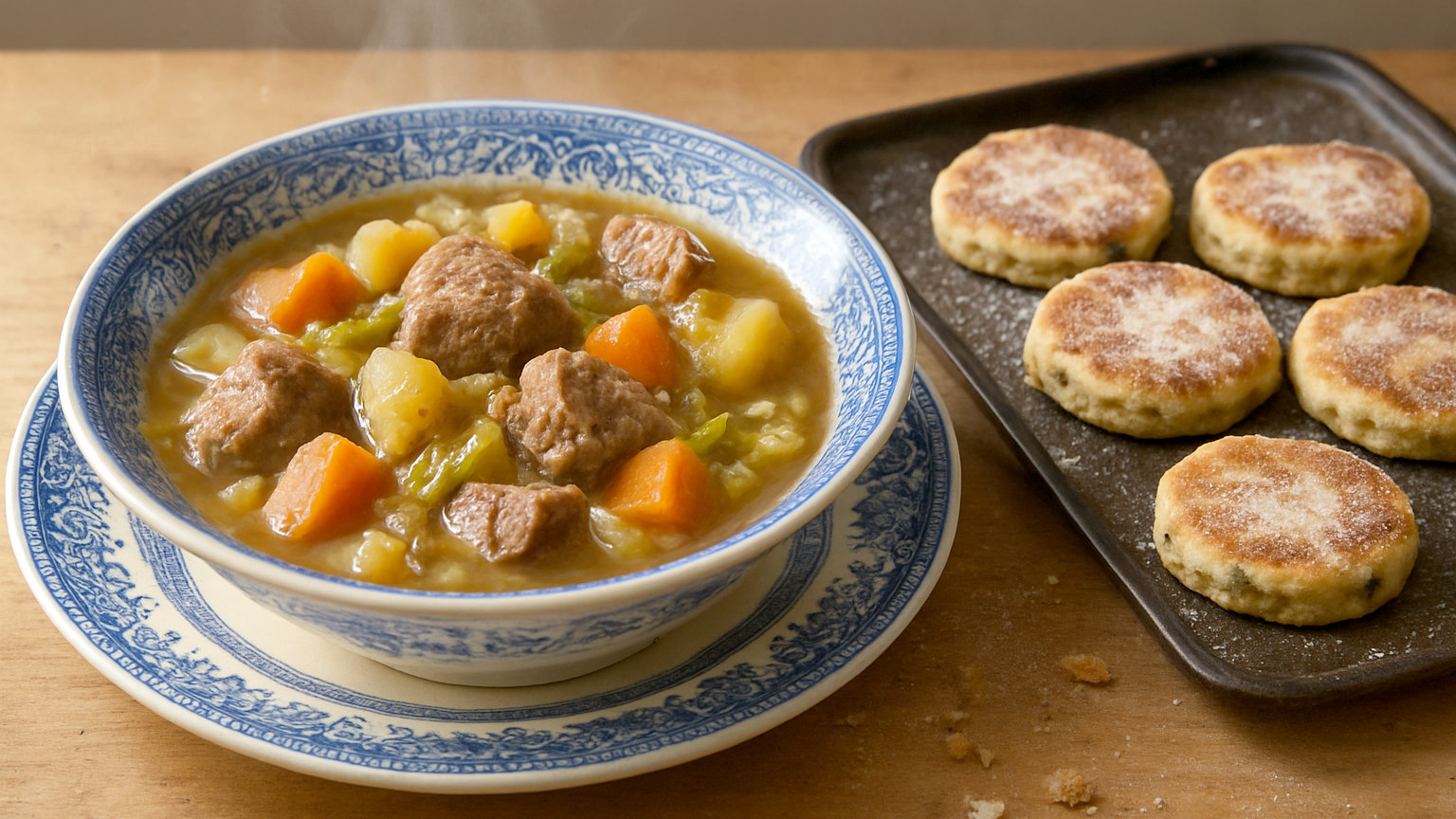
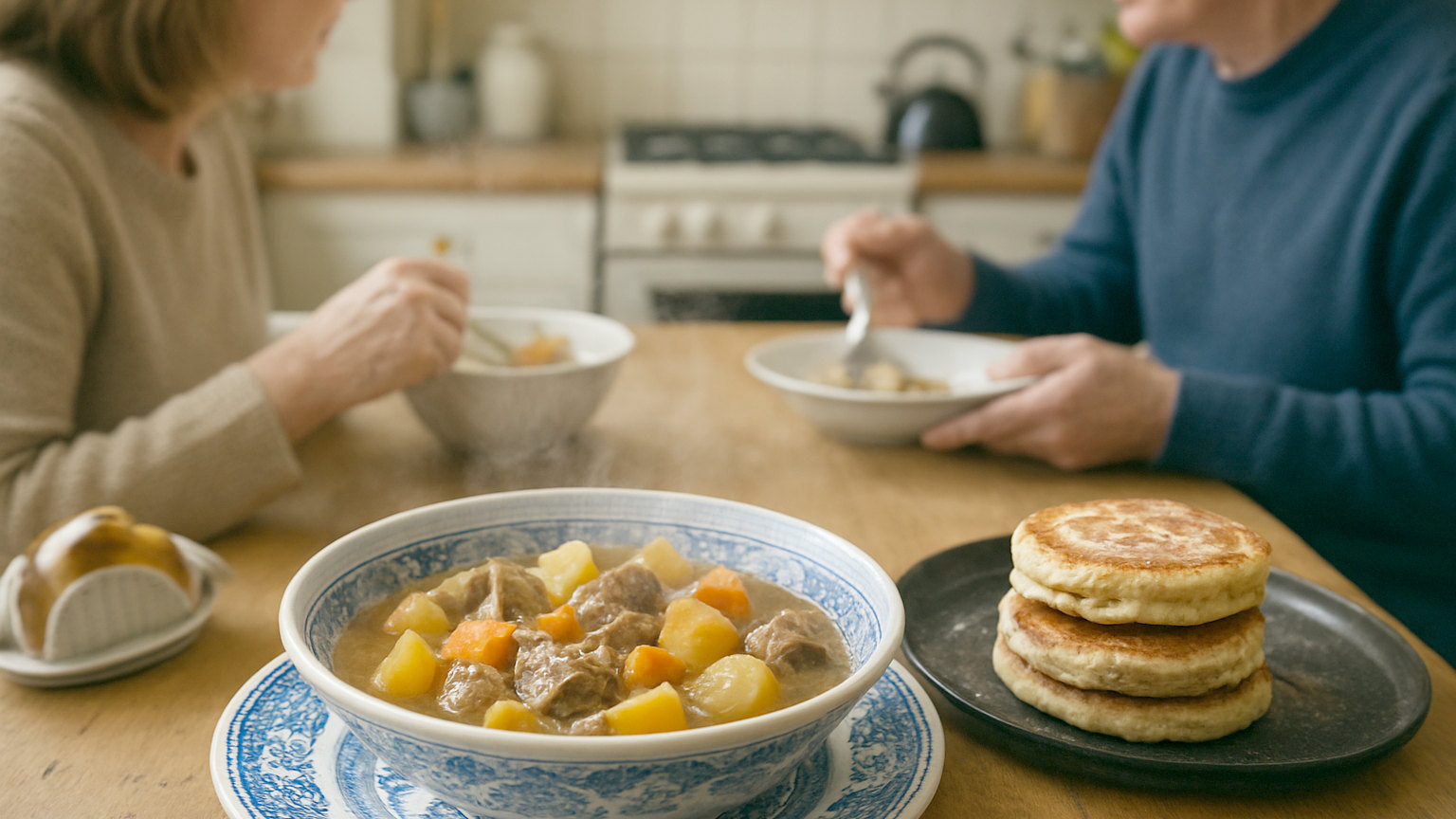
The Welsh national dish. Lamb and root vegetables in one pot, traditionally served as two courses from the same pan.