
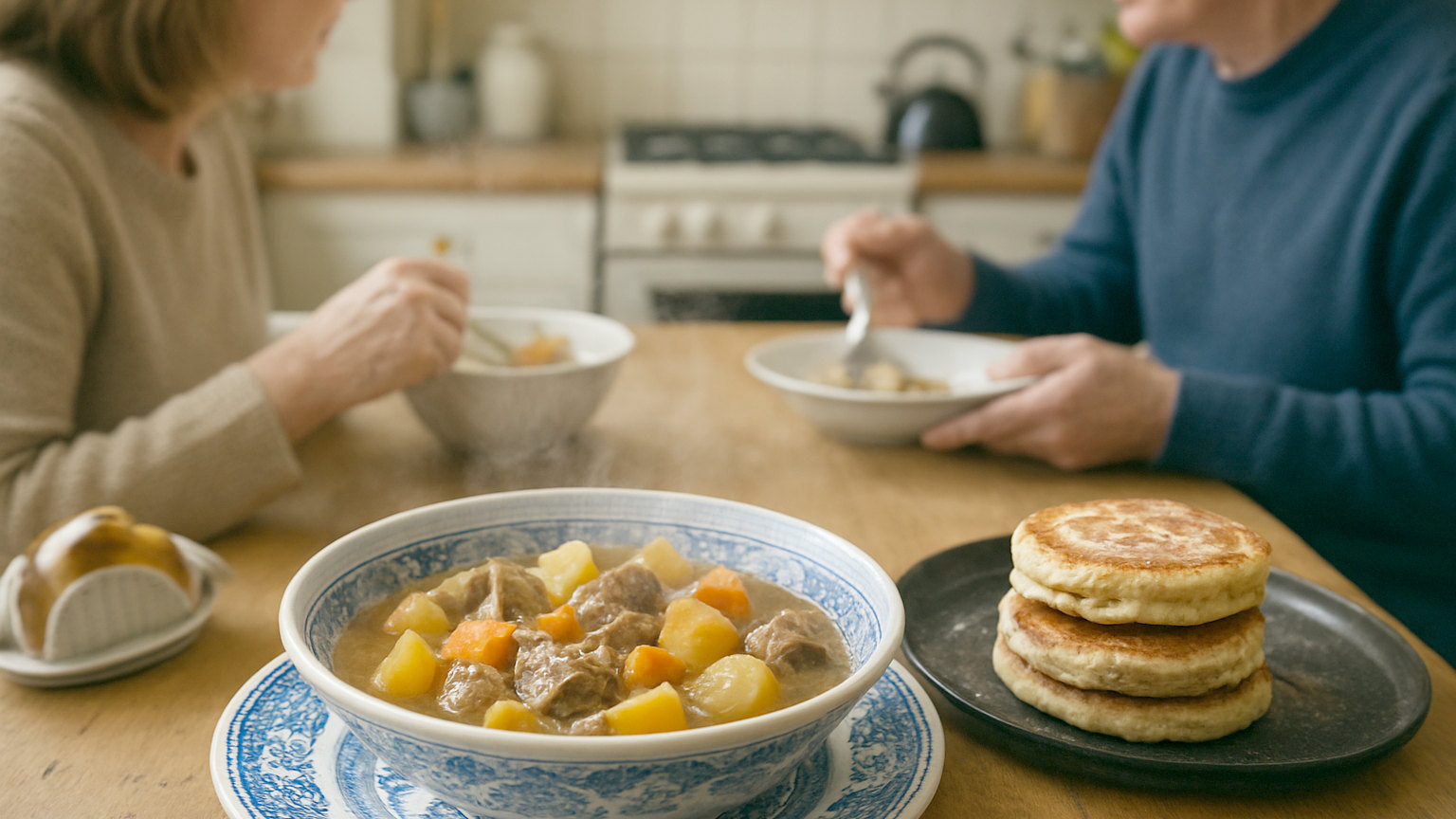
St David's Day falls on 1 March and is the national day of Wales, marked with parades, school eisteddfodau and a fair amount of cooking. The food is not elaborate: cawl, Welsh cakes and bara brith cover most of it. The leek, which appears everywhere on the day, has a longer history than the food does.
Who was St David?
Dewi Sant, a sixth century monk and bishop who founded monastic communities across Wales and became its patron saint.
He is said to have lived austerely on bread, herbs and water, which is faintly at odds with how the day is now celebrated.
What is traditionally eaten?
- Cawl, the lamb and vegetable broth
- Welsh cakes from the bakestone
- Bara brith with butter
- Welsh rarebit
- Glamorgan sausages
- Caerphilly cheese
Why the leek?
The usual account is that Welsh soldiers wore leeks in their caps to identify each other in battle. The story is attached to a seventh century battle against the Saxons, supposedly on St David's advice.
Whether or not that is history, the leek has been a Welsh emblem since at least the sixteenth century and Shakespeare refers to it.
Do leeks appear in the food?
Extensively. Cawl, Anglesey eggs, Glamorgan sausages and leek soup all use them, and they are in season through the winter and early spring.
They are the one vegetable that runs through Welsh cooking.
Why is there also a daffodil?
It is a later addition, popularised in the nineteenth and twentieth centuries, helped by the two words being similar in Welsh: cenhinen for leek and cenhinen Bedr for daffodil.
The daffodil is also conveniently in flower on 1 March.
Should there be a pudding?
Bara brith or Welsh cakes usually stand in for one, served with tea rather than as a formal course.
Teisen lap suits the occasion equally well.
How is the day marked?
Parades in towns and cities, children in traditional dress at school, eisteddfodau with music and poetry, and a good deal of cawl.
It is not a public holiday, though there have been repeated campaigns for one.
What would a St David's Day meal look like?
Cawl with Caerphilly and bread, then Welsh cakes or bara brith with tea. Rarebit or Glamorgan sausages if a lighter meal is wanted.
Almost all of it can be made the day before.
Do schools mark it?
Widely. Children wear traditional dress or a rugby shirt, and many schools hold a concert or an eisteddfod and finish early.
Is Welsh lamb in season?
Not really. New season Welsh lamb arrives from about May, so cawl on 1 March is made with hogget, older lamb or frozen meat.
That suits the dish, since older meat makes better broth.
What is Calennig?
A New Year tradition of visiting neighbours with a decorated apple and being given food or coins in return.
It survives in parts of Wales and has been revived in others.
What about Welsh drinks?
Welsh whisky, gin and beer have all grown considerably since the 1990s, and Wales now has a substantial distilling and brewing industry.
Are there other Welsh food occasions?
Calennig at New Year and Shrove Tuesday with crempog are both marked, and harvest suppers remain common in rural areas.
Is Welsh spoken at these events?
Widely, and eisteddfodau are conducted in Welsh. The language is a central part of how the day is marked.
Dydd Gwyl Dewi Hapus is the greeting.
What is an eisteddfod?
A festival of music, poetry and performance, held at school, local and national level. The tradition dates back centuries.
Schools across Wales hold one around St David's Day.
How do you cook for a crowd?
Cawl scales easily and improves overnight, so it is the obvious choice. Welsh cakes can be griddled in batches ahead and reheated in a warm pan.
Cool anything made ahead quickly and refrigerate within two hours, in line with Food Standards Agency guidance.
Next, try Welsh Rarebit, or see the rest of our Regional recipes.


