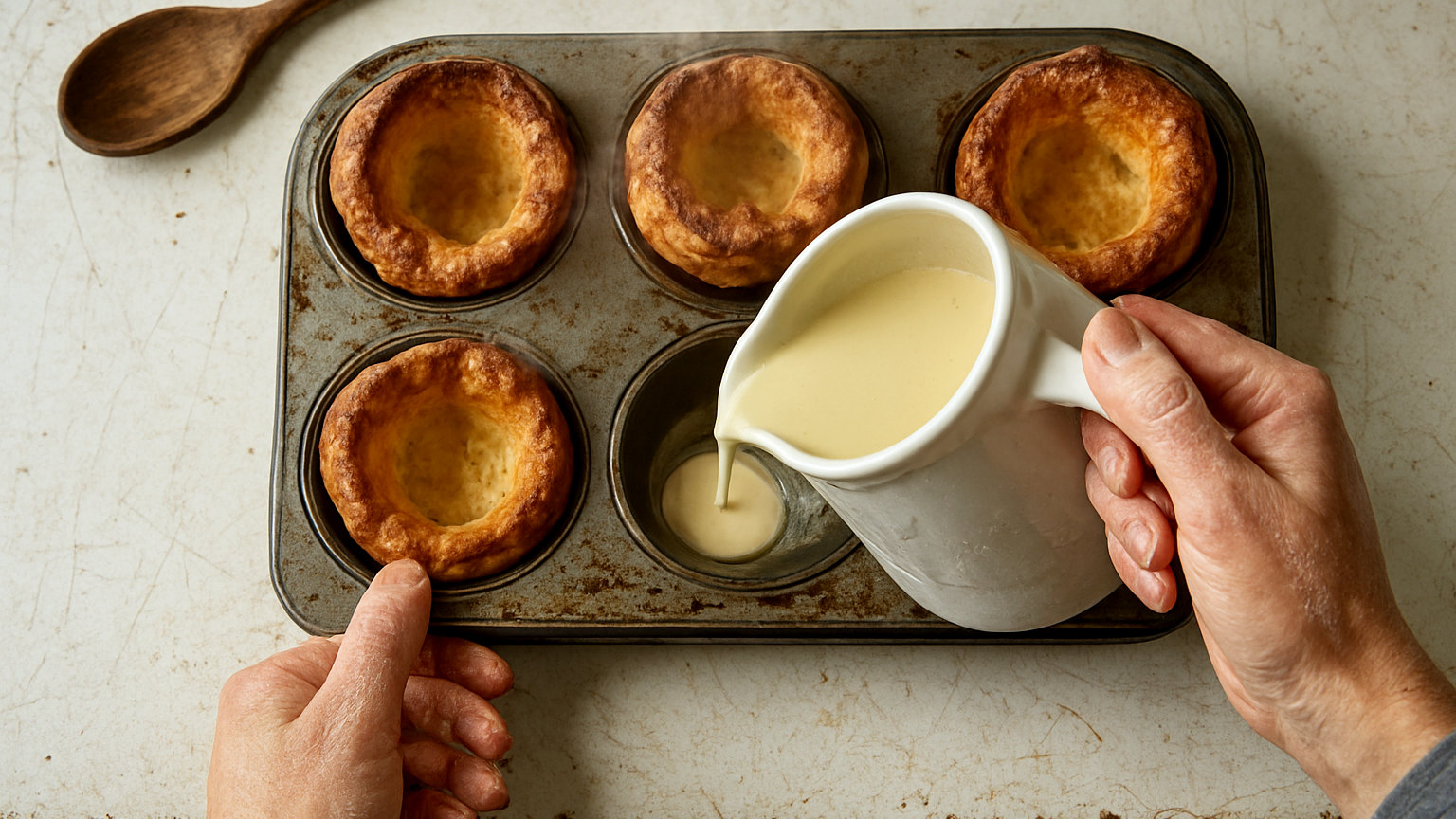
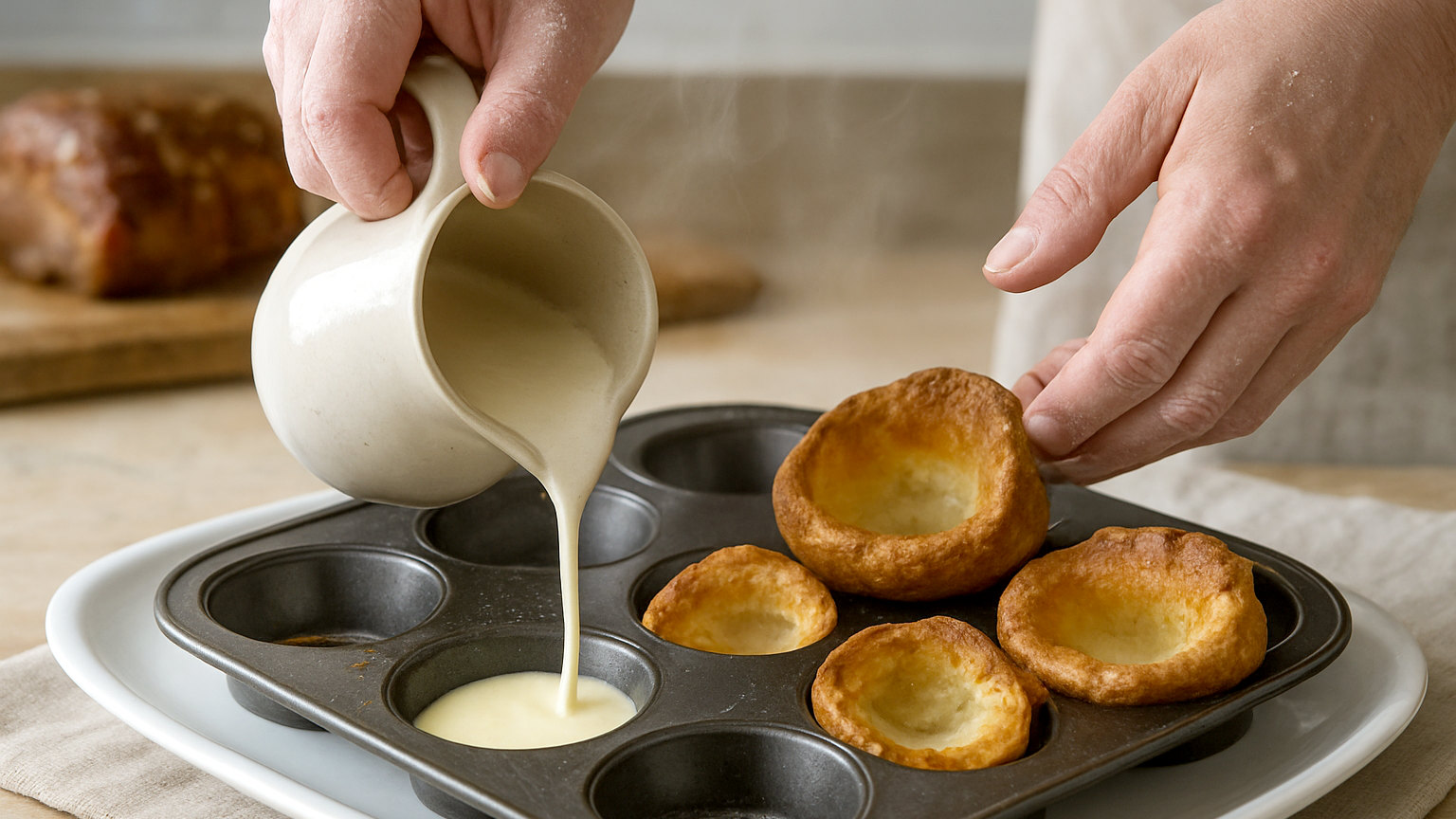
Are Yorkshire Puddings Only for Roast Beef?
Traditionally yes, in practice no. The rule comes from a time when they were a way of stretching an expensive joint, and it has outlived its purpose.
By UK Recipes
19 Aug 2026

Equal parts by volume, a rested batter and smoking hot fat - and why opening the oven ruins them.
Traditionally yes, in practice no. The rule comes from a time when they were a way of stretching an expensive joint, and it has outlived its purpose.
Yorkshire puddings served as a pudding with golden syrup is a real northern tradition, not a novelty. The batter barely changes at all.
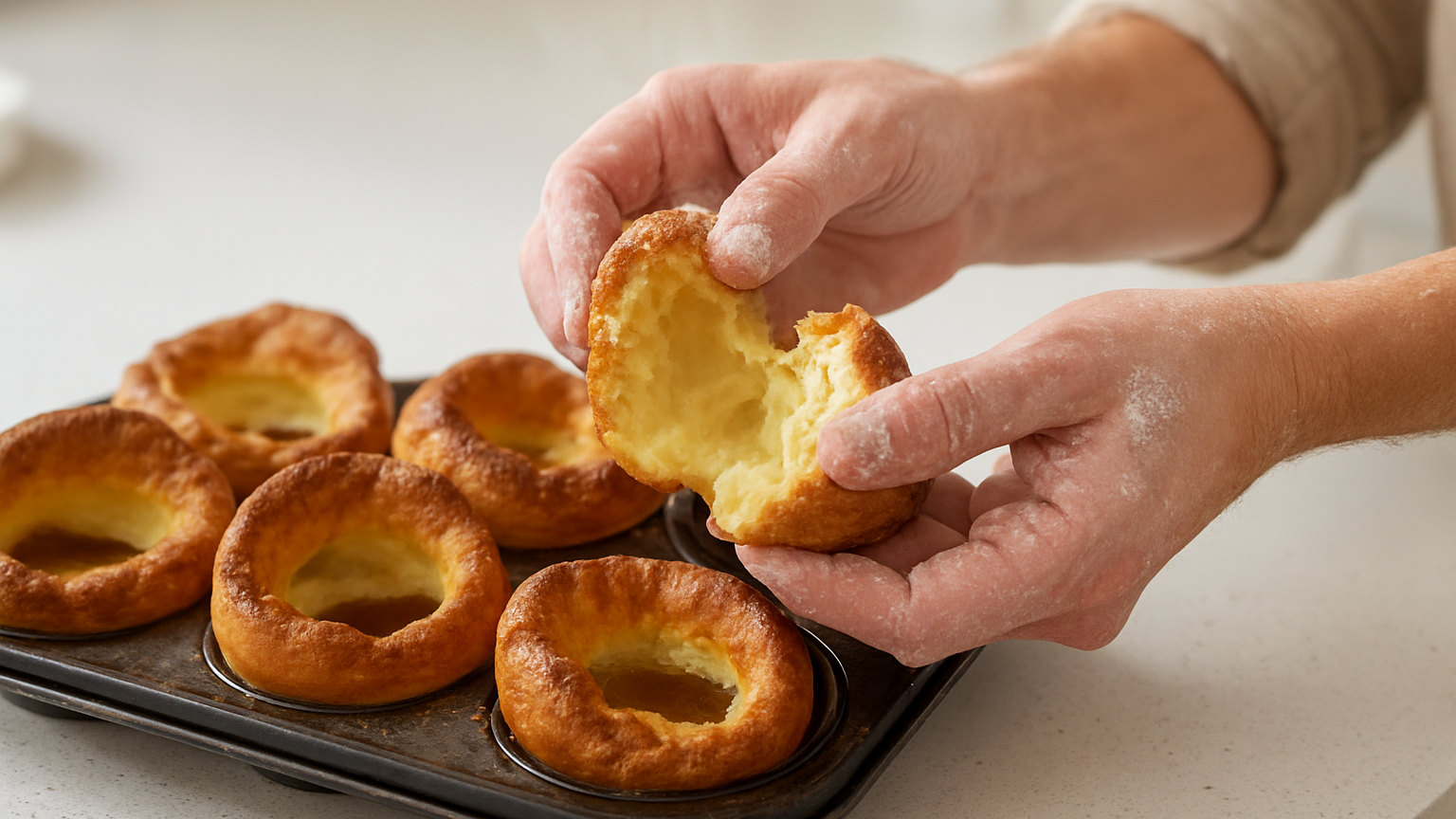
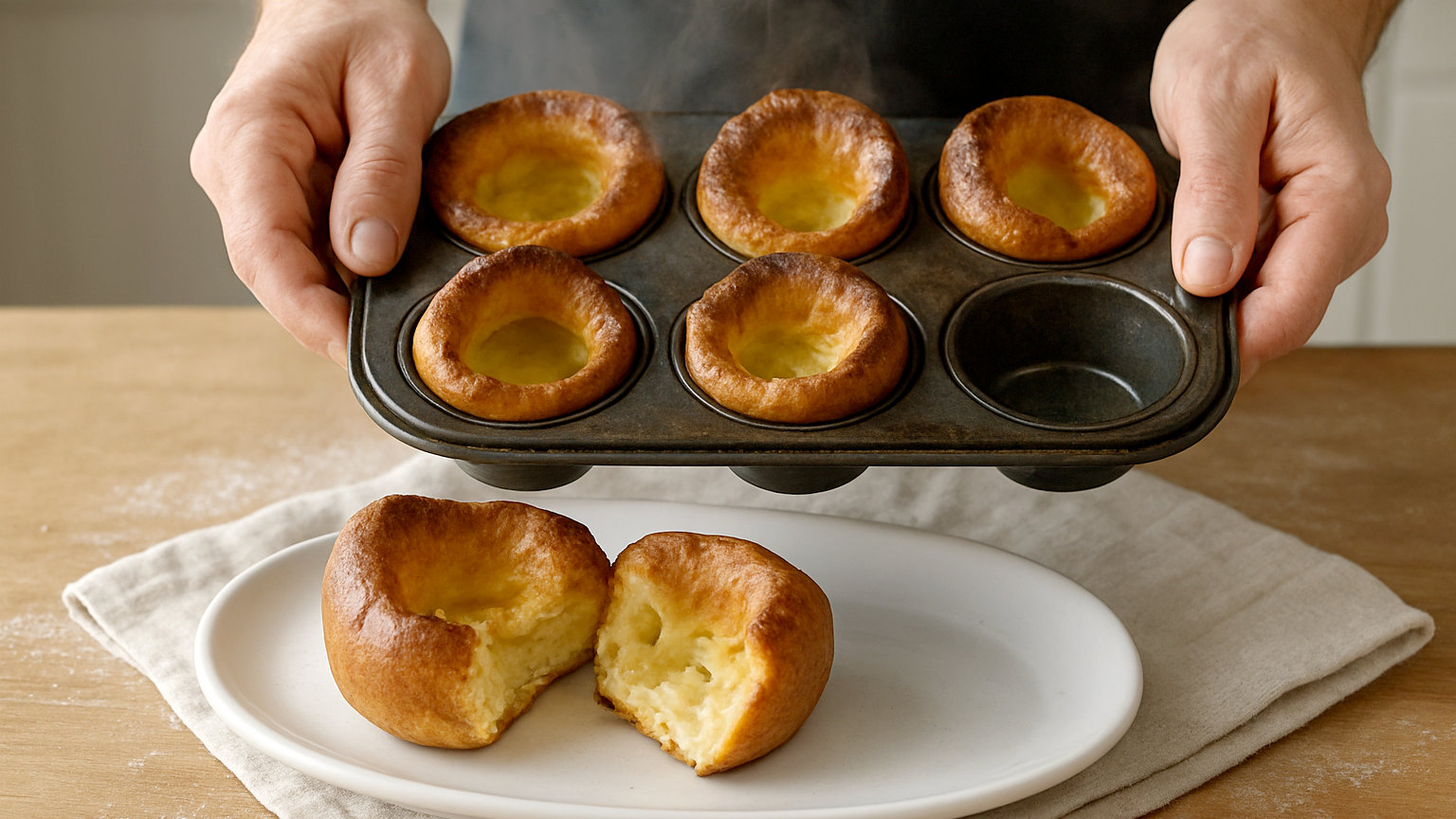
They keep two days, freeze for a month, and there is a genuine Yorkshire tradition of eating the leftovers as a pudding with golden syrup.
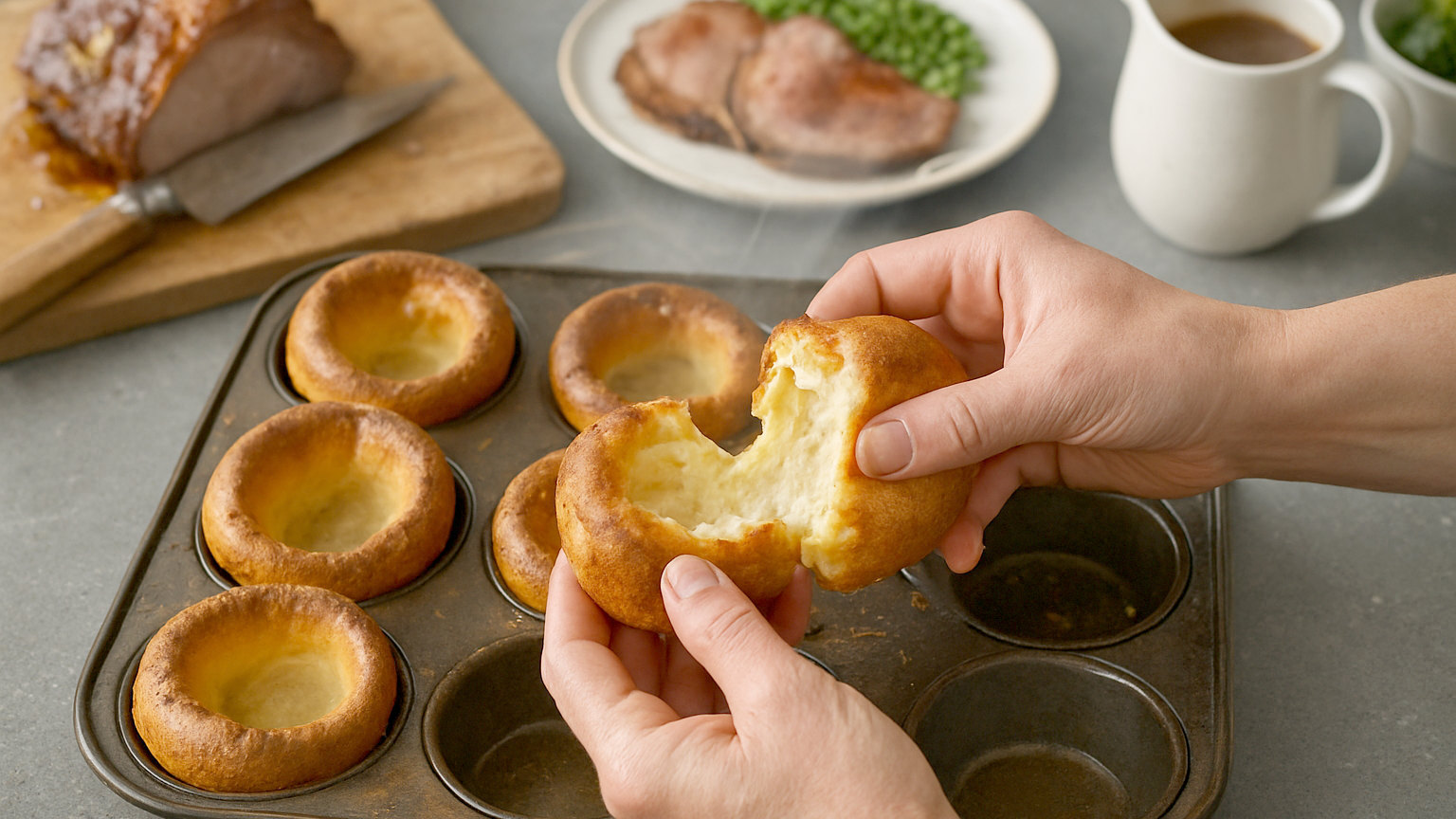
Gravy, and plenty of it. Beyond that they suit any roast, they work as a starter, and in some households they are a pudding in their own right.
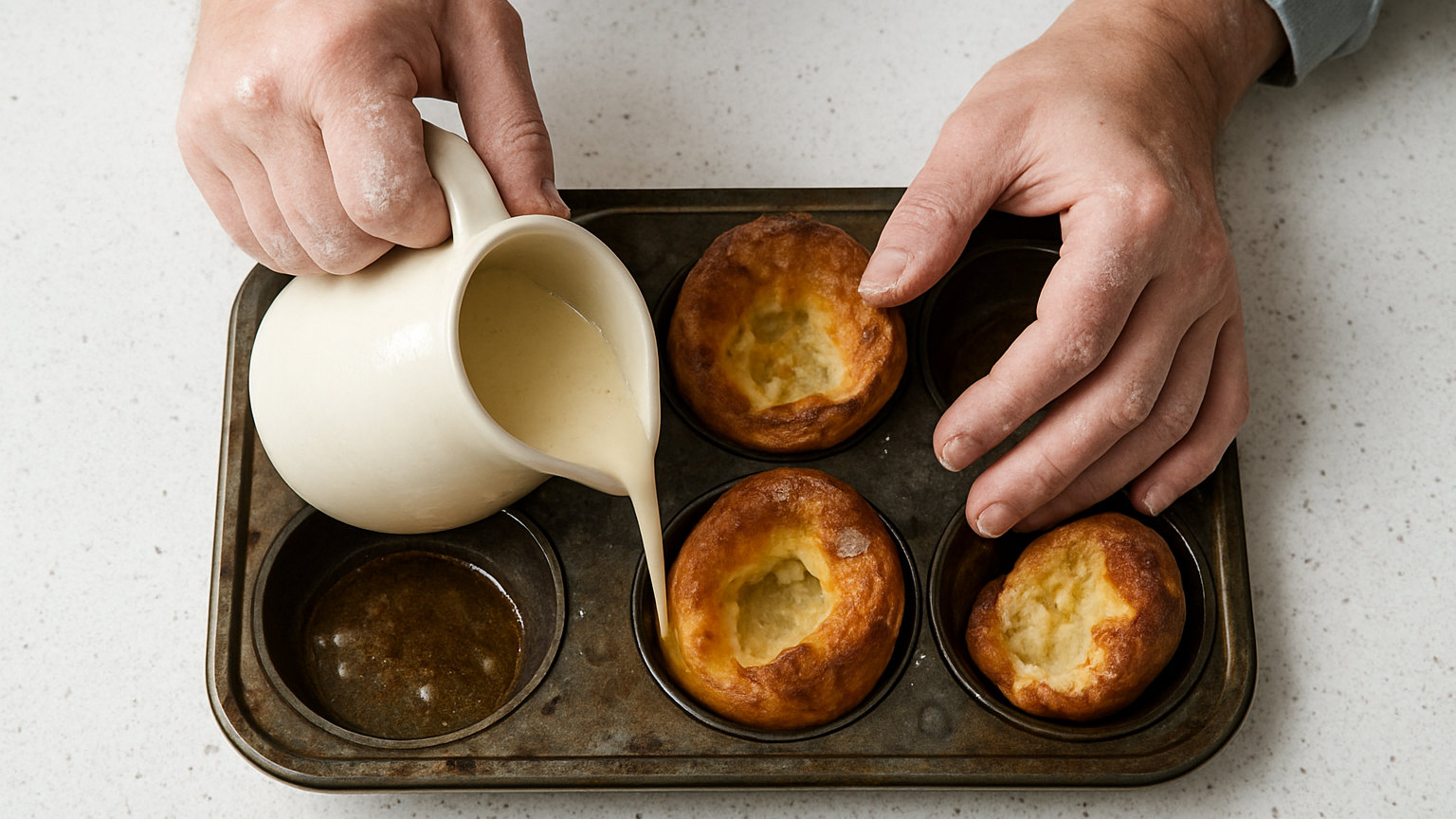
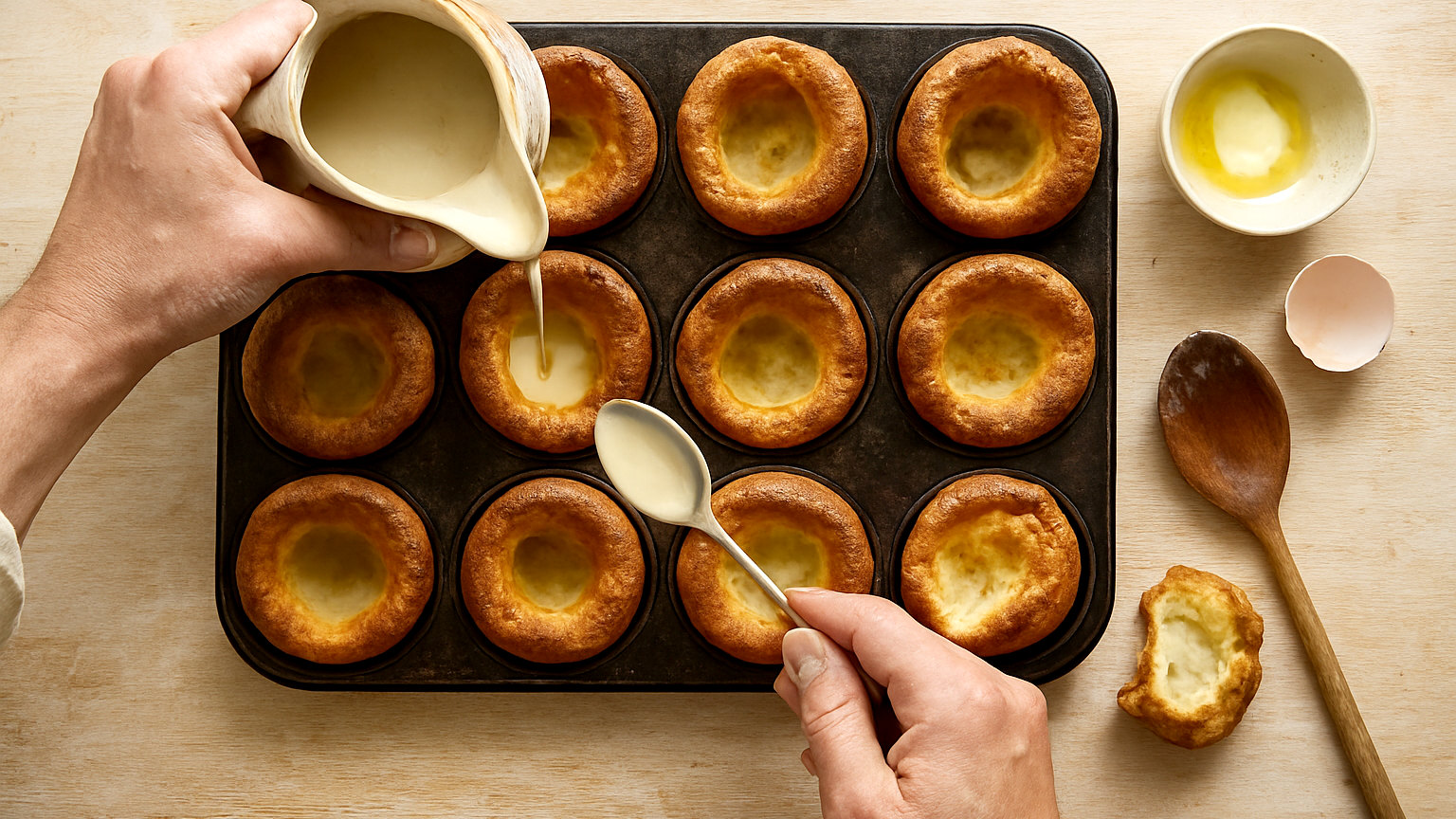
A two egg batter makes six puddings, which is right for two people. The tin still has to be hot, so the method does not scale down.
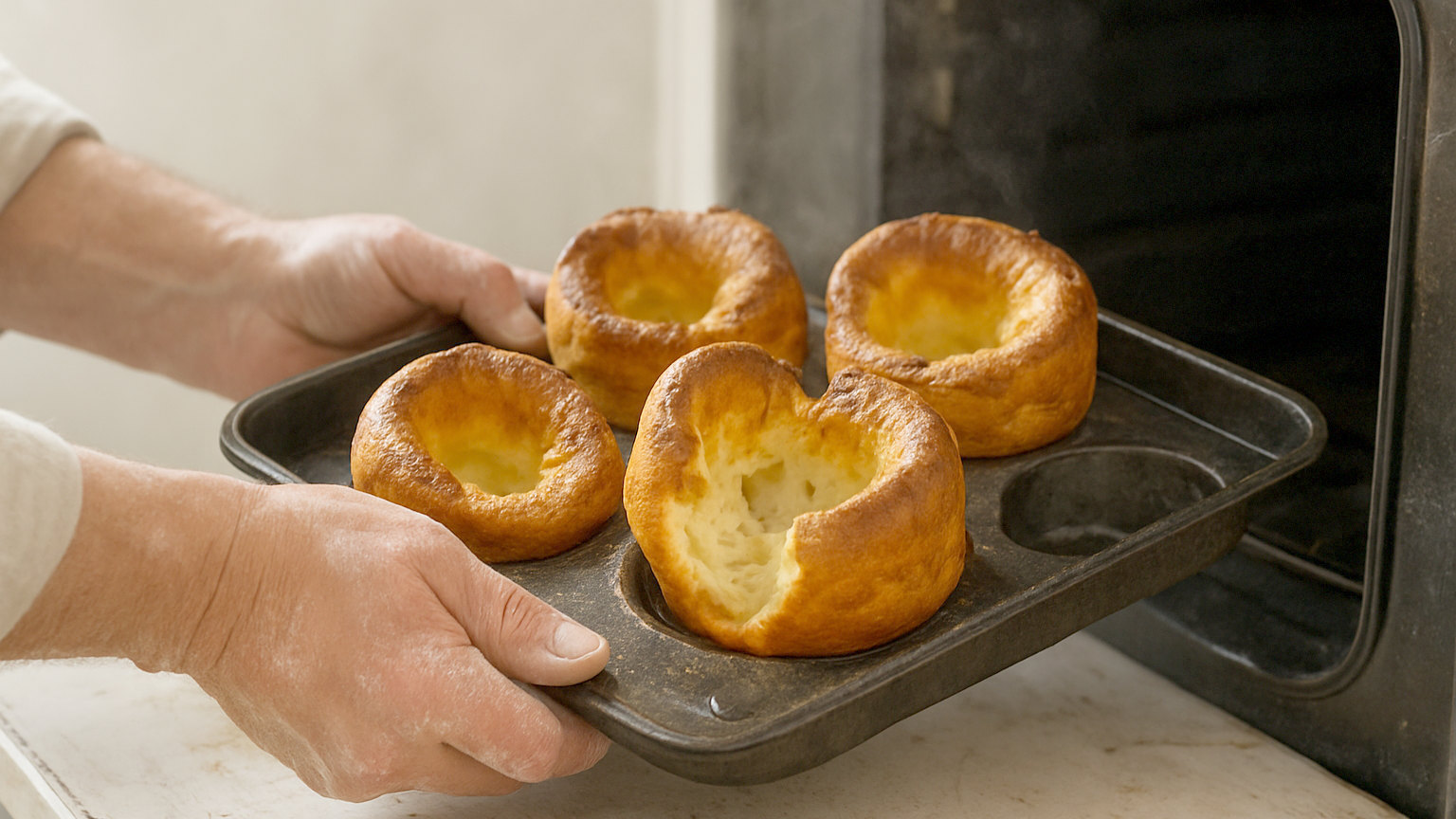
Two hundred and twenty degrees fan, twenty to twenty five minutes, and the door stays shut. Anything cooler and they cook without ever rising.
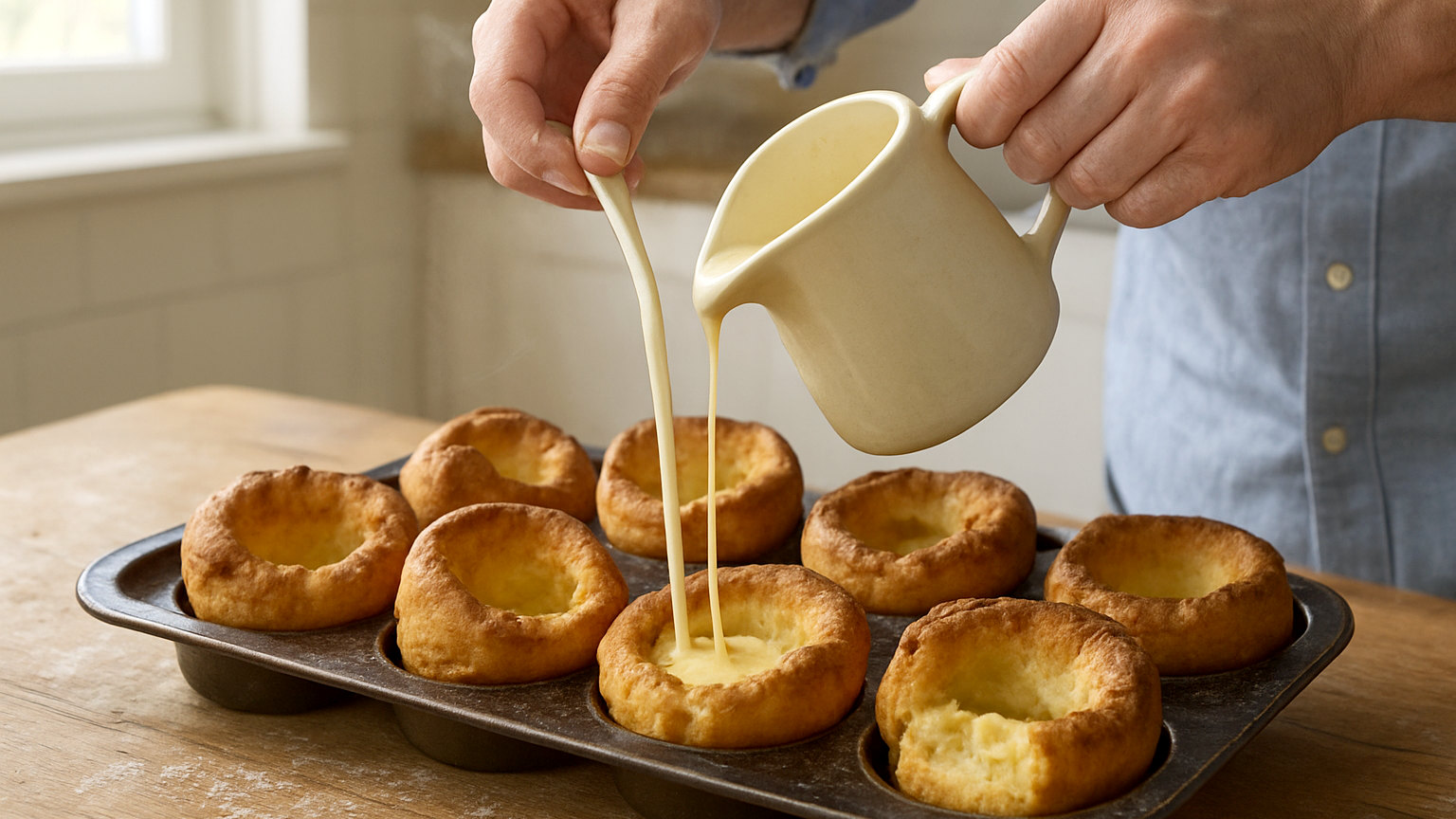
Four large eggs make twelve puddings on the standard ratio. Adding a fifth gives a taller, richer result, and the egg size matters more than people think.
Yorkshire puddings rise on steam rather than gluten, which is why the gluten free version works better than most gluten free baking does.
An air fryer makes decent Yorkshire puddings and only four at a time. Its real value is reheating a batch while the oven is full.
Cooked Yorkshire puddings freeze extremely well and reheat from frozen in seven minutes. Freezing the batter is possible and considerably less reliable.
Batter keeps a day in the fridge and is better for it. Beyond that, cook the puddings and store those instead, which works far better than freezing batter.
Milk gives flavour and colour, water gives a taller, crisper rise. Half and half is the compromise a lot of cooks quietly settle on.