
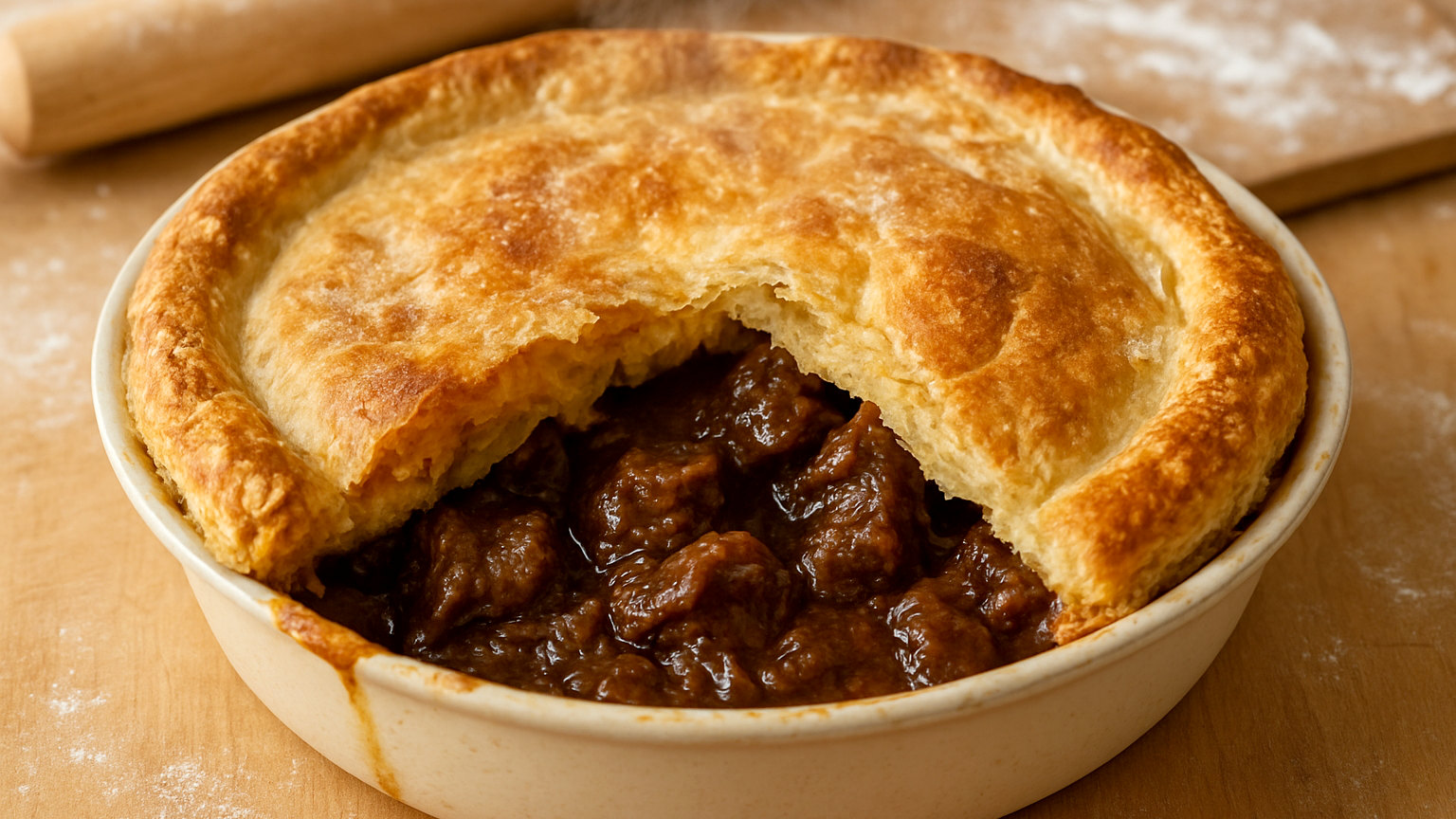
A steak and ale pie is really two jobs done on separate days. The filling is a slow beef stew that needs two hours and then needs to go completely cold. The pastry goes on afterwards. Nearly every disappointing homemade pie comes from putting hot filling into raw pastry, which melts the fat and guarantees the soggy bottom everyone worries about.
Ingredients for the filling, serves 6
- 1kg braising steak or beef shin, cut into 4cm chunks
- 2 tablespoons plain flour, well seasoned
- 2 tablespoons beef dripping or oil
- 2 onions, sliced thickly
- 2 carrots, cut into chunks
- 250g chestnut mushrooms, halved
- 2 tablespoons tomato puree
- 500ml brown ale or stout
- 300ml beef stock
- 2 bay leaves and a few sprigs of thyme
- 1 tablespoon Worcestershire sauce
Making the filling
- Heat the oven to 150C fan, 170C conventional, gas mark 3.
- Toss the beef in the seasoned flour. Brown it hard in the dripping, in batches, until each piece is properly dark. Set aside.
- Soften the onions and carrots in the same pan for 8 minutes, then add the mushrooms and cook until their liquid has gone.
- Stir in the tomato puree and cook for a minute, then pour in the ale and scrape the base of the pan clean.
- Return the beef, add the stock, herbs and Worcestershire sauce, bring to a simmer, cover and put in the oven for 2 to 2 and a half hours.
- The beef should fall apart under a fork. If the gravy is thin, lift the meat out and reduce it on the hob.
- Cool completely, ideally overnight in the fridge.
Brown the beef properly. This is where the flavour comes from, and it cannot be recovered later. Do it in three or four batches in a wide pan, because crowding produces grey meat sitting in its own liquid.
Choosing the ale
A brown ale, a mild or a stout all work. Avoid anything heavily hopped, since a strongly bitter IPA turns unpleasantly sharp over a long cook and the bitterness concentrates as the gravy reduces.
If you would rather not use alcohol, replace the ale with the same quantity of beef stock and add a tablespoon of black treacle and a teaspoon of balsamic vinegar. That gives you back the depth and the faint bitterness the ale was providing.
The pastry
Shortcrust on the base and puff on top is the classic combination and the best of both. All shortcrust is more traditional. All puff is easier and perfectly respectable.
For shortcrust, rub 100g cold butter and 50g lard into 300g plain flour with a pinch of salt, bring together with 3 to 4 tablespoons of cold water, and rest it in the fridge for 30 minutes.
Assembling and baking
- Heat the oven to 180C fan, 200C conventional, gas mark 6, with a baking sheet inside.
- Line a 23cm pie dish with the shortcrust. Prick the base, line with paper and baking beans, and blind bake for 15 minutes, then 5 minutes more without the beans.
- Fill with the cold filling. It should be generous but not domed.
- Brush the rim with beaten egg, lay the top over, press the edges together and trim. Cut a hole in the middle.
- Glaze with beaten egg and bake on the hot sheet for 35 to 40 minutes until deep golden.
Avoiding a soggy bottom
Four things do it. Blind bake the base. Use cold filling. Put the dish on a preheated baking sheet so the base gets direct heat. Cut a hole in the lid so steam escapes upwards rather than condensing inside.
A metal or enamel dish conducts heat far better than ceramic. If you only have a ceramic dish, give it an extra five minutes on the hot sheet.
Making ahead and freezing
The filling keeps three days in the fridge and freezes for three months. Assembled unbaked pies freeze well and bake from frozen at the same temperature for about an hour, covered with foil once the top has coloured.
A baked pie reheats at 160C fan for 25 minutes, covered with foil for the first fifteen so the pastry does not darken further. Cool leftovers quickly, refrigerate within two hours and reheat once only until piping hot throughout, following Food Standards Agency guidance.
Next, try Which Pastry Should You Use for a Pie?, or see the rest of our Mains recipes.


