
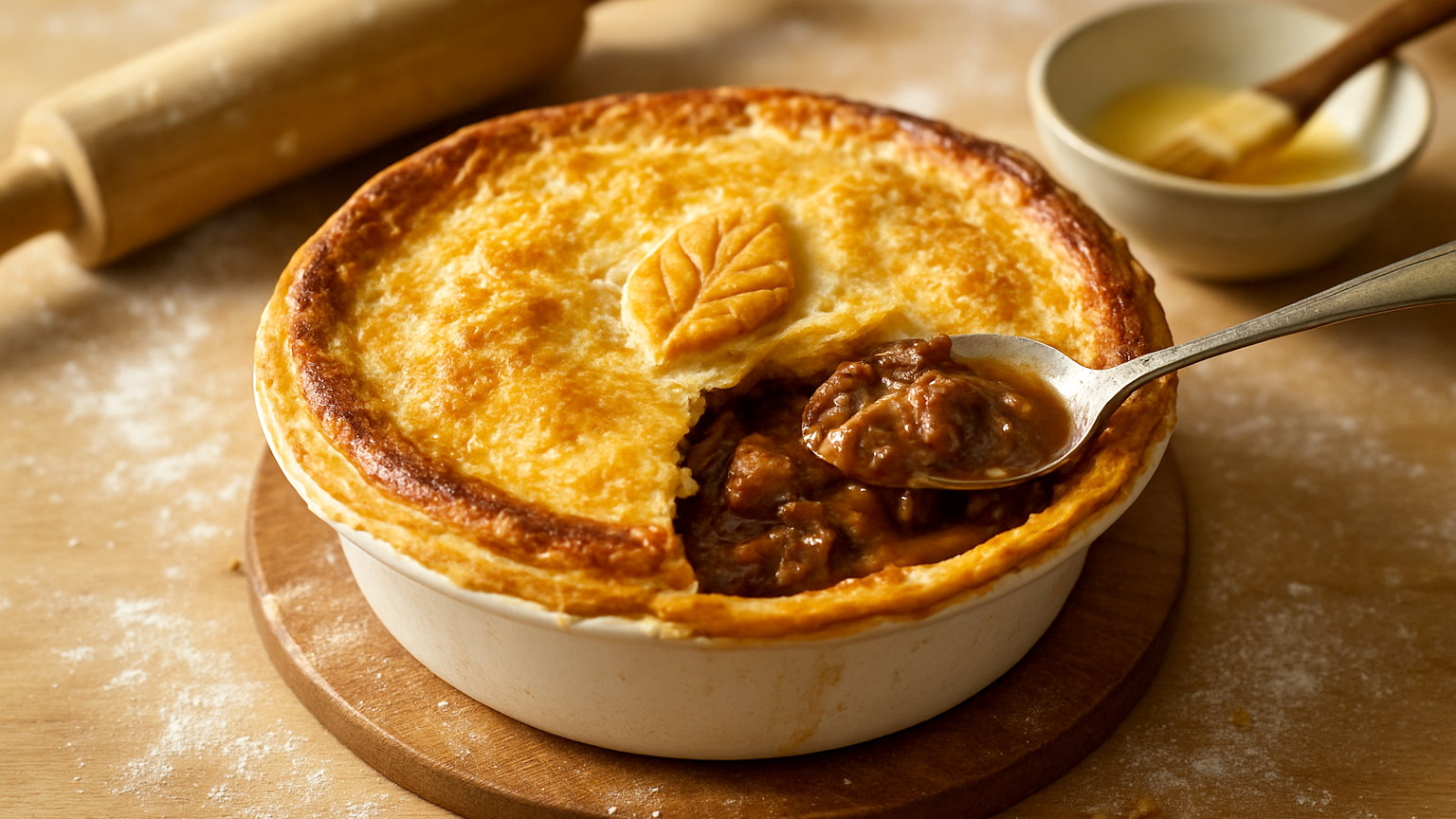
British pies use four or five different pastries and the choice is not a matter of taste. Each one behaves differently under a wet filling, at different temperatures and when eaten hot or cold. Choosing badly is the most common reason a pie disappoints, and it usually shows up as a soggy base or a lid that has collapsed into the gravy.
What is shortcrust best for?
Bases, and pies that are fully enclosed. It is strong, holds its shape, and resists moisture better than puff pastry because it has a tighter, denser structure.
The standard ratio is half fat to flour, so 250g of flour to 125g of fat. Half butter and half lard gives the best combination of flavour and shortness.
When should you use puff pastry?
For lids only, on a pie with a wet filling served hot. It rises dramatically and gives the contrast between crisp top and soft filling that a steak pie wants.
Puff pastry makes a poor base. The layers absorb liquid and collapse into a pale doughy mass, which is why almost no traditional British pie uses it underneath.
Is rough puff worth making?
Yes, and it takes about twenty minutes of actual work against several hours for full puff. It gives perhaps eighty per cent of the rise and is entirely adequate for a pie lid.
Shop bought all butter puff is also perfectly respectable and most cooks use it without apology.
What is hot water crust for?
Raised pies eaten cold: pork pies, game pies and veal and ham pies. It is made with boiling water and lard, which makes it pliable enough to mould by hand and sturdy enough to stand without a tin.
It is not a pastry you would want hot, since it is dense and slightly chewy, which is exactly right at room temperature.
Where does suet pastry fit?
Steamed puddings, above all steak and kidney pudding. Suet pastry is soft, light and slightly spongy, and it survives three hours of steaming without disintegrating.
It is the only pastry that works in a basin, and it cannot be baked successfully in the same way.
What about a mash topping?
Cottage pie, shepherds pie and fish pie use potato rather than pastry, which removes the soggy base problem entirely.
They are still pies in British usage, and the argument about whether they qualify is one of the more enjoyable pointless debates in English cooking.
Can you mix pastries in one pie?
Commonly, and it is the sensible approach. A shortcrust base with a puff lid gives you strength underneath and rise on top.
Most good pie shops do exactly this, and there is no reason a home cook should not.
Which pastry suits a cold pie?
Hot water crust or a firm shortcrust. Puff pastry goes soft and slightly greasy when cold, which is why nobody sells a cold puff pastry pie.
If the pie is going in a lunchbox or on a picnic, shortcrust every time.
Is shop bought acceptable?
All butter puff pastry is genuinely good and laminating pastry by hand is a real job. Shop bought shortcrust is more of a compromise, since it is easy to make and the difference is noticeable.
If you make one pastry yourself, make it the shortcrust.
Does a pie need a base at all?
Not necessarily. A great many British pies are lidded only, with the filling in a dish and pastry over the top, which sidesteps the soggy base problem entirely.
Purists argue that a lidded dish is a casserole with a hat rather than a pie. It is a real argument and it has never stopped anybody eating one.
How much do you need?
For a 23cm pie dish with a base and a lid, about 500g of shortcrust made from 300g of flour. For a lid only, 375g of puff pastry, which is one standard block.
Pastry freezes for three months raw, so making a double batch costs nothing extra in effort.
Next, try Steak and Ale Pie: A Proper Recipe With Real Pastry, or see the rest of our Mains recipes.


