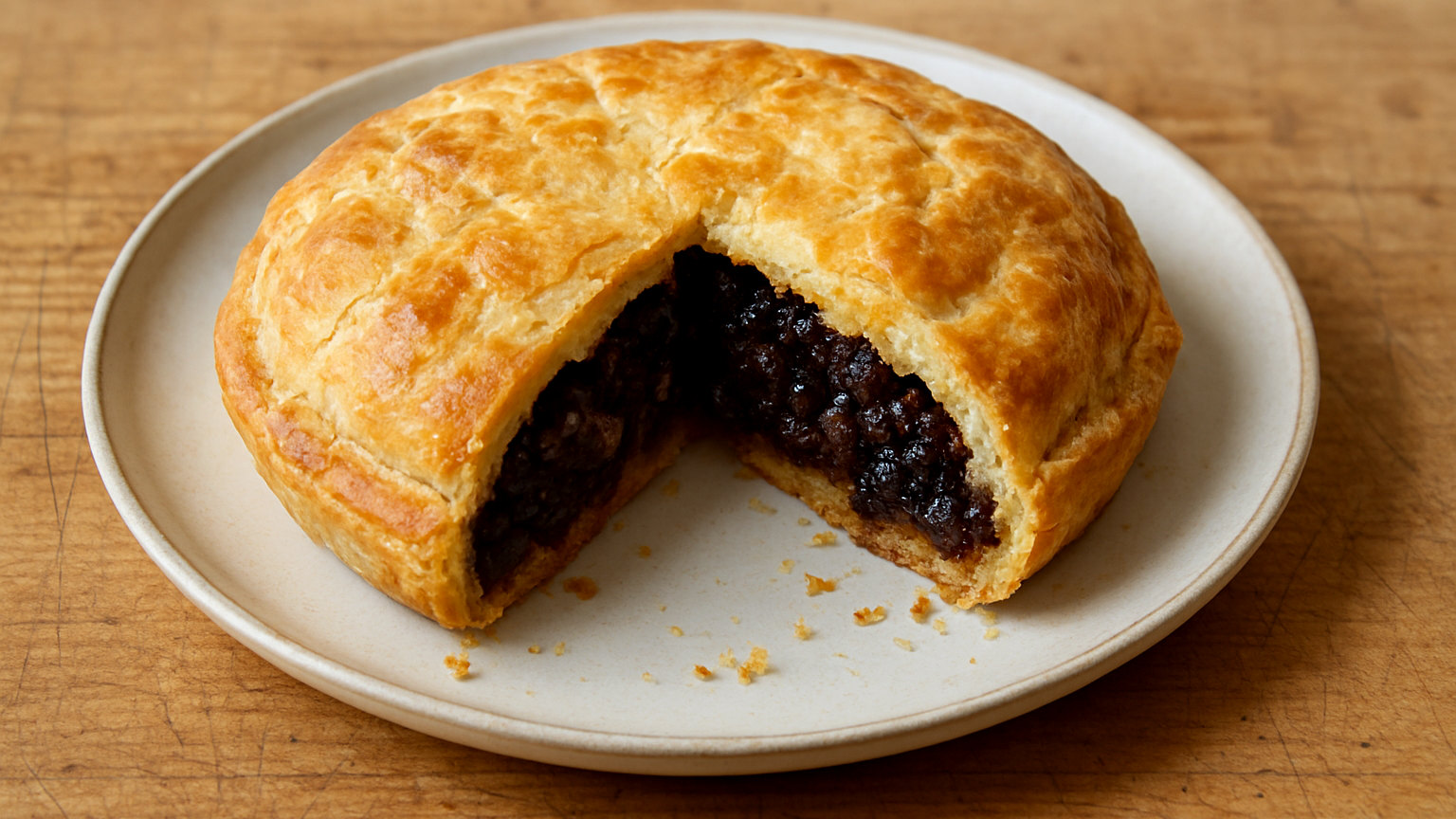
Regional English food is easier to understand as a product of geography than of tradition. What people ate depended on what the land grew, what the sea provided, what industry left them time to cook and what the local fuel could do. Nearly every county speciality has a practical explanation behind it.
What is London known for?
Pie, mash and liquor, jellied eels and Chelsea buns. Eels were abundant in the Thames and cheap, which shaped a whole category of cheap hot food.
London also absorbed food from everywhere else, being a port and a magnet for migration.
What comes from the South East?
Kent is hops, cherries, apples and Whitstable oysters, and it gives us gypsy tart and huffkins. Sussex has Sussex pond pudding and the smokie.
Kent is called the garden of England for a reason. Warm, dry and close to London, it grew soft fruit and hops commercially on a scale nowhere else matched.
What about East Anglia?
Norfolk and Suffolk are wheat, samphire, Cromer crab, Norfolk dumplings and Colchester oysters in Essex.
Flat, fertile and coastal, with a long tradition of both arable farming and fishing.
What is the West Country known for?
Clotted cream, cheddar, cider, pasties and seafood. High rainfall and mild winters make excellent dairy pasture.
It has its own section on this site, as do the North and the Midlands.
What does the North contribute?
Lancashire hotpot, parkin, Eccles cakes, black pudding, Wensleydale and Yorkshire pudding.
Industrial cities needed cheap, filling food that could cook unattended, which is why so many northern dishes are slow bakes and steamed puddings.
Why do puddings vary so much?
They follow local produce and fuel. Fruit growing counties gave crumbles and tarts, dairy areas gave custards and creams, and coal fired ranges gave steamed puddings.
Suet was cheap and available everywhere, which is why suet puddings are near universal.
What about the Midlands?
Melton Mowbray pork pies, Stilton, Bakewell pudding, Banbury cakes and Staffordshire oatcakes.
Central, agricultural and heavily industrial in parts, which produced both fine dairy and portable working food.
What about immigration?
It has shaped English food as much as geography. Curry houses, Italian cafes, Jewish bakeries and Chinese takeaways are all part of the regional picture now.
Chicken tikka masala is claimed by Glasgow and eaten everywhere.
Why did coastal areas differ so much?
Before refrigeration and railways, fresh sea fish could only be eaten within a few miles of where it landed. Everywhere else ate it salted, smoked or pickled.
That is why smoked and cured fish appear so widely inland.
What did the railways change?
Everything. Fresh fish could reach inland cities within hours, which is what made fish and chips possible as a national dish from the 1860s onwards.
Regional foods also began travelling and competing with each other.
How did industry change what people ate?
Long shifts left no time to cook, which favoured dishes that could be left in an oven, carried in a pocket or bought hot from a shop.
Pasties, pies, hotpots and fish and chips all follow that pattern.
What role did fuel play?
A great deal. Households without their own oven took dishes to a communal baker, which favoured things that could be baked in one dish and carried home.
Where coal was cheap, long slow oven cooking became normal.
Which English foods are protected?
Melton Mowbray pork pies, Stilton, West Country Farmhouse Cheddar, Yorkshire Wensleydale, Cornish pasties and Cornish clotted cream among others.
Protected status ties a name to a place and a method.
Why do so many dishes use offal and cheap cuts?
Prime cuts went to those who could pay. Working households cooked what was left, which meant long slow methods for tough meat and inventive use of offal.
Faggots, black pudding, tripe and brawn all come from that.
Is regional food still distinct?
Less than it was, since supermarkets sell the same range everywhere. Local bakeries, butchers and farm shops are where the differences survive.
Several regional dishes are eaten daily in one county and are entirely unknown fifty miles away.
If that was useful, Sussex Smokie covers related ground, and there is plenty more in Regional recipes.