
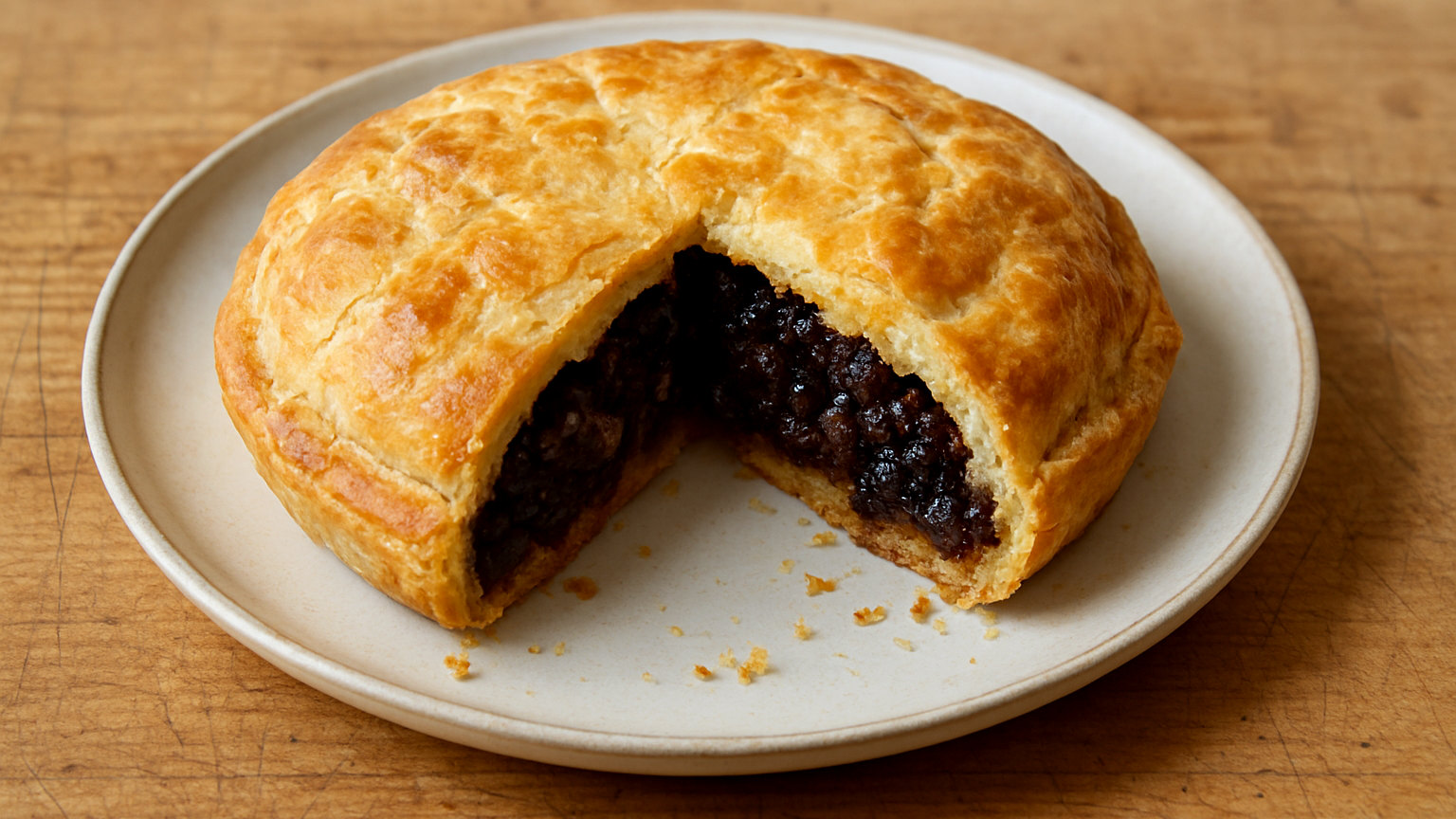
Banbury cakes are flat oval pastries filled with spiced currants and mixed peel, made in the Oxfordshire town since at least the seventeenth century. A shop in Banbury sold them continuously from the 1600s until it was demolished in 1968. They are close cousins of the Eccles cake, and the differences are shape, spicing and a little more sharpness.
What do you need for 8 cakes?
- 500g all butter puff pastry
- 50g butter
- 150g currants
- 50g mixed peel
- 75g dark brown soft sugar
- 1 teaspoon mixed spice and half a teaspoon each of cinnamon and nutmeg
- 2 tablespoons rum or brandy, optional
- 1 egg white and caster sugar for the tops
How do you make them?
- Melt the butter and stir in the currants, peel, sugar, spices and rum.
- Cool the filling completely.
- Roll the pastry thinly and cut 8 rounds about 12cm across.
- Put a heaped spoonful of filling in the centre of each.
- Gather the edges up over the filling and pinch to seal.
- Turn each over so the seam is underneath and press into a flat oval.
- Cut three slashes across the top of each.
- Brush with egg white, sprinkle with caster sugar and bake at 200C fan for 15 to 18 minutes.
Press them into ovals rather than circles. The oval shape is what distinguishes a Banbury cake from an Eccles cake, which is round, and it is the only reliable way to tell them apart on a plate.
How are they different from Eccles cakes?
Eccles cakes are round, from Lancashire, and use currants with little or no peel. Banbury cakes are oval, more heavily spiced and usually contain mixed peel.
Both are flat pastries filled with dried fruit and both are excellent.
Why does the filling leak?
Overfilling, or the seam underneath was not sealed properly. Pinch it firmly and turn the cake over so the weight holds it closed.
A little leakage caramelises on the tray and does no harm.
Why cut slashes in the top?
They let steam escape so the cakes do not burst, and the traditional three cuts are how they have always been marked.
Cut through the pastry but not into the filling.
How much filling per cake?
A heaped tablespoon, about 40g. Overfilled cakes burst at the seam as the filling expands.
Why egg white rather than whole egg?
It gives a crisp, frosted finish with the sugar rather than a golden glaze, which is the traditional appearance.
Why must the filling be cold?
Warm filling melts the butter in the pastry before it reaches the oven, which gives a greasy base and poor layers.
How thin should the pastry be?
About 3mm. The filling should almost show through the pastry once the cake is pressed flat, which is characteristic of both Banbury and Eccles cakes.
Should the currants be soaked?
The melted butter and rum do that job. Very dry currants can be soaked in hot tea for twenty minutes first.
Can they be made smaller?
Twelve smaller cakes from the same quantity bake in about 12 minutes and suit a tea table better than the full sized ones.
How old are they?
Recipes appear in print from 1615, and the Banbury shop that made them traded for over three centuries.
They were exported as far as India and Australia in the nineteenth century.
How should they be served?
Warm, with tea, or with a piece of sharp cheddar, which is a Lancashire habit worth borrowing.
Why is the filling so heavily spiced?
Banbury was on a trading route and spices were available. The heavier spicing is the main flavour difference from an Eccles cake.
Use fresh spices, since ground spice loses potency after about six months.
How long do they keep?
Three days in a tin and they are best warm from the oven. They freeze raw for three months and bake from frozen with 5 extra minutes.
For something along the same lines, see Roast Duck With Crisp Skin, or browse all our Regional recipes.


