
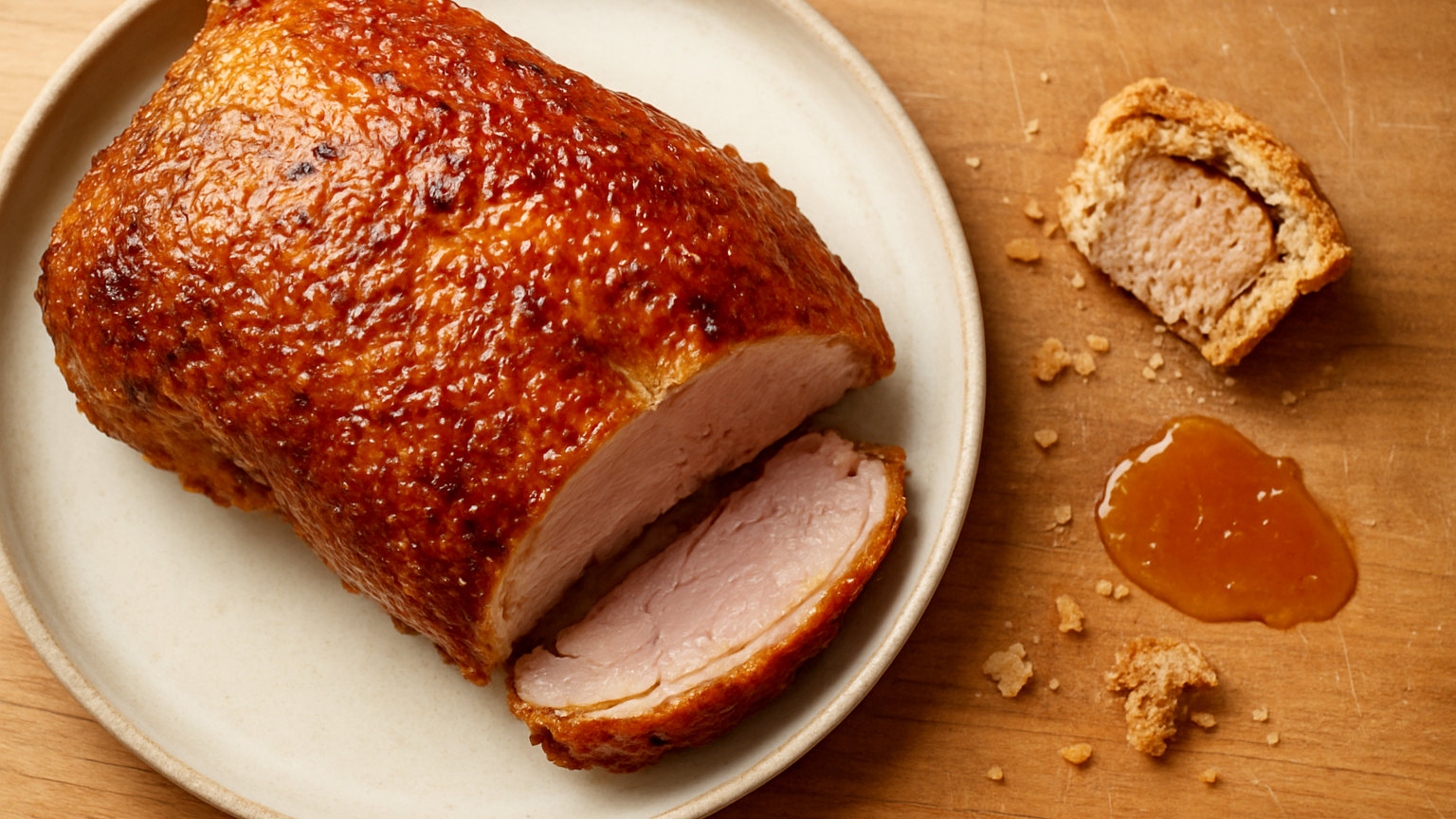
Duck has a thick layer of fat beneath the skin, far more than chicken, and roasting one successfully is mostly about getting that fat out. Rendered properly the skin turns crisp and the meat stays moist. Left in, the skin is flabby and the whole bird is greasy. Pricking, drying and a long steady roast are what make the difference.
What do you need for 4 people?
- 1 duck, about 2.2kg
- 1 tablespoon flaky salt
- 1 orange, halved, and a few sprigs of thyme
- Black pepper
- For the gravy: 1 tablespoon flour, 300ml chicken stock, 2 tablespoons port or red wine
How do you cook it?
- Take the duck out of the fridge an hour ahead and pat it completely dry.
- Prick the skin all over with a skewer, angling it so you pierce the fat but not the meat.
- Rub the skin with flaky salt and leave uncovered in the fridge overnight if you can.
- Heat the oven to 180C fan, 200C conventional, gas mark 6.
- Put the orange and thyme in the cavity and sit the duck on a rack over a deep tin.
- Roast for 30 minutes, then reduce to 160C fan.
- Roast for a further 1 hour 30 minutes, pouring off the fat every 30 minutes.
- Raise to 200C fan for the last 15 minutes to crisp the skin, then rest for 20 minutes.
Prick the skin without piercing the meat. The holes let rendered fat escape. Going right through into the flesh lets the juices out instead, and the meat dries.
Why leave it uncovered in the fridge?
It dries the skin, and dry skin crisps far better. Overnight is ideal and a few hours helps.
This is the same principle behind air drying a bird before roasting.
How long does it need?
Roughly 45 minutes per kilo plus 20 minutes, at the temperatures above. A 2.2kg duck takes about two hours fifteen in total.
Duck is best cooked through rather than pink when roasted whole.
How do you know it is done?
The juices from the thigh should run clear and a probe in the thickest part of the leg should read 75C.
The legs take longer than the breast, which is why a whole roast duck is cooked well done.
Should it be basted?
No, unlike a chicken. Duck bastes itself from within as the fat renders, and spooning fat over the skin softens it.
What do you do with the fat?
Strain it and keep it. Duck fat is the best thing there is for roast potatoes and it keeps for months refrigerated.
A 2.2kg duck yields several hundred millilitres.
Can it be jointed and roasted?
Legs and breasts cook at different rates, so jointing the bird and cooking the legs longer gives a better result than roasting it whole.
Roasting whole is easier and more impressive at the table.
What is an Aylesbury duck?
A white English breed from Buckinghamshire, once bred in enormous numbers and now rare. Most ducks sold as Aylesbury are a different breed.
Gressingham is the common British table duck today.
Should it be stuffed?
Not tightly. Aromatics such as orange and thyme in the cavity are fine, but a solid stuffing slows the cooking and stops the heat reaching the inside.
Cook any stuffing separately.
What should you serve with it?
Roast potatoes in the duck fat, braised red cabbage and something sharp such as an orange or cherry sauce.
Why roast it on a rack?
So the fat drains away rather than the bird sitting in it, which would fry the underside and prevent the skin crisping.
A deep tin is essential, since a duck releases a great deal of fat.
How much duck per person?
A 2.2kg duck feeds four, which is considerably less than a chicken of the same weight because of the fat and bone.
Cool leftovers quickly, refrigerate within two hours and use within two days.
See also Watercress Soup, or browse more Regional recipes.


