
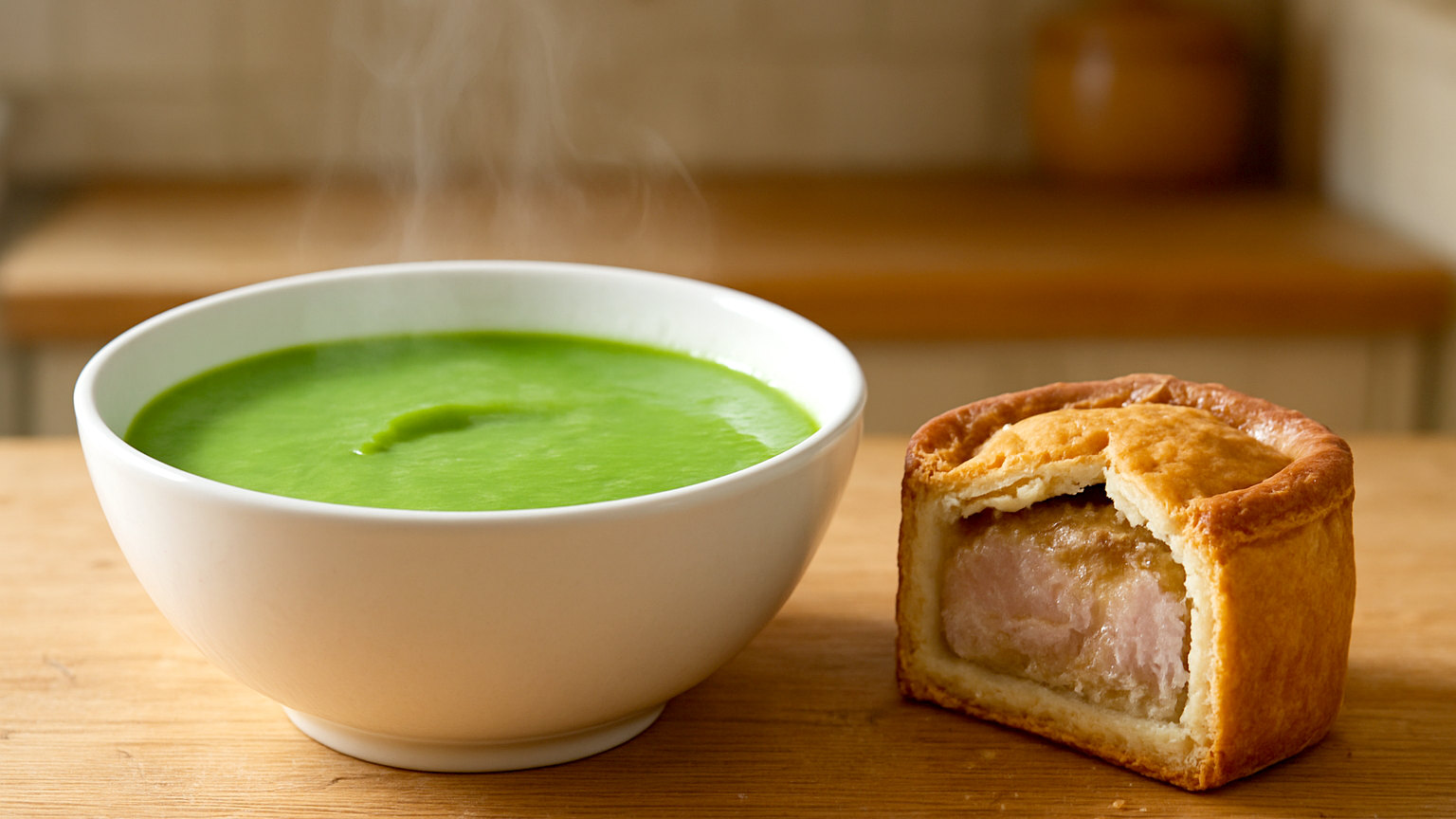
Watercress soup is peppery, sharp and a startling green, provided the watercress is barely cooked. Its colour and flavour are both destroyed by more than about two minutes of heat, so everything else in the soup is made first and the leaves go in at the very end. Hampshire has grown watercress commercially since the nineteenth century.
What do you need for 4 people?
- 200g watercress, thick stalks removed
- 1 onion or 2 leeks, chopped
- 50g butter
- 250g floury potatoes, peeled and diced
- 800ml chicken or vegetable stock
- 100ml double cream or creme fraiche
- Salt, white pepper and a grating of nutmeg
How do you make it?
- Melt the butter and sweat the onion gently for 10 minutes without colouring.
- Add the potato and stock and simmer for 15 minutes until the potato is soft.
- Bring the soup to a brisk simmer.
- Add all the watercress at once and push it under.
- Cook for 90 seconds only.
- Take off the heat immediately and blend until smooth.
- Stir in the cream and season with salt, white pepper and nutmeg.
- Serve at once, or cool quickly if serving cold.
Ninety seconds and no more. Watercress goes from bright green to dull khaki in about three minutes of simmering, and the peppery flavour disappears with the colour.
How do you keep the colour?
Cook it briefly and blend immediately, then cool the soup quickly if it is not being eaten straight away.
Standing hot in a pan will dull it within ten minutes.
Should the onion be browned?
No. Sweat it gently with the lid on so it softens without colouring, since browning would muddy both the colour and the clean peppery flavour.
Why potato in the base?
It thickens the soup without cream or flour and gives body, and it is neutral enough not to compete with the watercress.
Use a floury variety, which breaks down.
Can you use other leaves?
Rocket and nettles both make a similar soup with the same method, and nettle soup is a traditional spring dish.
Pick nettles young and wear gloves.
Should the stalks go in?
The thin stalks yes, since they carry a good deal of the pepperiness. Very thick or woody ones are better removed.
Does it freeze?
For three months without the cream, though the colour dulls noticeably. Add fresh watercress when reheating to brighten it.
Can it be served cold?
Very well, and it is excellent chilled in summer. Cool it rapidly over ice to protect the colour.
Season it more heavily if serving cold.
Should it be blended smooth?
Smooth is usual, and a stick blender does it in the pan in thirty seconds. A rougher texture with some leaves left whole is also good.
Blend it immediately after the watercress goes in, while the colour is at its brightest.
Why is watercress peppery?
It contains mustard oils, the same family of compounds found in mustard, horseradish and rocket.
Heat destroys them, which is another reason to cook it briefly.
Where is it grown?
In chalk stream beds, particularly in Hampshire, Dorset and Wiltshire. The water must be clean and running.
A watercress line once ran from Alresford to Alton carrying the crop to London.
How much watercress do you need?
200g for four people, which is two or three supermarket bags. It wilts to almost nothing, so it always looks like too much raw.
Keep a handful back to scatter over the finished soup.
When is it in season?
British watercress runs from April to October, with the best in late spring. It is grown under cover through the winter.
What can you serve with it?
Crusty bread, a swirl of cream, or a poached egg dropped into the bowl.
How long does it keep?
Two days refrigerated, though the colour fades. It freezes for three months without the cream.
Cool it quickly and refrigerate within two hours, in line with Food Standards Agency guidance.
If that was useful, Kentish Huffkins covers related ground, and there is plenty more in Regional recipes.


