
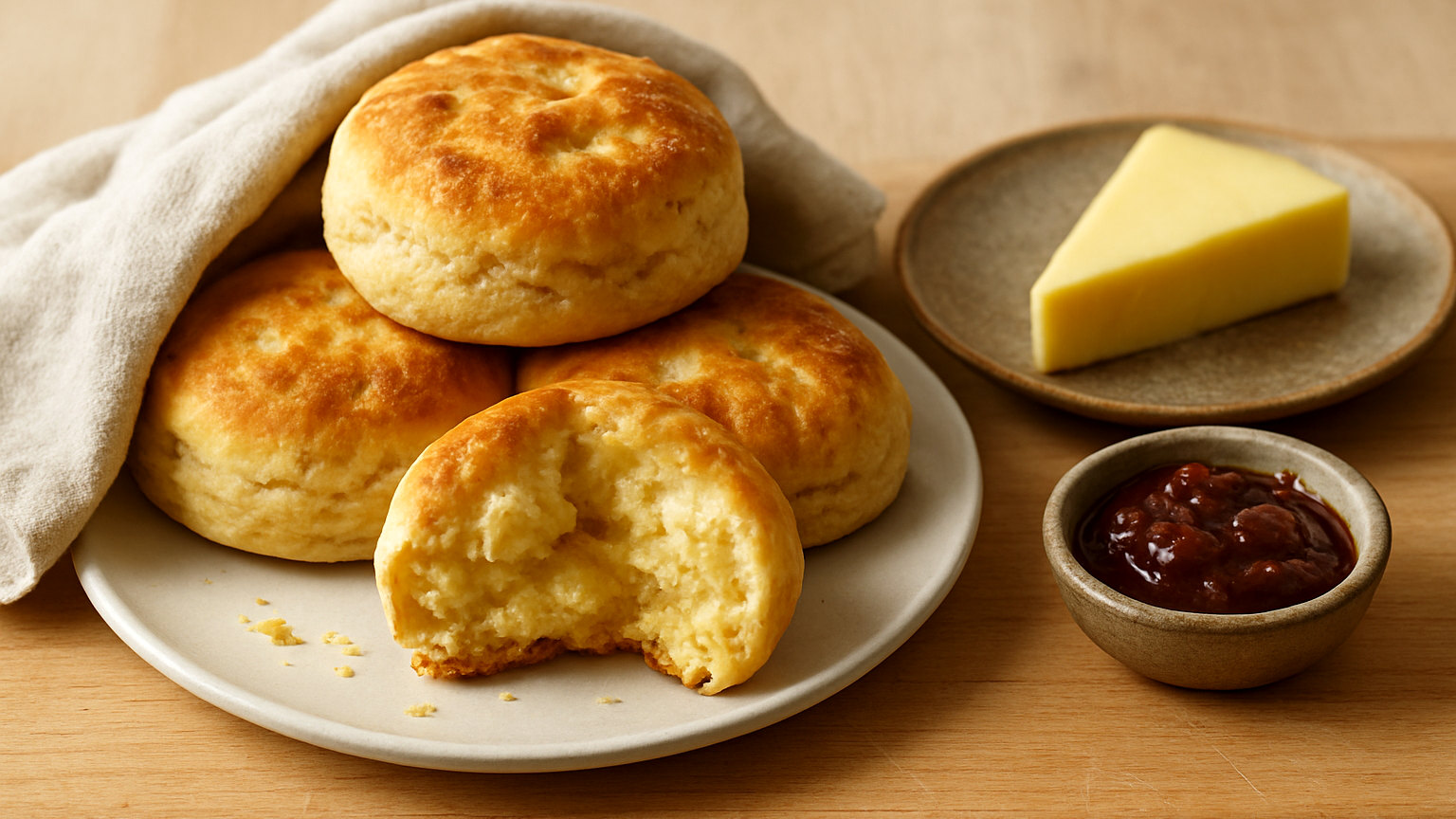
Huffkins are soft, flat, oval bread rolls from Kent with a characteristic hollow pressed into the middle. They were the bread of the hop gardens and cherry orchards, eaten by pickers during the season, and the dimple was traditionally filled with stewed cherries. The soft crust is the point, and it comes from wrapping them in a cloth as they cool.
What do you need for 8 huffkins?
- 500g strong white bread flour
- 7g fast action yeast and 2 teaspoons salt
- 25g caster sugar
- 50g lard or butter, softened
- About 300ml warm whole milk
- Extra flour for dusting
How do you make them?
- Combine the flour, yeast, salt and sugar, keeping salt and yeast apart initially.
- Rub in the lard, then add the warm milk and mix to a soft dough.
- Knead for 10 minutes until smooth.
- Prove for 1 hour until doubled.
- Divide into 8 and shape into flat ovals about 2cm thick.
- Prove on floured trays for 30 minutes.
- Press a deep hollow in the centre of each with your thumb or a floured finger.
- Dust with flour and bake at 200C fan for 12 to 15 minutes until pale.
Wrap them in a clean tea towel the moment they come out. Trapped steam softens the crust as they cool, which is what makes a huffkin a huffkin rather than an ordinary roll.
Why press a hole in the middle?
It stops the roll doming and keeps it flat, and traditionally the hollow held stewed cherries or a knob of butter.
Press firmly, since a shallow dimple disappears during baking.
What flour should you use?
Strong white bread flour, which gives enough structure to hold the shape while staying soft.
Plain flour makes them heavy and slightly crumbly.
Why should they stay pale?
A huffkin is soft rather than crusty. Twelve to fifteen minutes at 200C fan colours them lightly without forming a hard crust.
Dusting with flour rather than glazing keeps them matt and pale.
Can the dough be left overnight?
The first prove can be done in the fridge overnight, which develops the flavour. Bring it back to room temperature before shaping.
Why lard rather than butter?
Lard was what was available in rural Kent and it gives a particularly soft crumb. Butter works and gives a slightly richer flavour.
How much do they rise?
Less than a bread roll, since they are shaped flat and pressed in the middle. They should stay under about 4cm deep.
What were they eaten with?
Stewed Kentish cherries in the hollow, or cheese and cold meat during the hop harvest.
Split and buttered they are good with anything.
How do you know they are baked?
They should sound hollow when tapped underneath and be only lightly coloured on top. Twelve to fifteen minutes is usually right.
Do not wait for a deep golden crust, which means they have gone too far.
What is the hop connection?
Kent was the centre of English hop growing, and thousands travelled from London each September to pick. Huffkins fed them.
The oast houses that dried the hops are still a feature of the Kent landscape.
How is the dough different from a bread dough?
It is enriched with milk, fat and a little sugar, which gives a softer, more tender crumb than a plain water dough.
How should they be shaped?
Flat ovals rather than round balls, about 2cm deep. They are meant to be low rather than domed.
Can they be made sweet?
Some versions add more sugar and dried fruit, which makes them closer to a tea cake. The plain version is the traditional one.
The hollow was filled with fruit rather than the dough being sweetened.
Why are they oval?
It is simply the traditional shape, and a flat oval gives more soft crumb relative to crust than a round roll does.
How long do they keep?
A day at best, since enriched rolls stale quickly. They freeze for a month and refresh at 160C fan for 5 minutes.
Worth reading next: Afternoon Tea: What It Involves. There is more in our Regional recipes.


