
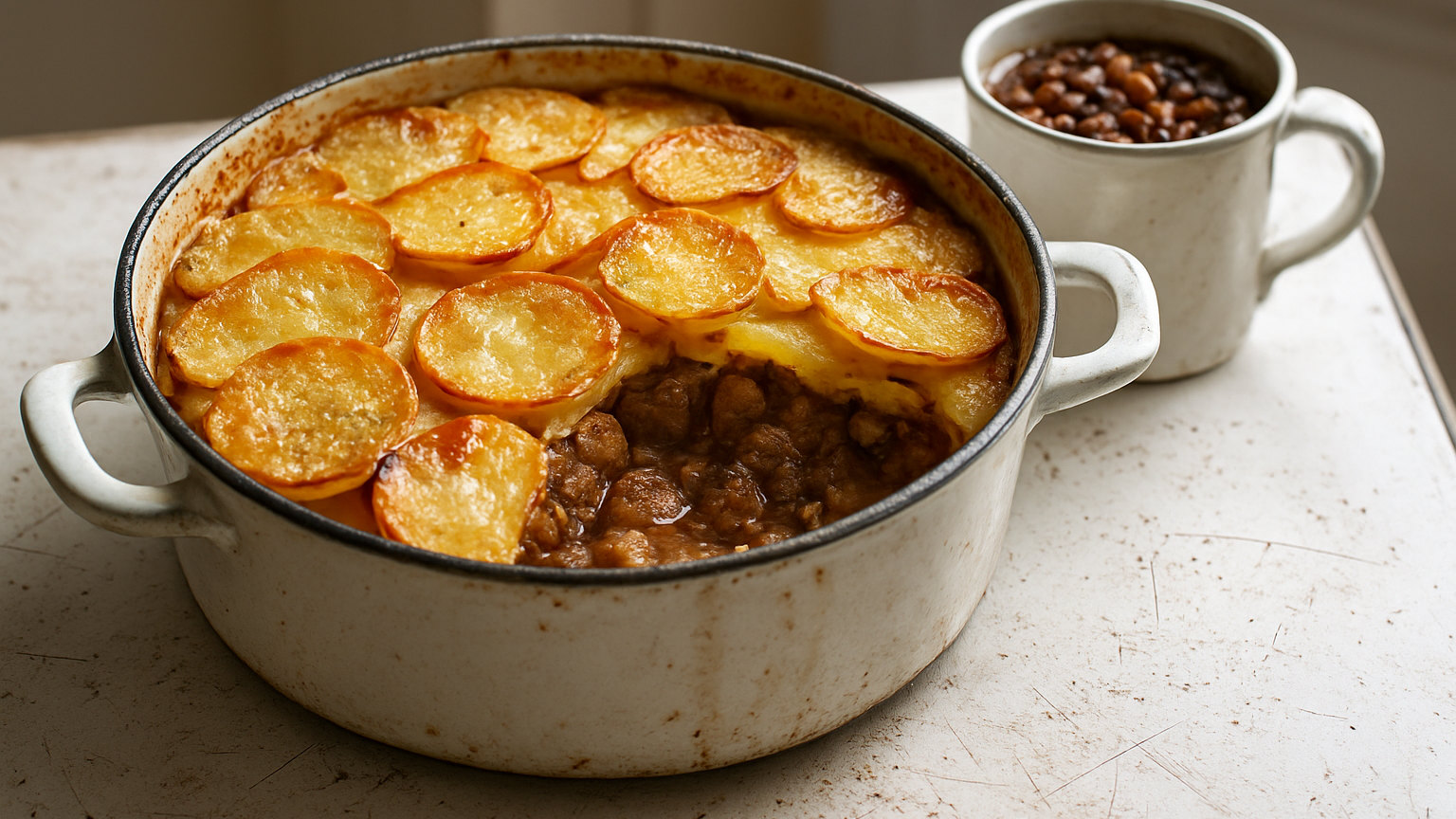
A Lancashire hotpot is lamb and onions under a lid of overlapping sliced potatoes, cooked slowly in a single pot for two to three hours. It began as a dish you assembled cold in the morning and left in a low oven while you were at work, which is why the traditional version involves no browning and no thickening and still comes out rich.
Ingredients, serves 4
- 900g lamb neck fillet or middle neck chops, cut into large pieces
- 3 large onions, sliced
- 2 carrots, sliced, optional and mildly contentious
- 900g floury potatoes such as Maris Piper, sliced 3mm thick
- 50g butter, melted
- 500ml lamb or beef stock
- 2 bay leaves, a few sprigs of thyme
- 1 tablespoon Worcestershire sauce, optional
- Salt and plenty of black pepper
Which cut of lamb
Middle neck chops on the bone are the traditional choice and give the best flavour, since the bones and connective tissue enrich the liquid as they break down. Neck fillet is easier to eat and easier to buy.
Shoulder works. Leg does not, because it is too lean for a long slow cook and goes dry and stringy. This is a cheap cut dish by design.
Method
- Heat the oven to 150C fan, 170C conventional, gas mark 3.
- Layer half the onions and carrots in the bottom of a deep casserole. Season well.
- Put the lamb on top in a single layer, season again, and tuck in the bay and thyme.
- Add the remaining onions and carrots.
- Pour in the stock and Worcestershire sauce. The liquid should come about two thirds of the way up, not cover everything.
- Overlap the potato slices on top in neat concentric circles, working from the outside in.
- Brush generously with melted butter and season the top.
- Cover and cook for 2 hours.
- Remove the lid, turn the oven up to 200C fan, and give it 25 to 30 minutes more until the potatoes are golden and crisp at the edges.
Do not drown it. The onions release a great deal of liquid and the potatoes must sit above the level of the stock, or they boil instead of roasting and you lose the crisp lid that makes the dish.
The arguments
Whether to brown the meat first is the main one. Traditionalists say no, on the grounds that the original was assembled cold and the long cook does the work. Browning does add depth, and if you want to, brown the lamb and soften the onions before layering. Both versions are defensible and we are not going to declare a winner.
Carrots divide people similarly. Some households consider them essential and others regard them as an intrusion into what should be lamb, onion and potato.
Oysters appear in Victorian recipes, when they were cheap food rather than a luxury. Few people add them now, but it is a genuine part of the dish's history rather than an invention.
Hotpot against Irish stew
Both are lamb, onion and potato cooked slowly. The difference is the potatoes. In a hotpot they sit on top as a lid and roast. In an Irish stew they go through the pot and break down to thicken the liquid, and there is no crisp top.
Doing it in advance
A hotpot can be assembled the night before and kept covered in the fridge, which is exactly how the dish was originally used. Add fifteen minutes to the covered cooking time if it goes into the oven straight from cold.
Getting the top right
Slice the potatoes thinly and evenly, using a mandoline if you have one. Overlap them properly so there are no gaps for steam to force through.
Butter is what browns them. Be generous, and brush again when you take the lid off if the surface looks dry.
Serving and keeping
Pickled red cabbage is the traditional accompaniment and cuts through the richness of the lamb. Buttered greens, braised red cabbage or simply a spoonful of pickled beetroot all do the same job.
Hotpot reheats well and many people think it is better the next day. Cool it quickly, refrigerate within two hours, and reheat once only at 160C fan until piping hot throughout. It freezes for three months, though the potato topping softens.
Worth reading next: Lancashire Butter Pie. There is more in our Regional recipes.


