
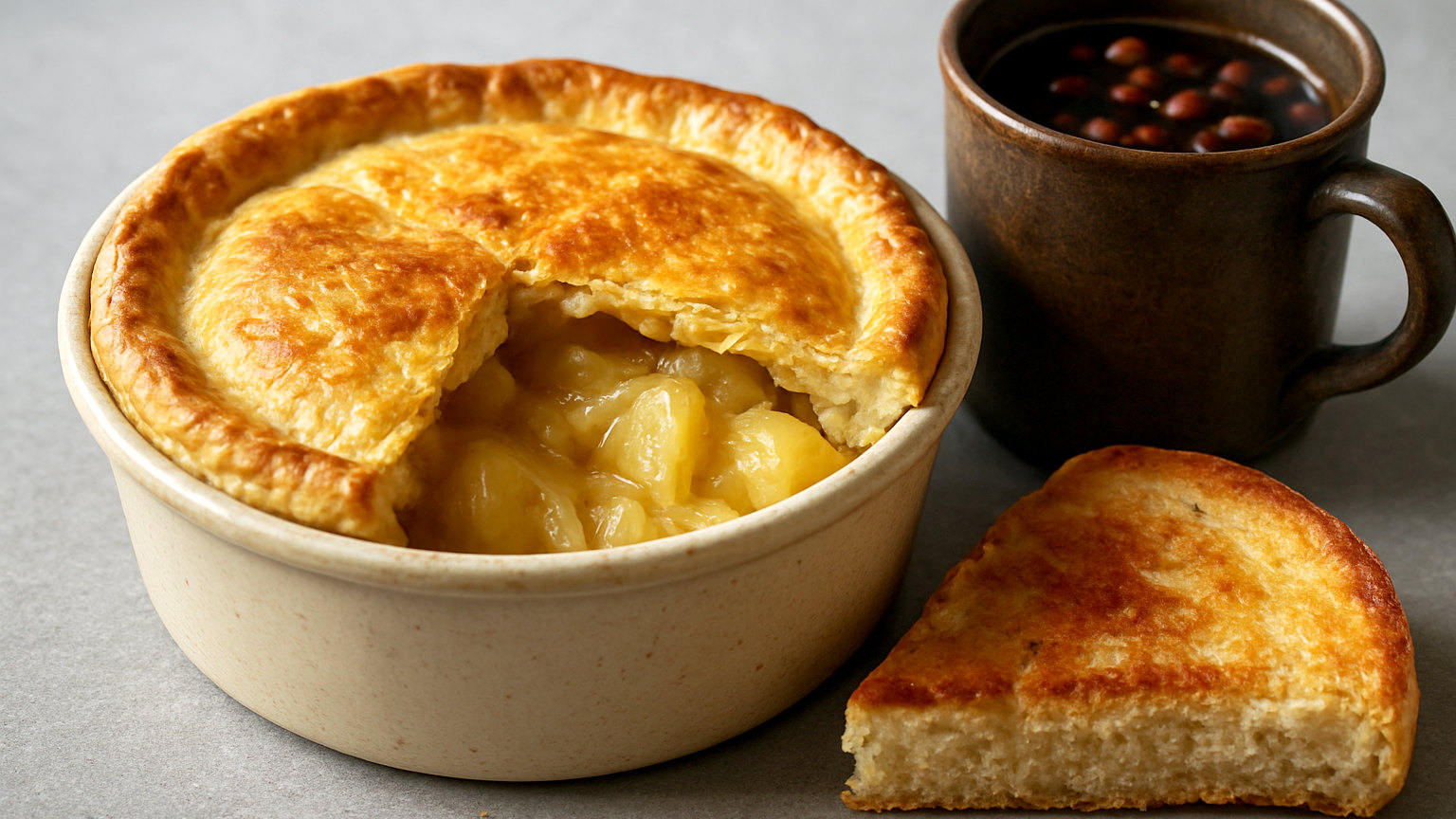
A Lancashire butter pie is potato and onion in a shortcrust case with a great deal of butter and nothing else. It is also called a Friday pie or a Catholic pie, because it was made for households who ate no meat on Fridays. In Preston and Chorley it is still sold in bakeries and eaten with brown sauce.
What do you need for a 20cm pie?
- 400g shortcrust pastry
- 800g floury potatoes, peeled and thickly sliced
- 2 large onions, thinly sliced
- 125g butter
- Salt and a great deal of white pepper
- 1 beaten egg for glazing
- 2 tablespoons milk
How do you make it?
- Boil the potato slices for 8 minutes until just tender, then drain and cool.
- Soften the onions in 50g of the butter for 15 minutes without colouring.
- Combine the potato and onion, season heavily and cool completely.
- Line a 20cm pie dish with two thirds of the pastry.
- Fill with the potato mixture, dotting the remaining butter through it.
- Add the milk, then top with the remaining pastry and seal the edges.
- Cut a steam hole and glaze with egg.
- Bake at 190C fan for 40 to 45 minutes until deep golden.
Season it far more heavily than feels right. The filling is potato, onion and butter and nothing else, so salt and white pepper are doing all the work. An underseasoned butter pie tastes of very little.
Why is there no meat?
Catholic households in Lancashire abstained from meat on Fridays, and this pie was made to fill that gap.
Lancashire had a large Catholic population, which is why the dish is so localised.
How much butter is right?
A great deal, around 125g for a pie this size. It is the name of the dish and the main source of flavour.
Reducing it substantially gives a dry, dull pie.
Why parboil the potatoes?
They will not cook through in the pie in the time the pastry needs. Eight minutes gets them most of the way.
Cool them completely before they go in, or they melt the pastry.
Why white pepper?
It is traditional in this pie and gives an earthier heat than black pepper, which also leaves visible specks in a pale filling.
Be generous with it.
Why add milk to the filling?
A couple of tablespoons keeps the potato from drying out during a long bake and helps it steam inside the pastry.
Any more and the pastry base goes soggy.
How do you stop a soggy base?
Bake on a preheated baking tray, use a metal dish rather than ceramic, and make sure the filling is completely cold.
Should the onions be browned?
No. Soften them slowly without colour, since browning gives a sweetness that changes the character of a very plain pie.
Fifteen minutes on a low heat is right.
What is it served with?
Brown sauce, or with mushy peas and gravy in the local chip shop style.
It is also eaten cold, which is how it travels.
Is it eaten hot or cold?
Both. Hot with gravy as a meal, or cold as a wedge from a bakery, which is how it is most often bought in Lancashire.
Can it be made in individual pies?
Yes, in a bun tin or individual foil dishes, baking for about 30 minutes.
Why is it called a Friday pie?
Because it was eaten on Fridays, when meat was avoided. It is also called a Catholic pie for the same reason.
Both names are still used around Preston and Chorley.
Which potatoes should you use?
Floury varieties such as Maris Piper, which soften and absorb the butter. Waxy potatoes stay firm and separate.
Slice them thickly, about 5mm, so they hold some shape.
How long does it keep?
Two days refrigerated and it reheats at 180C fan for 20 minutes. It freezes raw for three months.
Cool it quickly and refrigerate within two hours, in line with Food Standards Agency guidance.
Worth reading next: Lancashire Hotpot: The Traditional Recipe. There is more in our Regional recipes.


