
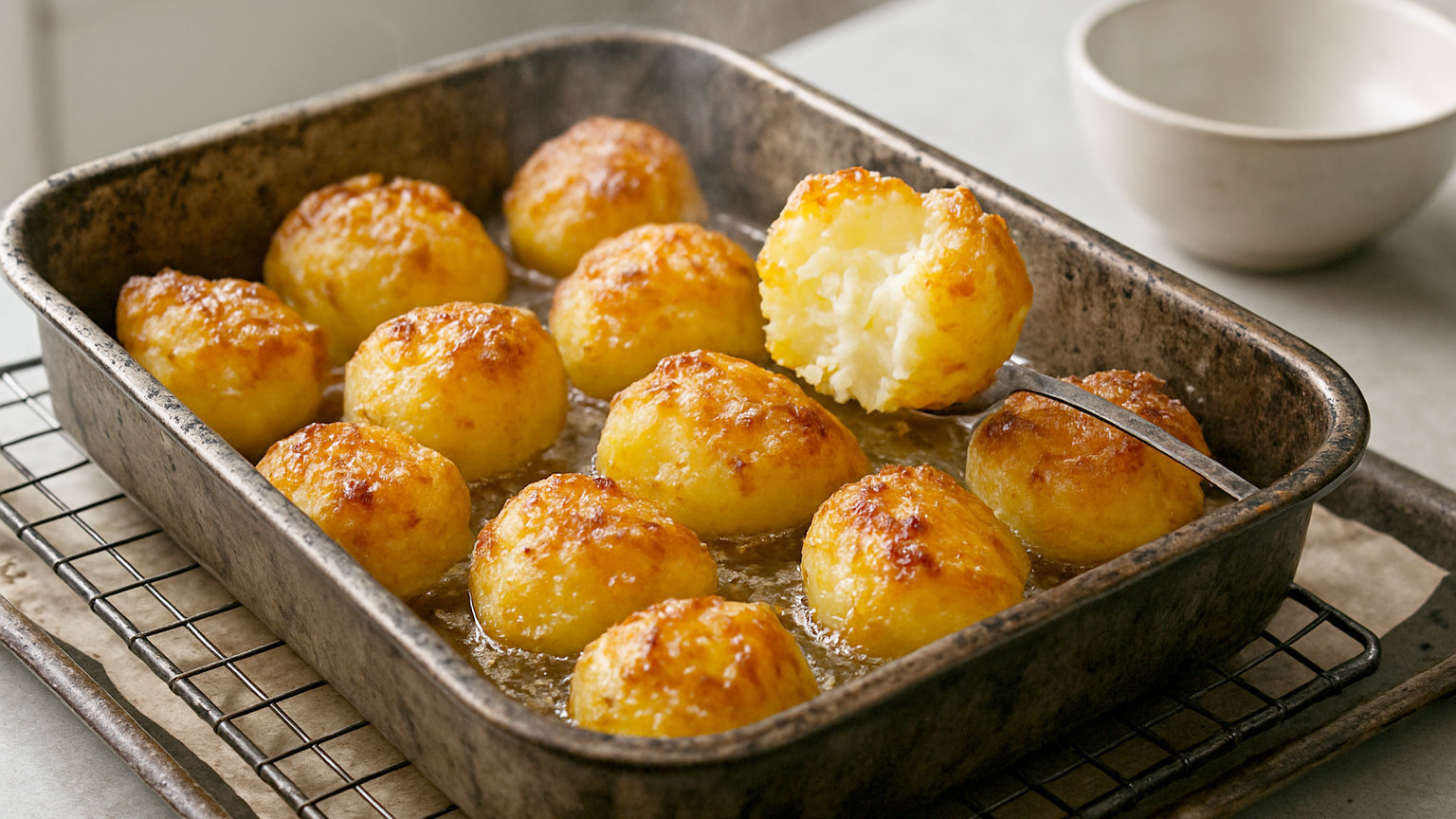
Three things decide whether roast potatoes come out crisp: parboiling them until the outer few millimetres have gone soft, roughing them up hard enough to raise a fluffy surface, and putting them into fat that is already smoking hot. Get those right and almost nothing else matters. Get any one of them wrong and no amount of oven time will rescue them.
Which potatoes
You want a floury variety, because floury potatoes break down at the surface to give you something to crisp. Maris Piper is the standard and is in every supermarket. King Edward is at least as good and arguably better. Desiree works well.
Avoid waxy salad potatoes such as Charlotte or Anya. They hold together beautifully, which is exactly the problem, since a potato that refuses to fluff up will only ever roast to a smooth skin.
What fat
Goose fat and beef dripping give the best flavour and the highest smoke point. Duck fat is excellent. Rendered fat from the joint you are already cooking is free and better than any of them.
Sunflower or vegetable oil works perfectly well and is what most people use. Olive oil burns at roasting temperatures and butter burns sooner still, so keep both for other jobs.
The method
- Heat the oven to 200C fan, 220C conventional, gas mark 7. Put a roasting tin with a generous layer of fat in to heat up at the same time.
- Peel the potatoes and cut them into even pieces, roughly the size of a small egg. Large potatoes into quarters, medium into halves.
- Put them into cold salted water, bring to the boil, then simmer for 8 to 10 minutes until a knife goes into the outside easily but the middle is still firm.
- Drain thoroughly and leave in the colander for a minute or two so the steam escapes and the surface dries.
- Put them back in the empty pan, put the lid on, and shake hard several times. The surfaces should look ragged and slightly mashed.
- Tip them carefully into the hot fat and turn each one so it is coated. They should hiss loudly on contact.
- Roast for 45 to 60 minutes, turning once at about 25 minutes and again 15 minutes later.
The hiss is the test. If the potatoes go into the fat silently, the fat is not hot enough, and they will absorb it and go greasy instead of sealing and crisping. Take them out, get the fat properly hot, and start again.
Where people go wrong
Overcrowding the tin is the most common mistake. Potatoes need space around them or they steam each other. Use two tins rather than piling them in, because a crowded tin of soft potatoes is a worse outcome than washing up twice.
Under-parboiling is next. If the outside is still firm when you drain them, there is nothing to rough up and nothing to crisp. Take them slightly further than feels comfortable.
Being timid with the shaking is the third. You are trying to damage the surface deliberately. A cautious shake achieves nothing.
Getting them to fit round the roast
Potatoes want a hotter oven than most joints. The usual solution is to roast the meat first, take it out to rest, then turn the oven up and give the potatoes their final 20 minutes of high heat while the meat sits.
Since a joint needs 20 to 30 minutes of resting anyway, this works out neatly. Parboil and rough up before the meat comes out, so the potatoes are ready to go straight into the hot fat.
Additions worth making
A tablespoon of semolina or plain flour tossed with the potatoes after roughing up gives an extra layer of crunch. A teaspoon of bicarbonate of soda in the parboiling water breaks the surface down further and produces a very craggy result.
Whole unpeeled garlic cloves and a few sprigs of rosemary or thyme can go in for the last 20 minutes. Any earlier and they burn.
Making them ahead
Parboil, drain, rough up and leave them on a tray in the fridge for up to a day. They roast from cold with no change to the method and possibly a slightly better result, since the surface dries out further.
Fully roasted potatoes can be frozen on a tray, bagged once solid, and reheated from frozen in a hot oven for about 20 minutes. They will not be quite as good as fresh, but they are considerably better than anything from a packet.
See also Which Fat Should You Use for Roast Potatoes?, or browse more Roasts recipes.


