What Do You Serve With a Pie?
Mash, peas and gravy is the answer nine times out of ten. The exceptions are worth knowing, and so is how much gravy to make.
By UK Recipes
15 Aug 2026

Steak and ale, chicken and leek, pork pies - shortcrust, hot water crust and puff, and how to stop a soggy bottom.
Mash, peas and gravy is the answer nine times out of ten. The exceptions are worth knowing, and so is how much gravy to make.
A vegetarian pie needs something to do the job the meat was doing. Usually that means mushrooms, lentils or a strong cheese rather than more vegetables.
Freeze it raw rather than cooked and it comes out far better. Most pies go straight from the freezer into the oven with no defrosting at all.
A 23cm dish feeds six and takes about a kilo of filling. Metal beats ceramic for the base, and depth matters more than width.
For anything with a wet filling, yes. The step people miss is the second stage, after the beans come out, which is what actually dries the base.
A northern chip shop staple made properly at home. The onions must be cooked down first, or the pie floods and the pastry never sets.
The kidney is what makes it, and soaking it in milk first removes the harshness that puts people off. The filling wants three hours and a day in the fridge.
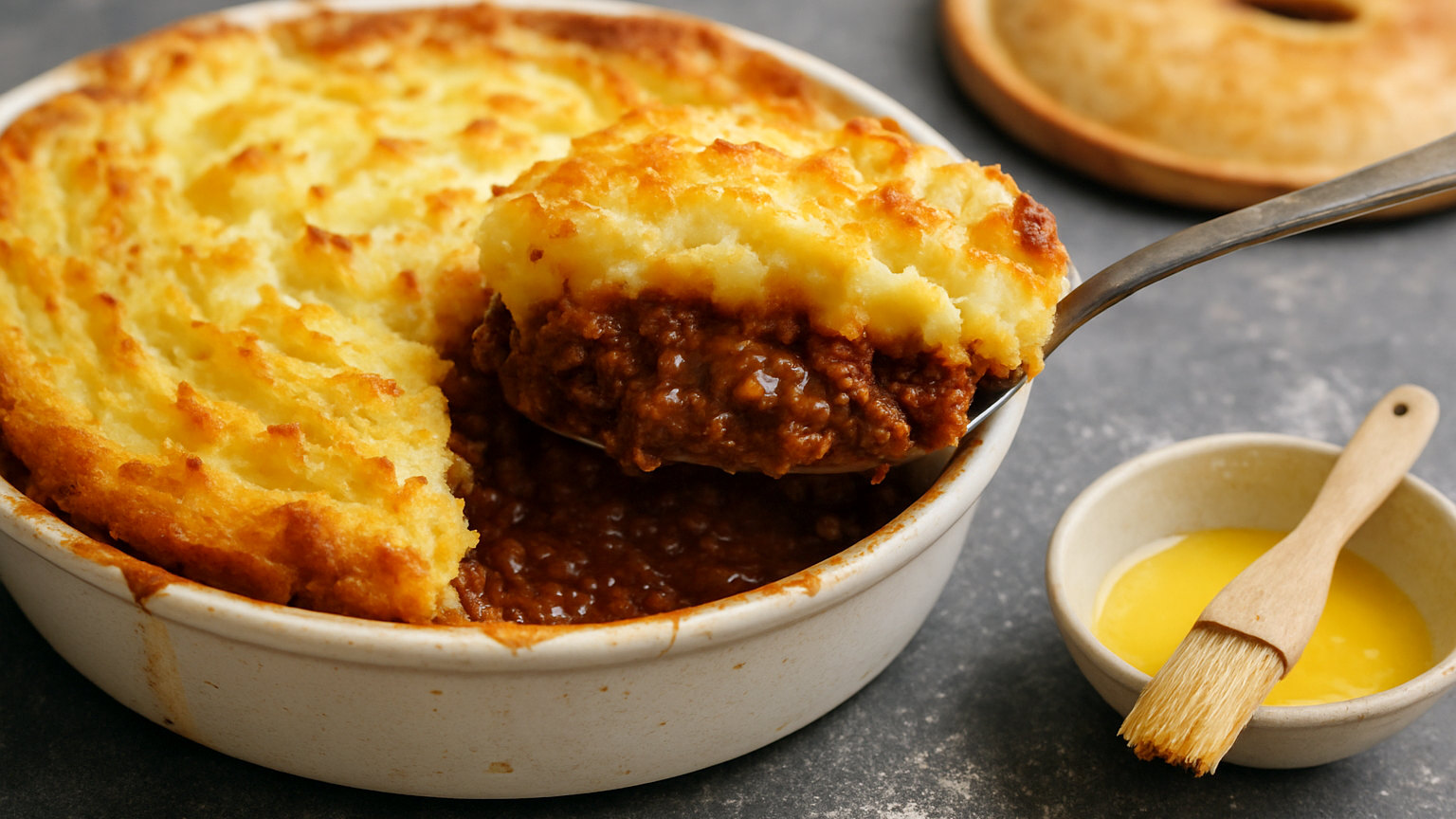
Shepherds pie is lamb and cottage pie is beef. That is the whole distinction, and it is more recent than most people assume.
Poach the fish in the milk that becomes the sauce, and take it out while it is still underdone. It finishes cooking in the oven.
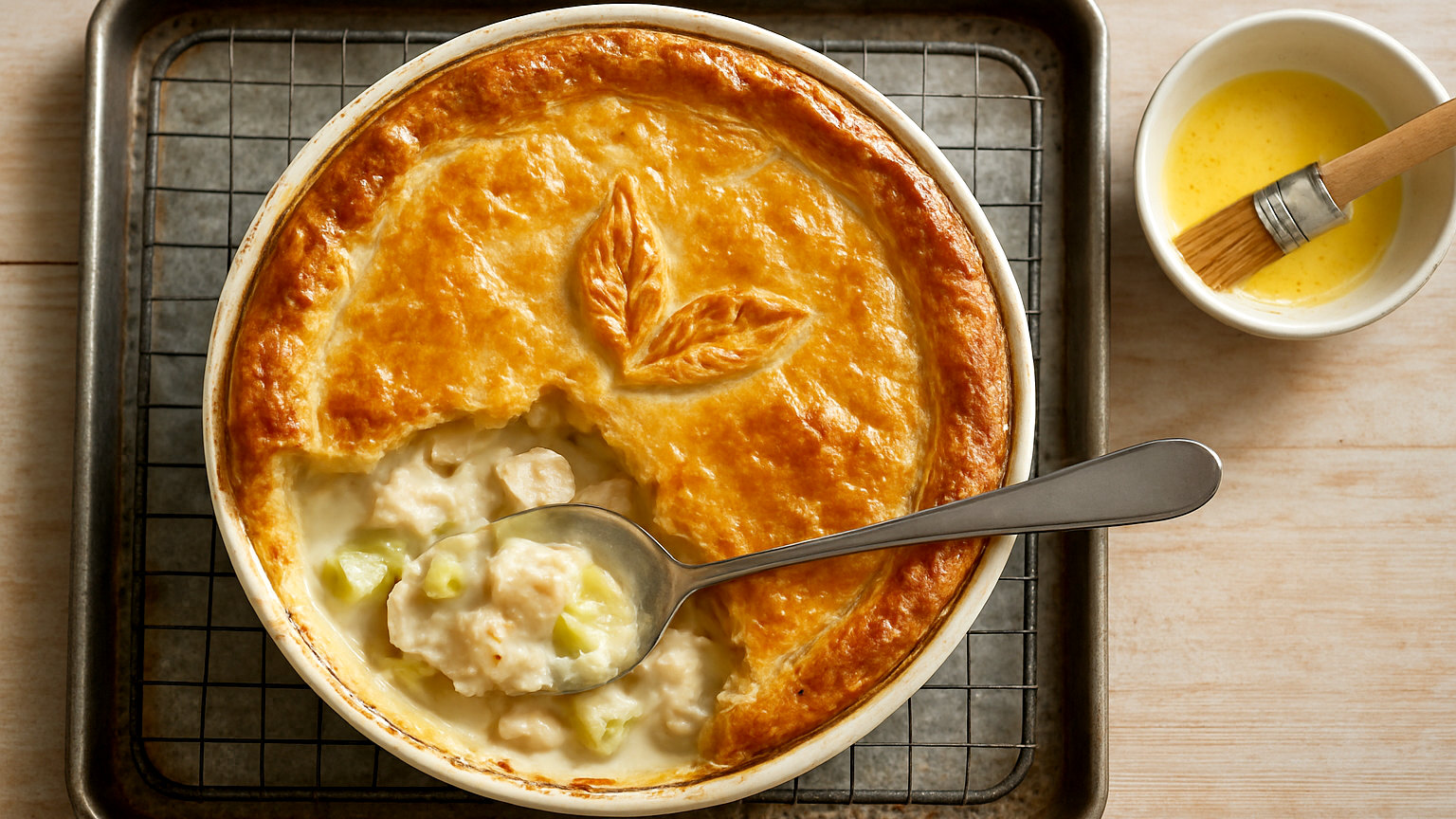
A pie built on a proper white sauce rather than a thin gravy, so it holds together when cut. The filling must be completely cold before the pastry goes on.
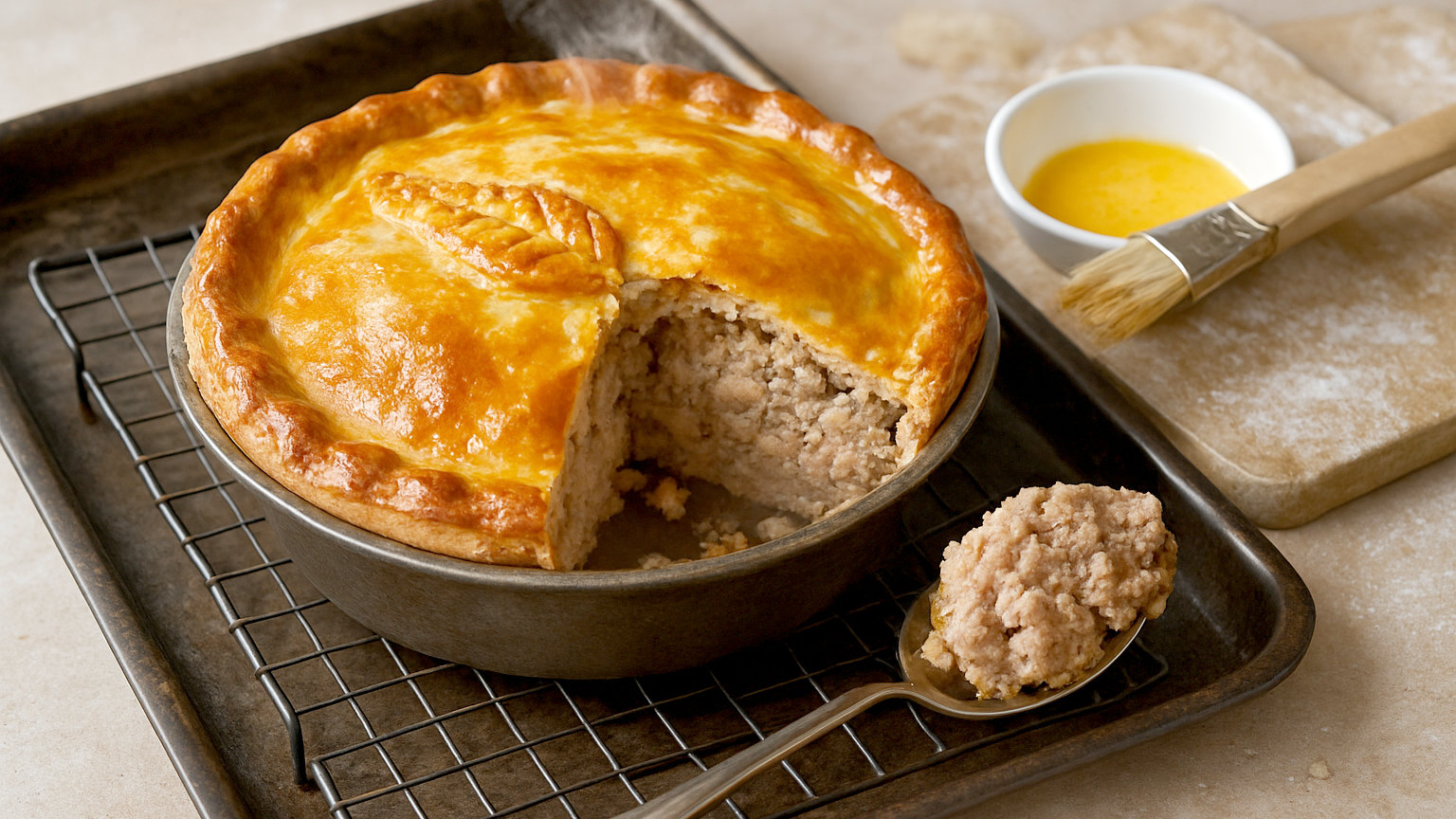
The pastry that stands up on its own. Boiling water and lard make it pliable enough to mould by hand and sturdy enough to hold a pork pie together.
Full puff pastry takes a day. Rough puff takes twenty minutes of work and gives most of the rise, which is more than enough for a pie lid.