
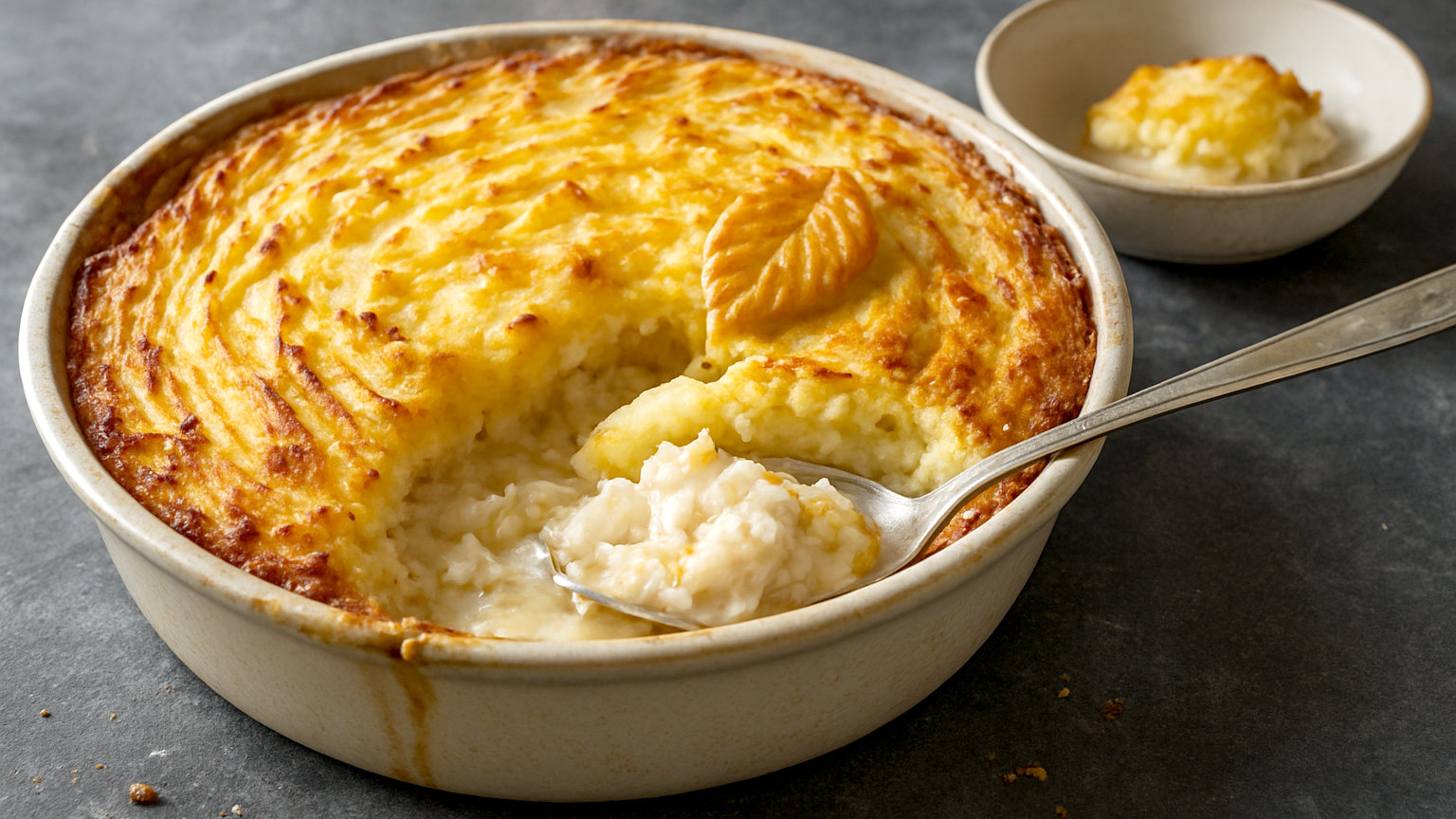
Fish pie is a dish of two failures: watery sauce and overcooked fish. Both come from the same cause, which is fish cooked twice. Poaching it briefly in the milk that will become the sauce solves both at once, since the milk takes on the flavour and the fish comes out underdone, ready to finish in the oven.
What do you need for 6 people?
- 400g white fish such as cod or pollock, skinned
- 300g smoked haddock, undyed, skinned
- 200g raw prawns
- 700ml whole milk
- 1 onion, halved, 2 bay leaves and 6 peppercorns
- 60g butter and 60g plain flour
- 3 tablespoons chopped parsley and 1 tablespoon capers
- 1.2kg Maris Piper potatoes, 100g butter and 100ml milk for the mash
- 75g mature cheddar, grated
How do you make it?
- Put the milk in a wide pan with the onion, bay and peppercorns and bring to just below a simmer.
- Slide in the white fish and haddock and poach for 4 minutes only.
- Lift the fish out onto a plate and strain the milk into a jug.
- Melt the butter, stir in the flour, cook for 2 minutes, then add the strained milk gradually.
- Simmer for 5 minutes until very thick, then stir in the parsley and capers and season.
- Flake the fish into large pieces into a dish, add the raw prawns and pour over the sauce.
- Cool completely, then top with mash and scatter over the cheese.
- Bake at 190C fan for 35 to 40 minutes until bubbling at the edges.
Four minutes of poaching is enough. The fish will still look underdone and that is correct, because it has another forty minutes in the oven ahead of it.
Why does the sauce go watery?
Because fish releases liquid as it cooks, and a sauce made to a normal consistency is thinned by it. Making the sauce thicker than seems reasonable is the answer.
Poaching the fish first also removes some of that liquid into the milk, where it becomes flavour rather than a problem.
Which fish should you use?
A mixture is better than one type. White fish for bulk, smoked haddock for depth, and prawns or salmon for colour and richness.
Choose undyed smoked haddock, since the bright yellow version colours the whole sauce and tastes harsher.
Does the filling need to be cold?
Yes, or the mash sinks into it. Cooling also lets the sauce firm up so the topping can be spread rather than dropped in blobs.
Spread the mash from the edges inwards, which stops it sliding under the surface.
What makes a good mash topping?
Floury potatoes, riced rather than blended, with plenty of butter and only a little milk. A wet mash slides off and mixes into the sauce.
Rough the top up with a fork so there are ridges to catch the heat and crisp.
What else can go in?
Chopped hard boiled eggs are traditional and good. Spinach wilted and squeezed dry, leeks softened in butter, or a little English mustard in the sauce.
Can it be made ahead or frozen?
Assemble it up to a day ahead and refrigerate, then bake for an extra 10 minutes from cold.
It freezes assembled and unbaked for three months. Defrost fully in the fridge before baking, since a frozen centre will not heat through reliably.
Can you use frozen fish?
Yes, and it is often better value and just as good. Defrost it fully in the fridge and pat it very dry, since frozen fish holds extra water.
Do not poach it from frozen, which cooks the outside before the middle has thawed.
What should you serve with it?
Peas or buttered greens and nothing else. It is a rich dish that already contains its own potato, so a second starch is unnecessary.
How do you know it is ready?
The sauce should be bubbling up around the edges and the top browned. It must be piping hot throughout, in line with Food Standards Agency guidance.
For something along the same lines, see Steak and Ale Pie: A Proper Recipe With Real Pastry, or browse all our Mains recipes.


