
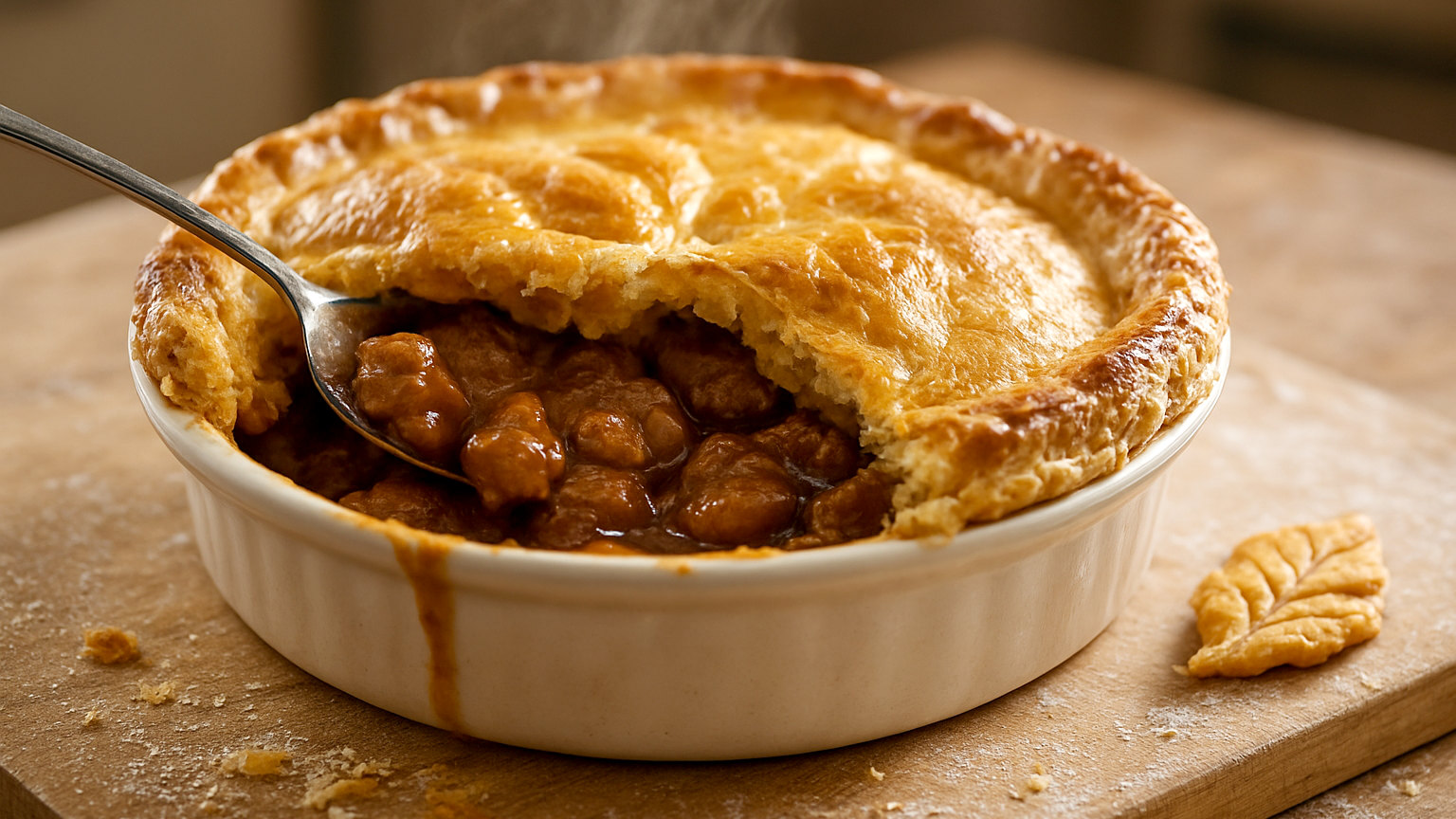
Pies freeze better than almost any other cooked dish, which makes them ideal for batch cooking. The important decision is whether to freeze them raw or baked, and for most pies raw is clearly better. Pastry that has never been baked will crisp properly from frozen, while pastry baked twice is noticeably tougher.
Should you freeze it raw or cooked?
Raw, assembled and unbaked, for the best result. The pastry goes into the oven fresh, so it rises and crisps exactly as it would have done.
Baked pies do freeze and reheat acceptably, and are the right choice if you have leftovers rather than a plan.
How do you freeze an unbaked pie?
- Make the filling and cool it completely.
- Assemble the pie in a freezer proof dish, ideally metal or foil.
- Do not glaze it with egg yet.
- Open freeze uncovered for 2 hours until firm.
- Wrap tightly in two layers of cling film or foil.
- Label with the contents and the date.
The filling must be completely cold before assembly. Warm filling melts the pastry fat, and freezing does not undo that, so the pie will be greasy underneath however it is baked.
How long does it keep?
Three months for both raw and cooked pies. Beyond that they remain safe but the pastry dries and picks up freezer flavours.
Meat fillings and pastry both hold up well over that period.
Do you defrost before baking?
For most pies, no. Bake straight from frozen at about 10C lower than usual and add roughly half as long again to the cooking time.
A pie that would take 35 minutes fresh takes around 55 from frozen at 190C fan. Cover the top with foil if it browns before the middle is hot.
When should you defrost first?
For fish pie and anything with a mash topping and a dense filling, defrost fully in the fridge overnight. These are thick and heat unevenly from frozen.
Anything containing previously frozen raw meat should also be defrosted and cooked thoroughly rather than baked from frozen.
How do you know it is done?
The filling must be piping hot throughout, which means bubbling at the edges and steam coming from the hole. A probe in the centre should read at least 75C.
Golden pastry on its own is not a reliable indicator with a frozen pie, since the outside browns long before the middle heats.
Should you glaze before or after freezing?
After. Egg wash applied before freezing goes patchy and can crack as the pastry contracts, so brush it on just before the pie goes into the oven.
It also gives you a chance to add a steam hole if the pastry has shifted during freezing.
Which fillings do not freeze well?
Anything with a high proportion of cream or egg custard can split. Potato in a filling goes slightly grainy, though a mash topping is fine.
Raw pastry containing baking powder, such as some suet crusts, loses some of its lift.
Can you freeze pastry separately?
Yes, and it is often more useful. Shortcrust and puff both freeze for three months as a block, as rolled sheets, or already lined into a tin.
A lined tin can be blind baked straight from the freezer with an extra 5 minutes.
What should you freeze it in?
Foil dishes are the practical choice, since they go from freezer to oven and you are not left without your pie dish for three months.
They are also reusable. Wash and keep them rather than throwing them away after one pie.
Do individual pies freeze better?
Considerably. They heat through evenly from frozen in about 30 minutes and you can take out one or six as needed.
Can you refreeze a cooked pie?
No. A pie frozen raw, baked and served should not go back into the freezer, and leftovers from it should be refrigerated and eaten within two days.
Cool leftovers quickly, refrigerate within two hours and reheat once only until piping hot, in line with Food Standards Agency guidance.
Worth reading next: Steak and Kidney Pie. There is more in our Mains recipes.


