
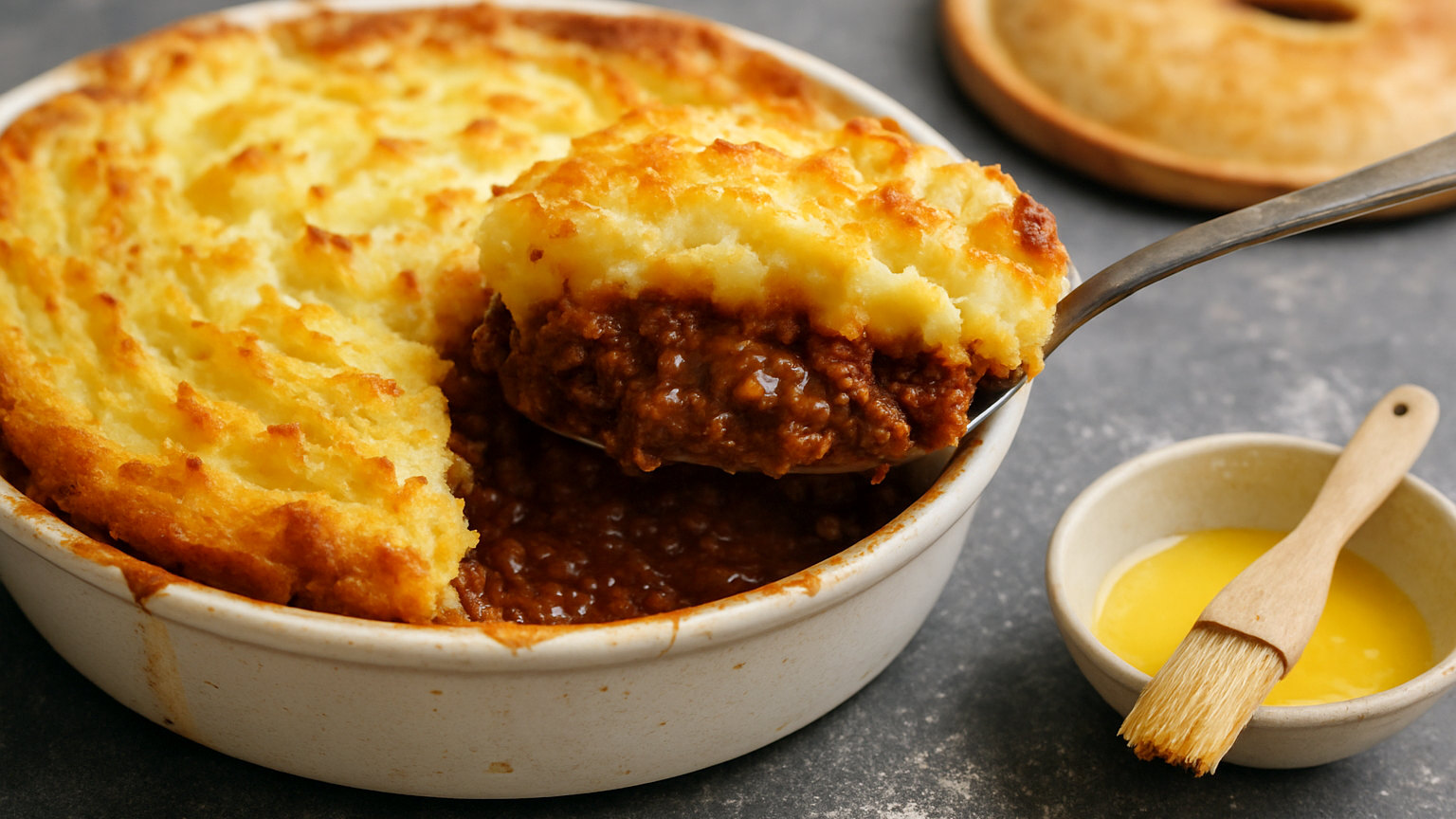
The difference between cottage pie and shepherds pie is simple and frequently got wrong on menus. Shepherds pie is made with lamb, because shepherds keep sheep. Cottage pie is made with beef. Everything else about the two dishes is essentially identical, and the distinction is younger than the dishes themselves.
Which came first?
Cottage pie, by some margin. The name appears in the late eighteenth century, when the potato had become cheap enough to be a staple in labourers cottages.
It originally described any leftover meat under a potato crust rather than beef specifically.
When did shepherds pie appear?
The term is recorded from the 1850s and did not settle into meaning lamb specifically until well into the twentieth century.
For most of their history the names were used interchangeably. The neat rule everybody now quotes is a relatively modern tidying up, which is why older cookbooks are inconsistent.
Does the method differ?
Barely. Both are minced meat cooked with onion, carrot and a savoury gravy, topped with mashed potato and baked until browned.
The seasoning tends to differ by habit, with thyme and Worcestershire sauce in the beef version and rosemary in the lamb.
Was it originally made with leftovers?
Yes, and that is the point of the dish. Cooked meat from a Sunday roast, minced or chopped small, was the original filling rather than raw mince.
Made that way it needs less cooking, since the meat is already tender and only the gravy has to thicken.
Which is better with leftovers?
Both work, and lamb is arguably better because the flavour is strong enough to carry through a second cooking. Leftover roast lamb makes an excellent shepherds pie.
Use any leftover gravy in place of some of the stock, which is already seasoned and thickened.
What about other versions?
Fisherman pie is fish, cumberland pie has a breadcrumb and cheese topping, and a version made with lentils is usually called a shepherdless pie or simply a vegetarian shepherds pie.
Duchess pie describes one where the mash is piped rather than spread.
Is it really a pie?
Not by the definition that requires pastry, which is why some people object to the name. British usage has always been looser than that.
The argument comes up regularly and has never troubled anyone eating one.
What makes a good topping?
Floury potatoes, riced rather than blended, with plenty of butter and not much milk. A wet mash sinks into the filling.
Rough the surface with a fork so there are edges to brown, and add grated cheese if you want a crust.
What goes with either version?
Peas, buttered cabbage or green beans, and a spoonful of pickled red cabbage on the side. Both pies already contain their own potato.
Baked beans alongside is a common and entirely legitimate British habit, particularly with children at the table.
Does the filling need to be cold?
It helps considerably. Cold filling supports the mash rather than letting it sink, and it also lets you assemble the pie a day in advance.
Should the mince be browned first?
Always, and in batches so the pan stays hot. Mince tipped straight into a pan with onions steams grey and the finished pie tastes flat.
Drain off excess fat after browning, particularly with lamb, which releases a great deal of it.
How long should the filling cook?
At least 45 minutes and ideally an hour and a half. Mince simmered for twenty minutes is edible; simmered for ninety it becomes something else entirely.
Add a splash of Worcestershire sauce, a spoonful of tomato puree and a bay leaf, and let it reduce until thick.
Which should you make?
Whichever meat you have. If you are buying mince specifically, beef is cheaper and lamb has more flavour, and both are improved by a long slow simmer rather than a quick one.
Cool leftovers quickly, refrigerate within two hours and use within two days, following Food Standards Agency guidance.
Worth reading next: Fish Pie With a Proper Mash Topping. There is more in our Mains recipes.


