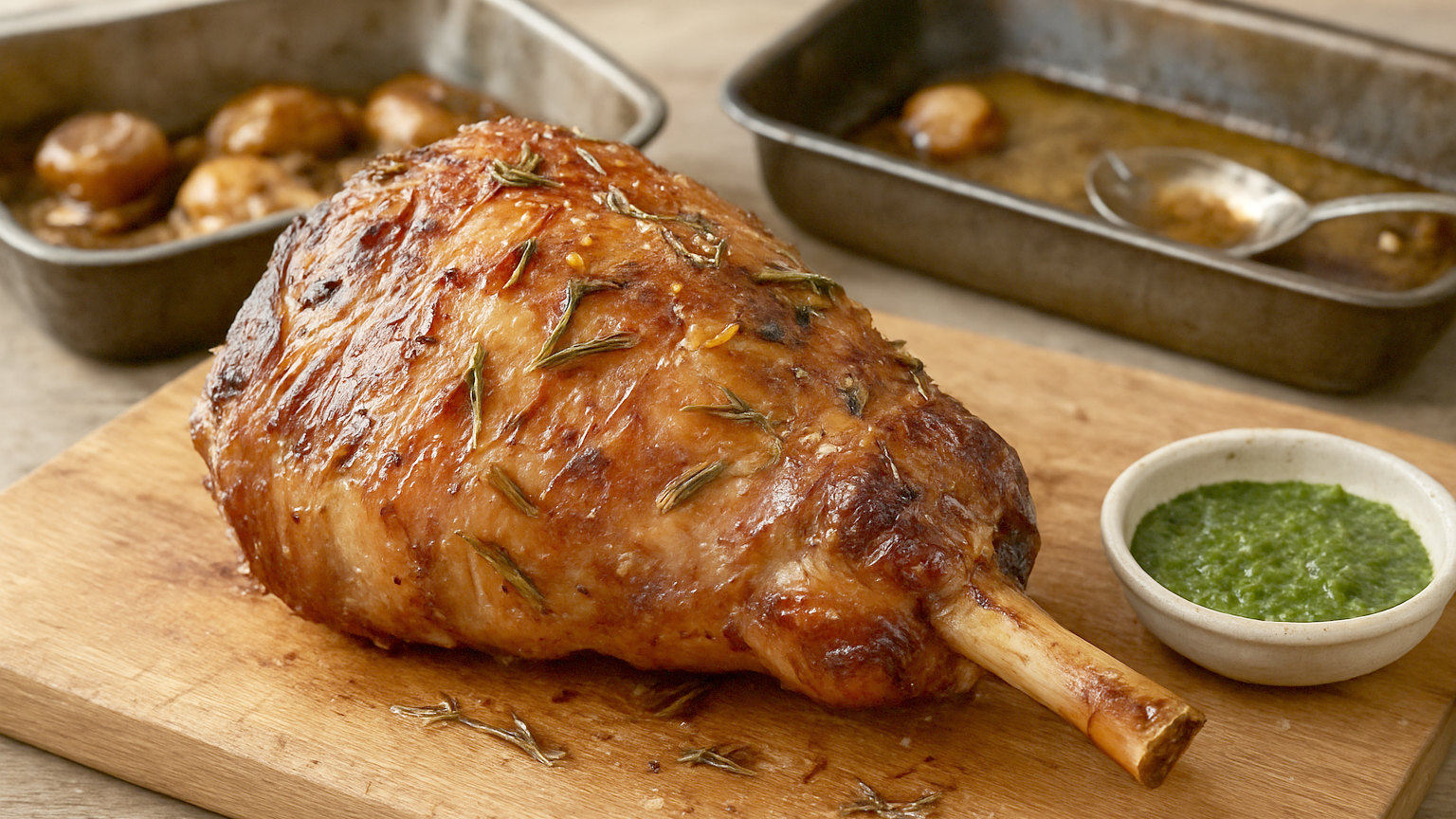
Easter lunch is not difficult cooking. It is a scheduling problem with about six components, one oven and a fixed time at which everybody expects to sit down. The way through it is the same as at Christmas: work backwards from the moment you want to serve, and understand that the resting period is not dead time but the window in which everything else gets finished.
What should you buy?
Allow 350g per person on the bone. A 2.5kg leg feeds six to eight, and a 2.5kg shoulder feeds the same number more cheaply if you have the afternoon for a slow roast.
Order it from a butcher a week ahead if you can. Easter is the busiest lamb weekend of the year and the good joints go early.
What can you do the day before?
- Salt the joint and leave it uncovered on a rack in the fridge
- Make the mint sauce and any other sauces
- Peel the potatoes and leave them in cold water
- Trim the greens and prepare the carrots
- Make the gravy base from stock and browned onions
Everything done on Saturday is something you are not doing while eight people ask when lunch is.
What is the plan for eating at 2pm?
This assumes a 2.5kg leg cooked pink in one oven.
- 10.30am: take the lamb out of the fridge
- 11.45am: oven on to 220C fan, stud the lamb with garlic and rosemary
- 12.00pm: lamb in for 20 minutes at high heat
- 12.20pm: oven down to 180C fan
- 12.40pm: parboil the roast potatoes, drain, rough up, set aside
- 1.15pm: lamb out at 56C, cover loosely and rest
- 1.20pm: oven up to 220C fan, potatoes into hot fat
- 1.30pm: make the gravy from the tin
- 1.45pm: greens on the hob, warm the plates
- 1.50pm: carve
- 2.00pm: serve
The thirty minute rest is what makes the plan work. Without it there is no window in which one oven can give the potatoes the high heat they need, which is why lamb and roast potatoes so often arrive at different temperatures.
What changes for a slow roast shoulder?
The whole day gets easier. The shoulder goes in at about 8.30am, needs no attention for five hours, and the oven is at a low temperature throughout, so potatoes can cook underneath it.
It also removes the timing risk entirely, since an extra half hour does no harm to a shoulder.
How do you manage oven space?
Count what genuinely needs the oven and move everything else to the hob. Carrots, greens and peas are all hob jobs. Sauces reheat in a pan.
An air fryer takes real pressure off if you have one and is well suited to the parsnips or a second tray of potatoes.
What should be on the table?
Mint sauce, redcurrant jelly and plenty of gravy. Allow 150ml of gravy per person and make more than that, since it always runs out first.
What else belongs on an Easter table?
New potatoes if they have arrived, purple sprouting broccoli while it is still in season, and a dish of peas. Simnel cake is the traditional pudding, though a rhubarb crumble suits the time of year just as well.
Hot cross buns are usually finished by Sunday, but any left over make an excellent bread and butter pudding.
How do you cope with a small oven?
Cook the potatoes as boulangere underneath the lamb rather than as roasties, which removes the need for a second high temperature slot entirely.
Failing that, roast the potatoes in the morning until nearly done, then finish them for fifteen minutes while the lamb rests.
What about the leftovers?
Strip the bone the same evening rather than leaving the joint out overnight, and use the bone for stock or a Scotch broth.
Cool the meat quickly, refrigerate within two hours and use within three days, following Food Standards Agency guidance. Cooked lamb freezes for three months and reheats once only, until piping hot throughout.
For something along the same lines, see Roast Lamb for Two: Cooking a Small Joint, or browse all our Roasts recipes.