
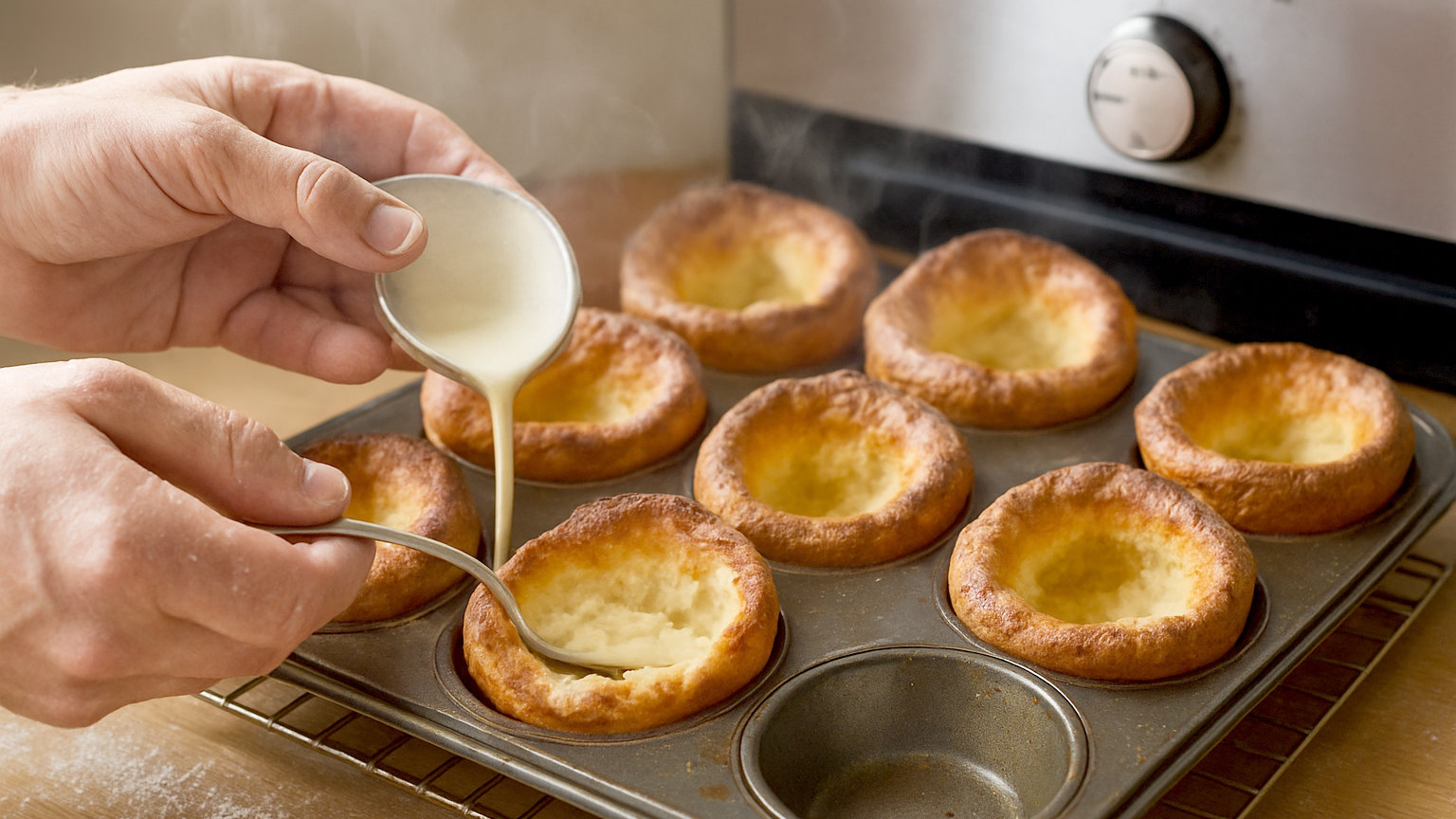
Yorkshire puddings need a hotter oven than almost anything else on a Sunday, and that single requirement creates most of the timing problems people have with a roast. Too cool and they will cook through without ever rising properly. The good news is that the window they need is short, and it fits neatly into the period when the meat is resting.
What temperature do they need?
220C fan, 240C conventional, gas mark 9. This is close to the top of what a domestic oven will do, which is the point.
At 200C fan they will rise noticeably less. At 180C fan they will barely rise at all and will be dense and pale.
How long do they take?
Standard puddings in a 12 hole bun tin take 20 to 25 minutes. Deep muffin tins take 25. Giant Yorkshires take 30 to 35.
Judge by colour rather than the clock. They should be deep golden on the sides as well as the tops, since pale sides mean the walls have not set and they will sag as they cool.
When can you open the door?
Not for the first 20 minutes. Opening the oven drops the temperature by 30C or more in seconds, and a risen but unset pudding collapses immediately.
Use the oven light and look through the glass. After 20 minutes the structure has firmed enough to survive a check.
Which shelf should they go on?
The top shelf, where a fan oven is usually hottest and where there is most direct heat in a conventional one.
Avoid putting anything on the shelf above, which blocks airflow and shields the puddings from the heat they need.
Is your oven actually at temperature?
Often not. Domestic ovens drift out of calibration and many run 15C to 20C below the dial, which is enough to ruin Yorkshire puddings while leaving everything else acceptable.
An oven thermometer costs a few pounds and answers the question permanently. If yours runs cool, set it higher.
How long should the fat preheat?
Ten minutes in an oven already at temperature, not while it is still climbing. The fat should be visibly smoking when the batter goes in.
This is a separate step from preheating the oven and it is the one most often shortened.
How does this fit around the roast?
Use the resting period. Take the joint out, turn the oven up to 220C fan, put the tin of fat in to heat, and cook the puddings while the meat sits.
They will share that window with the roast potatoes, which want the same temperature, so the two jobs go together neatly.
Does the tin position matter?
Centre the tin rather than pushing it to the back, since the back of most ovens runs hotter and the rear puddings will colour first.
If yours cooks unevenly, turn the tin once at the 20 minute mark, by which point the puddings have set enough to survive the door opening.
Can they share the oven with potatoes?
Yes, with the puddings on the top shelf and the potatoes below. Do not put the potato tin above them.
Both want the same heat, and the potatoes tolerate the door being opened while the puddings do not, so put the potatoes in first.
Do conventional ovens need longer?
Roughly the same time at the higher temperature. A fan oven circulates air and cooks slightly faster, which is why the fan figure is 20C lower.
Gas ovens have hot spots, so turn the tin once at the 20 minute mark if yours cooks unevenly.
What if the oven will not go hot enough?
Some older ovens top out around 200C fan. Compensate by preheating the fat for longer, using a heavier tin, and accepting a slightly shorter rise.
An air fryer often runs hotter than an old oven and can be a better tool in that situation, at least for a small batch.
What if they are done early?
Leave them in the switched off oven with the door slightly ajar for a few minutes, which keeps them crisp.
Never cover them with foil. Trapped steam softens the walls within minutes and they cannot be brought back.
Worth reading next: The Yorkshire Pudding Ratio Explained. There is more in our Roasts recipes.


