
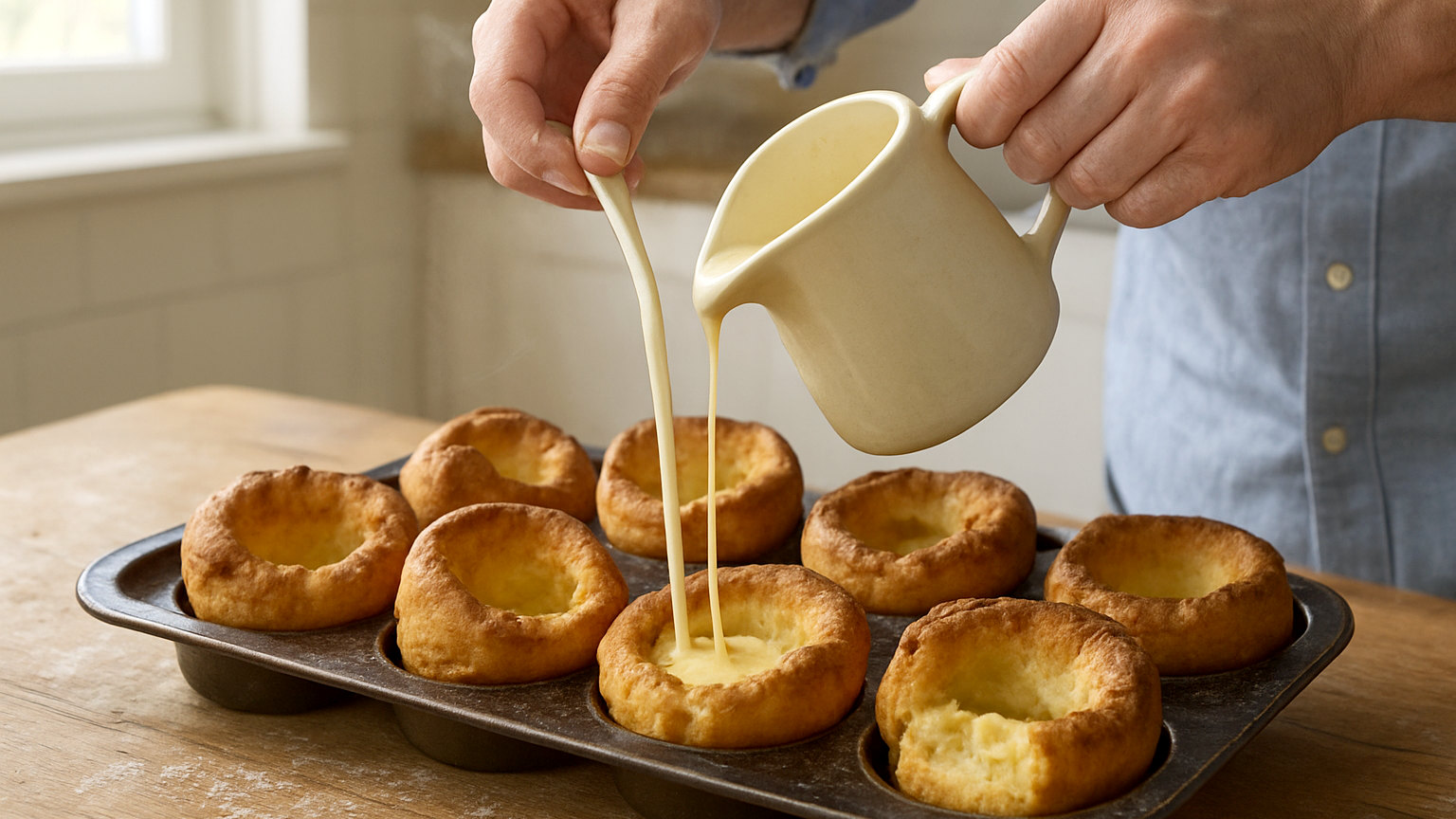
Gluten free Yorkshire puddings are one of the more successful gluten free conversions, for a reason worth understanding. The rise comes from steam rather than from gluten, so the structural job the flour is doing is smaller than in bread or cake. Get the flour blend right and the difference from the standard version is genuinely small.
What do you need for 12 puddings?
- 5 large eggs, one more than the standard recipe
- 100g gluten free plain flour blend
- 40g cornflour
- 200ml whole milk
- Half a teaspoon of xanthan gum, if the blend does not contain it
- Half a teaspoon of salt
- Beef dripping or sunflower oil for the tin
How do you make them?
- Whisk the eggs and salt until frothy.
- Whisk in the flour, cornflour and xanthan gum until completely smooth.
- Add the milk gradually to the consistency of single cream.
- Rest for at least an hour, which matters more here than with wheat flour.
- Heat the oven to 220C fan, gas mark 9, with a teaspoon of fat in each hole for 10 minutes until smoking.
- Fill each hole two thirds full and return to the oven immediately.
- Bake for 22 to 25 minutes without opening the door for the first 20.
Bake them slightly longer than wheat puddings. Gluten free structures set later and a pudding pulled at 20 minutes will often sag as it cools.
Why the extra egg?
Egg provides protein that sets into a structure, which partly replaces the job gluten would have done. The extra egg gives the walls enough strength to hold their shape.
It also makes the puddings slightly richer and a little more custardy in the middle, which most people consider an improvement.
Why add cornflour?
It lightens the blend and produces a crisper, more delicate wall. Gluten free plain flour blends on their own can give a slightly heavy, sandy result.
Roughly a quarter of the total flour weight as cornflour is a good starting point.
Is xanthan gum necessary?
It helps hold the structure together, but many supermarket gluten free plain flour blends already contain it. Check the ingredients before adding more.
Doubling up gives a slightly gummy texture, so err on the side of leaving it out if you are unsure.
Does the batter need longer resting?
Yes. Gluten free flours absorb liquid more slowly, so an hour is the minimum and overnight is noticeably better.
An unrested gluten free batter often produces gritty puddings, which is the most common complaint about them.
Which flour blends work best?
Blends based on rice flour with potato and tapioca starch perform well. Anything with a high proportion of chickpea or buckwheat flour will taste strongly of itself.
Plain cornflour on its own also works, giving a very light, crisp, almost glassy pudding with a hollow middle.
Can they be made dairy free too?
Yes. Oat milk is the best substitute for browning and body, though oats are not suitable for everyone with coeliac disease unless certified gluten free.
Soya milk works and is reliably gluten free. Use oil rather than dripping in the tin if the meal is also dairy free.
Why do gluten free ones collapse?
Almost always underbaking. Without gluten the walls set later, so a pudding that looks golden on top may still be soft at the sides.
Give them three or four minutes longer than you would a wheat batch and look for colour right down the sides before taking them out.
Can the same batter make toad in the hole?
Yes, and it works well since the sausages give the batter something to climb. Use gluten free sausages and check the stock in any onion gravy.
Do they keep as well?
They stale slightly faster and are best eaten on the day, though they freeze for a month and reheat from frozen at 200C fan in 7 minutes.
Cool quickly, refrigerate within two hours and reheat once only until piping hot, following Food Standards Agency guidance.
Next, try Air Fryer Yorkshire Puddings, or see the rest of our Roasts recipes.


