
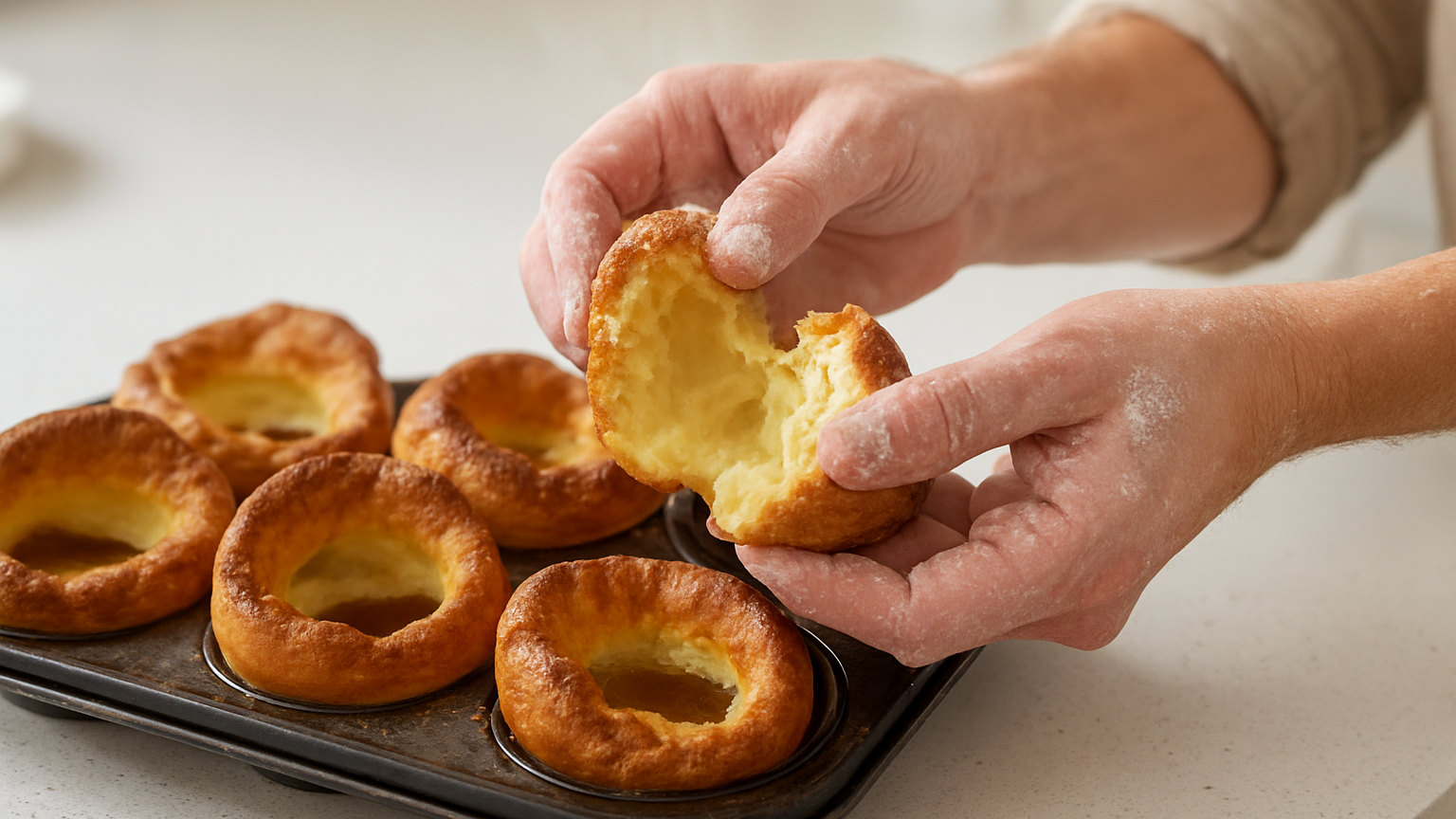
Yorkshire puddings exist to carry gravy. Everything else about how they are served follows from that, including the older tradition of eating them before the meat rather than alongside it. They are traditionally paired with roast beef, though almost nobody now restricts them to it, and the arguments about that are cheerful rather than serious.
How much gravy do they need?
Allow 150ml per person for a roast dinner and make more than that. Gravy is the item most likely to run out at a Sunday table, and Yorkshire puddings absorb a good deal of it.
A pudding served without gravy is dry and slightly pointless, which is worth remembering when planning the meal.
Which roast do they suit?
Beef by tradition, and the pairing is genuinely good because beef gravy is rich enough to stand up to them.
They work with any roast in practice. Most households now serve them with chicken, lamb and pork without hesitation, and the only real objection is a traditional one rather than a culinary one.
Can they be a starter?
That is the original way. In Yorkshire they were served first with gravy, to take the edge off appetites before an expensive joint appeared.
It is worth doing occasionally, particularly if the meat is going to be tight. One large pudding each, filled with onion gravy.
What about onion gravy?
It is arguably the better partner. Slice three onions, cook them slowly in butter for 25 minutes until deeply brown, add flour, stock and a splash of Worcestershire sauce.
It suits puddings served on their own or with sausages far better than a thin beef gravy does.
Can they be a main course?
Giant Yorkshires filled with stew, sausages and mash, or a roast dinner in miniature are a pub staple and work well at home.
Fill them at the table rather than in the kitchen, since the walls soften within a few minutes of gravy going in.
How many per person?
Two is the accepted minimum in most households and three is not unusual. A four egg batch of twelve serves four to six.
They are cheap to make, so err upwards. Any spares freeze for a month.
Do they work with a vegetarian roast?
Yes, provided the fat in the tin is oil rather than dripping. A nut roast or a mushroom wellington with a rich vegetarian gravy suits them well.
Check the gravy too, since many granules and stocks contain beef extract.
Should they go on the plate or beside it?
On the plate, and ideally somewhere the gravy will reach. Some households serve them on a separate side plate to keep them crisp until the last moment.
Either is fine. What matters is that they are hot, since a cold Yorkshire is a poor thing.
Is there a sweet version?
There is, and it is genuinely traditional in parts of Yorkshire. The same puddings served with golden syrup, jam or sugar and lemon as a pudding course.
It sounds odd to anyone who has only met them savoury and it works better than expected, particularly with any left over from the roast.
Do they suit a stew rather than a roast?
Very well, and it is one of the better midweek uses. A beef and ale stew or a sausage casserole served over or inside puddings turns a modest amount of meat into a full meal.
The gravy needs to be thick for this, since a thin sauce soaks straight through the base within a minute or two.
Should the gravy go in the well or over the top?
In the well if the pudding is being eaten on its own, and over the top if it is part of a full plate. Either way it should go on at the table rather than in the kitchen.
What goes alongside on the plate?
Everything you would normally serve: roast potatoes, a green vegetable, a root vegetable and whatever sauce belongs to the meat.
The puddings are an addition rather than a substitute for a starch, though a plate with both roast potatoes and Yorkshires is a large one by any standard.
See also What to Do With Leftover Yorkshire Puddings, or browse more Roasts recipes.


