
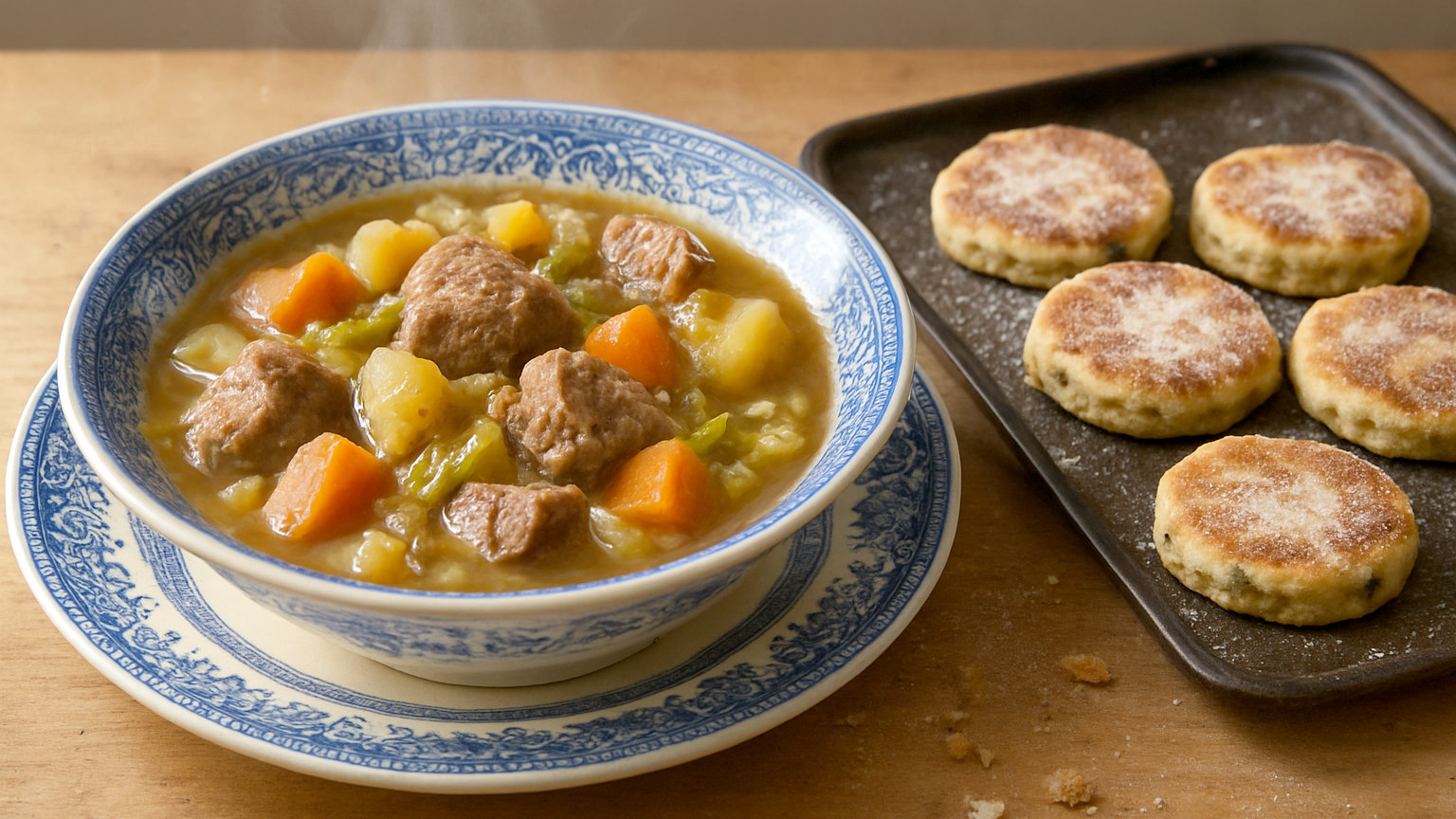
Welsh lamb holds protected status, which means meat sold under the name must come from sheep born and reared in Wales. The reason it is distinctive comes down to the ground the animals graze: thin upland pasture and, on the coast, salt marsh. Both produce leaner, more strongly flavoured meat than lowland lamb.
What does protected status mean?
Welsh Lamb holds a Protected Geographical Indication, so the animals must be born, reared and slaughtered in Wales to specified standards.
Lamb reared elsewhere cannot be sold under the name however it was raised.
What is salt marsh lamb?
Sheep grazed on tidal marshes eat samphire, sea lavender and salt tolerant grasses. The result is meat with a subtly saline, herbal character that needs very little seasoning.
The Gower and the Dee estuary are the main Welsh areas. It is seasonal, from about June to October.
What is mountain lamb?
Sheep from the Welsh uplands, typically smaller breeds grazing sparse ground. The meat is leaner and more strongly flavoured than lowland lamb.
Welsh Mountain is the main breed and the carcasses are noticeably smaller.
When is the season?
New season Welsh lamb appears from around May, with the main season from summer through to autumn.
Spring lamb sold earlier in the year is usually reared indoors or imported.
What is the difference between lamb, hogget and mutton?
Lamb is under a year old, hogget is between one and two years, and mutton is over two.
Older meat has considerably more flavour and needs longer, slower cooking. Hogget is worth seeking out.
Which cuts are best for roasting?
Leg and rack for quick roasting, shoulder for slow. A whole leg of Welsh mountain lamb is smaller than you might expect, often around 1.8kg.
Adjust roasting times for the smaller size.
Should lamb be served pink?
Leg and rack are usually served pink, at about 63C. Shoulder, neck and shank are cooked well past that until the connective tissue breaks down.
The two groups of cuts want opposite treatment.
Which cuts suit slow cooking?
Neck, shoulder, shank and breast. These are the cuts that go into cawl and they reward two or three hours.
They are also considerably cheaper than the roasting joints.
What is the difference from New Zealand lamb?
Seasons are opposite, so New Zealand lamb fills the winter and early spring gap when British lamb is out of season.
British lamb from summer to autumn is the one to buy when it is available.
Does it need much seasoning?
Less than usual with salt marsh lamb, which carries its own salinity. Taste before adding salt at the end.
Rosemary, garlic and anchovy all suit it.
How many sheep are there in Wales?
Sheep considerably outnumber people, and hill farming shaped both the landscape and the food. Lamb is the meat Welsh cooking is built around.
Much of the upland is unsuitable for anything else.
What should you look for when buying?
Firm, pale pink flesh with creamy white fat rather than yellow, and a good covering of fat on roasting joints.
The PGI mark confirms the origin.
How is it eaten in Wales?
In cawl above all, roasted for Sunday, and increasingly as slow cooked shoulder. Laverbread sauce is a traditional Welsh accompaniment.
Why does grazing affect flavour?
Compounds from the plants sheep eat are stored in the fat, and it is the fat that carries most of the flavour in lamb.
Herb rich upland and marsh grazing therefore shows up directly in the meat, in the same way it does with wine and terroir.
Is Welsh lamb leaner?
Generally yes, since hill sheep walk a great deal on sparse ground. Leaner meat dries more readily, so watch roasting times carefully.
Slow cooked cuts are more forgiving.
How should it be stored?
Refrigerated on the bottom shelf and used within three days, or frozen for six months.
Cook lamb to at least 63C for pink or 70C for well done, and cool leftovers quickly, in line with Food Standards Agency guidance.
If that was useful, Welsh Onion Cake covers related ground, and there is plenty more in Regional recipes.


