
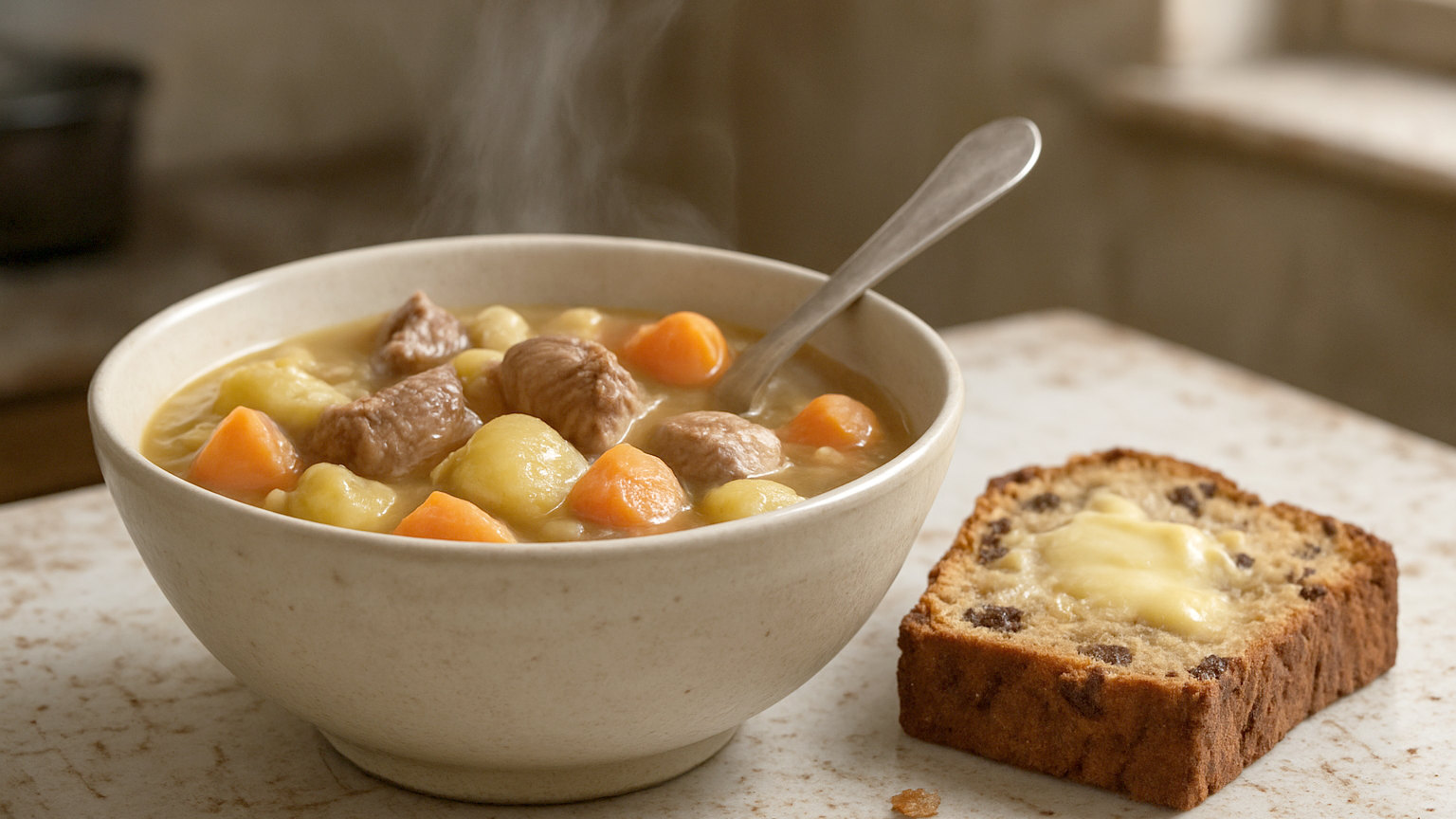
Cawl is the Welsh national dish, a broth of lamb and root vegetables cooked slowly in one pot. The word simply means soup or broth. Traditionally it was served as two courses from the same pan: the broth first with bread, then the meat and vegetables as a main. Like most dishes of its kind it is better on the second day.
What do you need for 6 people?
- 1kg lamb neck or shoulder on the bone
- 2 litres cold water
- 2 large carrots and 1 small swede, cut into chunks
- 2 parsnips, cut into chunks
- 600g potatoes, cut into large pieces
- 3 large leeks, thickly sliced
- 1 onion, quartered
- 2 bay leaves and a few sprigs of thyme
- Salt, black pepper and chopped parsley
How do you make it?
- Put the lamb, onion, bay and thyme in a large pan with the cold water.
- Bring slowly to the boil and skim off the scum thoroughly.
- Simmer gently, partly covered, for 2 hours until the lamb is tender.
- Cool and refrigerate overnight if you have time.
- Lift off the set fat the next day.
- Add the carrot, swede and parsnip and simmer for 20 minutes.
- Add the potatoes and simmer for a further 15 minutes.
- Add the leeks for the last 8 minutes, season well and finish with parsley.
Add the leeks in the last eight minutes. They are the defining vegetable of the dish and they collapse into nothing if they go in early. Everything else can take a long simmer and leeks cannot.
Why is it served as two courses?
The broth was ladled out first and eaten with bread and cheese, then the meat and vegetables followed as the main course.
It made one pot stretch further, which is the logic behind a good deal of traditional cooking.
Which cut of lamb?
Neck, shoulder or shank, all on the bone. Cheap cuts with connective tissue give the best broth.
Bacon or beef appear in some versions, and lamb is the traditional choice.
Is it eaten as a soup or a stew?
Traditionally both, in sequence. Now it is usually served as one bowl with everything in it.
Why make it a day ahead?
The flavour deepens and the fat sets on top overnight, so it lifts off cleanly in a sheet rather than needing skimming.
Almost every Welsh cook will tell you cawl is better the second day.
Should the vegetables be in large pieces?
Yes. This is a rustic dish and the vegetables should be recognisable chunks rather than a fine dice.
Should the meat be taken off the bone?
Lift it out once tender, strip the meat and return it in large pieces, discarding the bones.
Some households serve it on the bone, which is more rustic and harder to eat.
What goes with it?
Crusty bread and a wedge of Caerphilly cheese, which is the traditional accompaniment.
Some people crumble the cheese into the broth.
What vegetables are traditional?
Leeks above all, with potato, carrot, swede and parsnip. Whatever was in the garden went in.
There is no fixed list and the leeks are the one constant.
Is there a vegetarian version?
Yes, built on a good vegetable stock with pearl barley or beans for substance. It is a different dish and it works.
When is it eaten?
Year round and particularly on St David's Day, when it appears on tables across Wales.
What does the word mean?
Cawl simply means soup or broth in Welsh, so the name describes the method rather than any fixed set of ingredients.
That is why every family version differs.
How thick should it be?
It is a broth rather than a stew, so it should be loose enough to eat with a spoon from a bowl.
The potato thickens it slightly as it stands.
How long does it keep?
Three days refrigerated and it freezes for three months.
Cool it quickly, refrigerate within two hours and reheat once only until piping hot, in line with Food Standards Agency guidance.
See also Welsh Rarebit, or browse more Regional recipes.


