
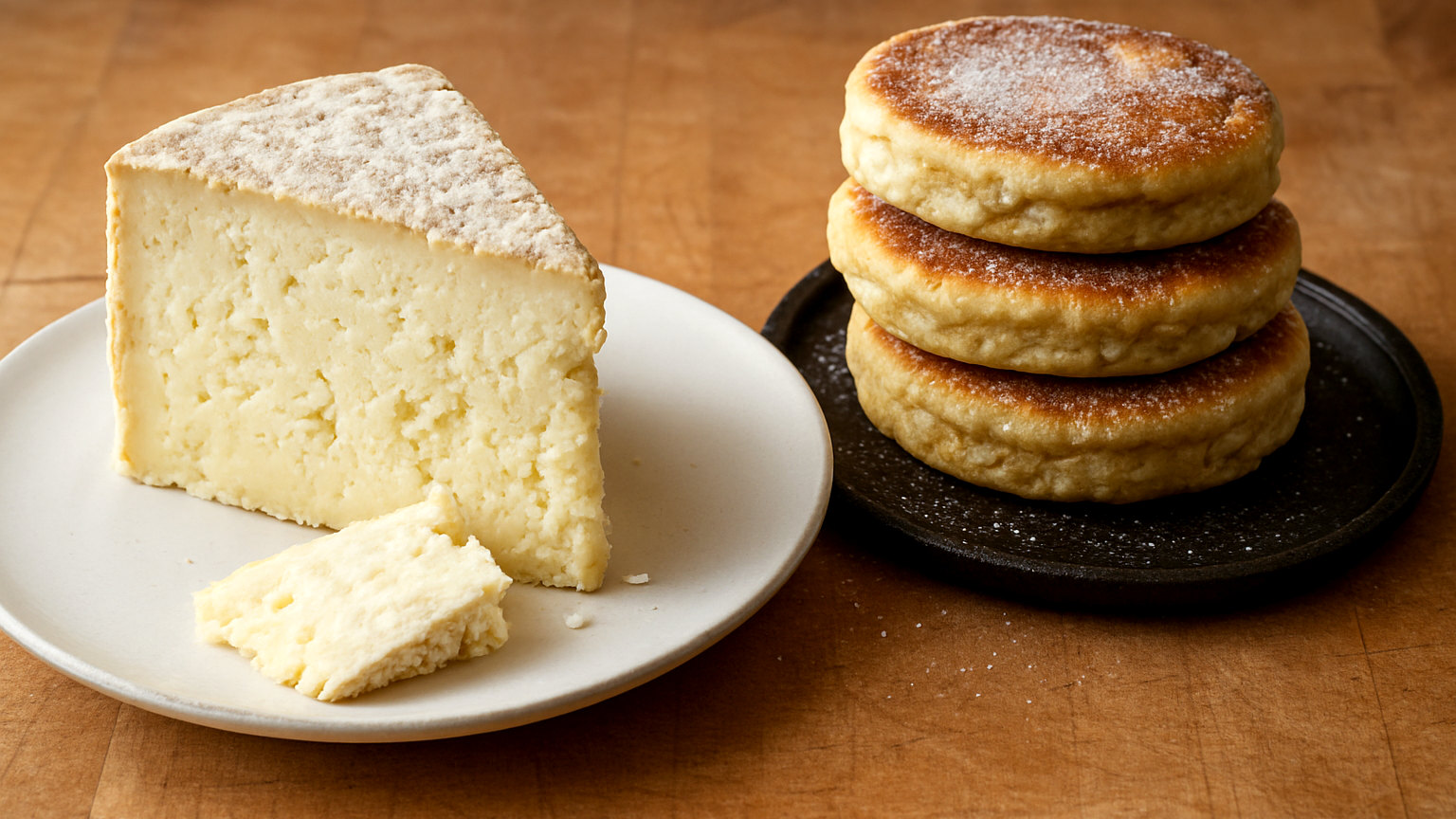
Caerphilly is the cheese most people associate with Wales, and it has a specific origin: it was made for miners. The story is that the salty rind replaced the salt lost through sweat underground, and that a wedge could be held in dirty hands by its rind and eaten without cutlery. Whether or not that is the whole picture, it is a young, moist, salty cheese and it was made for eating fresh.
What is Caerphilly like?
White, crumbly and moist with a mild lactic tang and a distinct saltiness. It is a young cheese, traditionally eaten within a few weeks.
Aged Caerphilly develops a firmer, creamier layer under the rind and a stronger flavour.
Why was it made for miners?
The salted rind was a practical feature rather than a flavour choice. It replaced salt lost through heavy sweating underground and gave a handle for grubby hands.
The cheese matured in weeks rather than months, which suited farms needing quick income.
What does it go with?
Bara brith, Welsh cakes, apple, celery and chutney. It is mild enough to suit sweet accompaniments better than a strong cheddar does.
Is it still made in Caerphilly?
Very little of it. Most Caerphilly is now made in Somerset and Wiltshire, and it holds no protected status, so it can be made anywhere.
A number of Welsh producers do still make it.
What other Welsh cheeses are there?
Perl Las is a creamy blue, Perl Wen a brie style cheese, and Y Fenni is cheddar with mustard seed and ale.
Gorwydd Caerphilly is a well regarded traditional raw milk version.
Is it eaten young or aged?
Traditionally young, within weeks of making. Farmhouse producers now also sell aged versions with a rind and a considerably stronger flavour.
What is Welsh goat and sheep cheese like?
Wales has a strong modern tradition of both, helped by upland grazing that suits goats and sheep better than dairy cattle.
Several have won international awards since the 1980s revival.
How long should it be matured?
Traditionally two to three weeks, which is very short for a cheese. Longer maturing gives a firmer, stronger cheese with a creamy layer under the rind.
Both styles are sold and the young one is the classic.
Does Caerphilly melt well?
It melts but does not string, so it suits rarebit, Glamorgan sausages and baked dishes rather than a toastie.
Mixing it with cheddar gives both flavour and melt.
What does the name mean?
It is named after the town of Caerphilly in south Wales, where it was first sold at market from farms in the surrounding area.
What is it used for in Welsh cooking?
Crumbled into cawl, in Glamorgan sausages, in rarebit and eaten with bara brith or Welsh cakes.
A wedge alongside a bowl of cawl is the classic combination.
How should it be stored?
Wrapped in waxed paper in the fridge, not cling film. Take it out an hour before eating.
It is a young cheese and does not keep as long as a hard cheddar.
What happened to Welsh farmhouse cheese?
Wartime rationing all but ended it, as it did across Britain, and the revival began in the late twentieth century.
Wales now has a considerable number of small independent cheesemakers.
How is Caerphilly made?
The curd is cut, drained and pressed lightly, then brined for a few hours rather than salted through, which is where the salty rind comes from.
It is matured for only a few weeks, which keeps it moist and crumbly.
Why is it crumbly?
Light pressing and short maturing leave more moisture in the curd, so the cheese breaks rather than slices.
The same applies to Lancashire and Cheshire, which are close relatives.
What should go on a Welsh cheeseboard?
A Caerphilly, a Welsh blue, a soft cheese and something flavoured, with oatcakes, bara brith and chutney.
Keep cheese refrigerated and follow the dates on the pack, in line with Food Standards Agency guidance.
For something along the same lines, see St David's Day and Welsh Food Traditions, or browse all our Regional recipes.


