
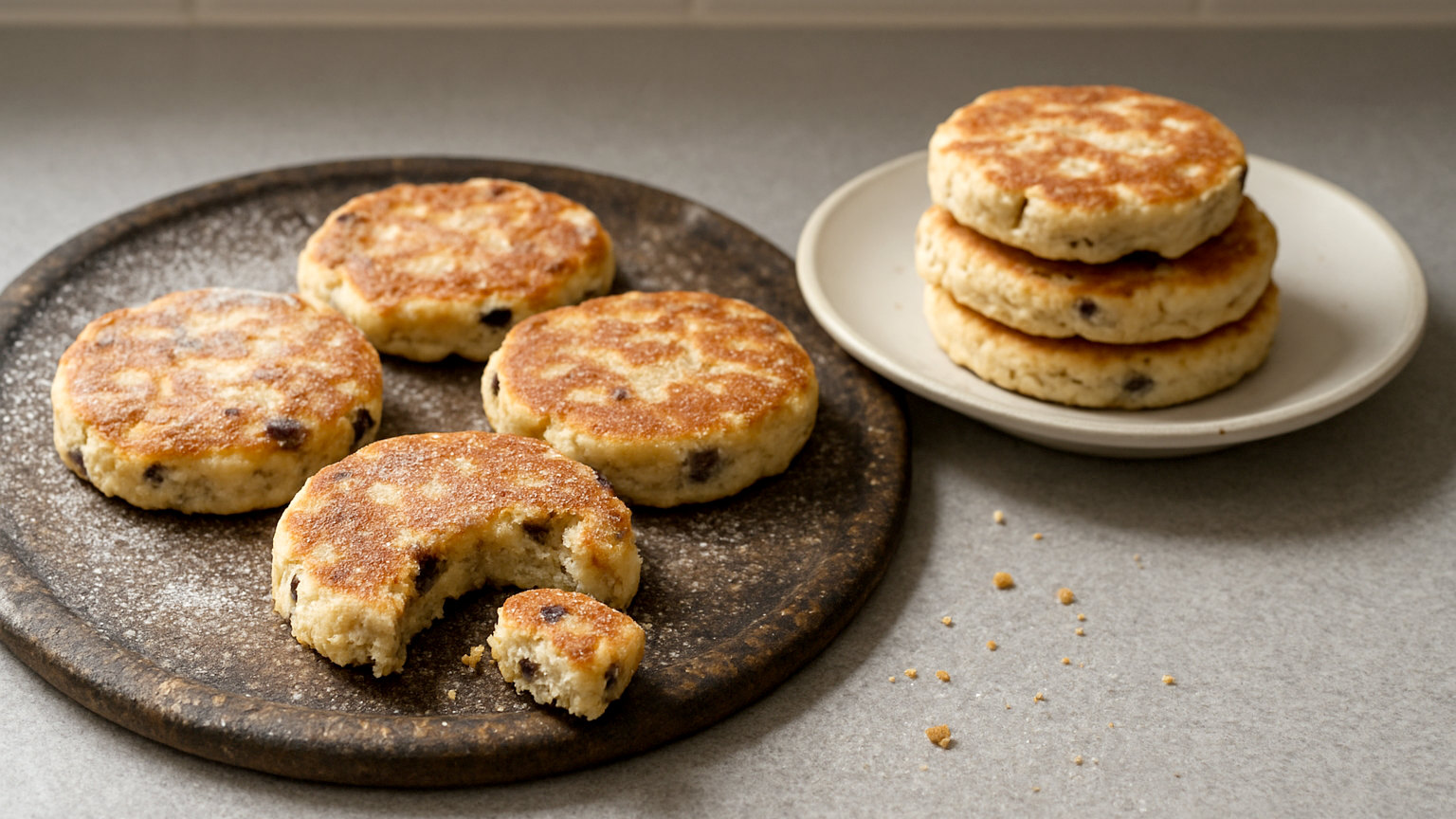
Welsh cakes are a rubbed in dough with currants and spice, cooked on a hot bakestone or heavy pan rather than in an oven. That griddle cooking is the whole point of them and it gives a texture between a scone and a biscuit, slightly crisp outside and soft within. In Welsh they are picau ar y maen, cakes on the stone.
What do you need for about 16 cakes?
- 225g self raising flour
- 110g cold butter, diced
- 85g caster sugar, plus extra for dusting
- 85g currants
- Half a teaspoon of mixed spice
- 1 egg, beaten
- A splash of milk if needed
- A little butter or lard for the pan
How do you make them?
- Rub the cold butter into the flour until it resembles breadcrumbs.
- Stir in the sugar, currants and mixed spice.
- Add the beaten egg and bring together into a firm dough, adding a splash of milk only if needed.
- Roll out on a floured surface to about 6mm.
- Cut into 6cm rounds.
- Heat a heavy pan or bakestone over a medium low heat and grease it lightly.
- Cook for 3 to 4 minutes a side until golden brown and risen.
- Dust with caster sugar while still warm.
Keep the pan at a medium low heat. Too hot and they brown in two minutes with a raw centre. They need three or four minutes a side to cook through, which means a gentler heat than feels right.
What is a bakestone?
A flat iron plate heated over a fire or hob, called a maen or planc in Welsh. A heavy cast iron frying pan does exactly the same job.
The surface should be thick enough to hold a steady heat.
How thick should they be?
About 6mm. Thicker ones stay doughy in the middle and thinner ones dry out into biscuits.
What fat should be in the dough?
Butter is usual now and lard was traditional, giving a shorter texture. A mixture of the two is a reasonable compromise.
How do you know they are cooked?
They should be well risen with a distinct golden brown surface on both sides and no wet dough in the middle when one is split.
Cook a test one first to check the heat.
Should they be sugared hot?
Yes, straight from the pan while the surface is still warm enough for the caster sugar to stick.
Are they the same as scones?
No. A scone is baked in an oven and rises considerably. A Welsh cake is griddled, flatter and denser, with a crisper surface.
They are also sweeter and always contain fruit.
How many does the mixture make?
About sixteen 6cm cakes, and the trimmings can be re rolled once.
They cook four or five at a time in a large pan.
Should the pan be greased?
Very lightly, and wiped rather than coated. Too much fat fries them and they should be closer to dry cooked.
Why is the dough firm rather than soft?
A soft dough spreads on the hot surface and will not hold its shape. It should be firm enough to roll and cut cleanly.
Add milk only if the egg alone will not bring it together.
Can they be split and buttered?
They can, though they are traditionally eaten plain, dusted with sugar, still warm from the pan.
When are they eaten?
All year, and particularly on St David's Day. They are sold warm from market stalls across Wales.
What can you add?
Sultanas or raisins in place of currants, a little lemon zest, or a pinch of nutmeg.
Keep additions modest, since the dough is plain by design.
Why are they cooked rather than baked?
Many Welsh households had no oven, only an open fire with a bakestone over it, so the entire baking tradition developed on a flat hot surface.
Welsh cakes, pancakes and planc bread all come from that.
How long do they keep?
Three days in a tin and they are much better on the day. They freeze for a month and refresh in a warm pan.
For something along the same lines, see Welsh Lamb and What Makes It Different, or browse all our Regional recipes.


