
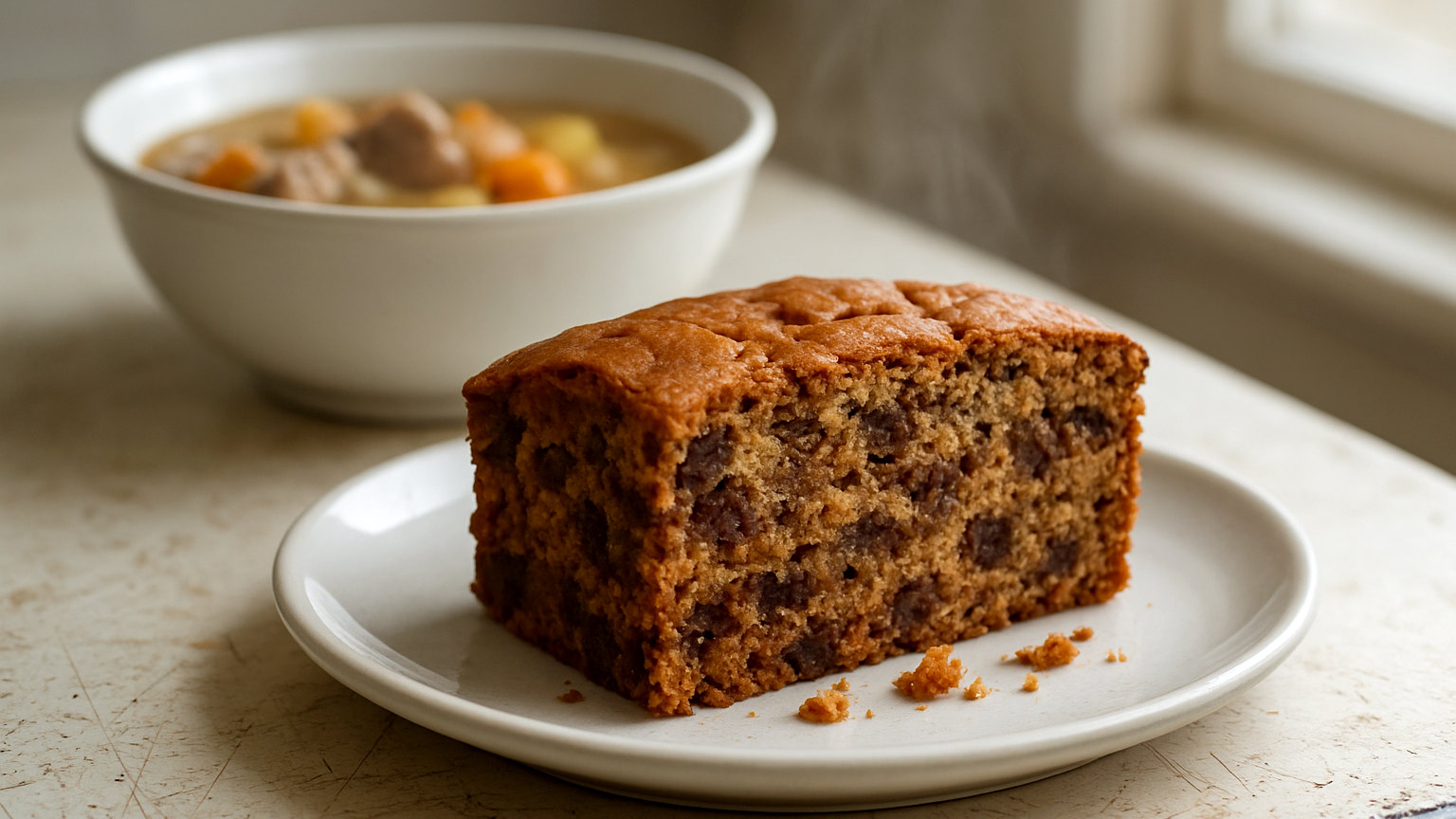
Teisen lap is a shallow, moist fruit cake baked in a flat tin or on a plate, and the shape is the point. It was made for miners to take underground, where a slice needed to survive being carried in a tin without drying out or falling apart. The name means plate cake, and it is somewhere between a cake and a very rich Welsh cake.
What do you need for a 23cm cake?
- 250g self raising flour
- 125g cold butter, diced
- 125g caster sugar
- 150g currants or sultanas
- Half a teaspoon of grated nutmeg
- 2 eggs, beaten
- About 100ml whole milk or buttermilk
How do you make it?
- Heat the oven to 160C fan, 180C conventional, gas mark 4.
- Grease and line a shallow 23cm round tin or ovenproof plate.
- Rub the butter into the flour until it resembles breadcrumbs.
- Stir in the sugar, dried fruit and nutmeg.
- Add the beaten eggs and enough milk to give a soft dropping consistency.
- Spread into the tin, no more than 3cm deep.
- Bake for 35 to 40 minutes until golden and springy.
- Cool in the tin and cut into wedges.
Keep it shallow, no more than 3cm. A deep tin turns it into an ordinary fruit cake. The shallow shape is what gives the high proportion of crust to crumb and the moist, dense texture.
Why is it so moist?
A wetter batter than a standard cake and a short bake. It should be a soft dropping consistency rather than stiff.
Buttermilk in place of milk makes it moister still.
Why was it a miners cake?
It kept well, travelled without crumbling and did not dry out over a long shift underground.
The same practical logic produced the pasty in Cornwall and the huffkin in Kent.
What does the name mean?
Teisen means cake and lap means plate or moist, depending on the source. Either reading fits the cake.
It was often baked directly on an enamel plate.
Can you add anything else?
Mixed peel, a little lemon zest or chopped dates. The traditional version keeps to currants and nutmeg.
How is it different from a Welsh cake?
A Welsh cake is griddled and small. Teisen lap is baked in the oven as one large flat cake and is moister and less crisp.
The ingredients are similar, which is why they are often confused.
Why is it not griddled?
It is too wet and too large to cook on a bakestone, so it needed an oven or a communal bakehouse.
That is the practical difference between it and a Welsh cake.
Should it contain nutmeg?
It is the traditional spice and it should be freshly grated. Mixed spice or cinnamon work and taste less authentic.
Why buttermilk rather than milk?
It reacts with the raising agent and gives a softer crumb, and the slight acidity balances the sweetness.
Ordinary milk with a teaspoon of lemon juice does the same job.
Can it be baked on a plate?
Traditionally yes, on an ovenproof enamel plate, which is where the name comes from. A shallow cake tin is easier.
How should it be served?
In wedges with tea, plain or buttered. It needs no icing.
What size tin should you use?
A 23cm shallow round tin or an ovenproof plate. Anything deeper changes the character entirely.
It should come out about 3cm deep.
Should the fruit be soaked?
Not necessary, since the batter is wet enough to keep it plump. Very dry currants can be soaked briefly in hot tea and patted dry.
How do you know it is baked?
Golden on top and springy to a light press, with a skewer coming out clean. Around 35 to 40 minutes is usual.
Do not overbake it, since the moisture is the whole point.
How long does it keep?
Four days in a tin, and it stays moist longer than most cakes. It freezes for three months.
See also Faggots and Peas, or browse more Regional recipes.


