
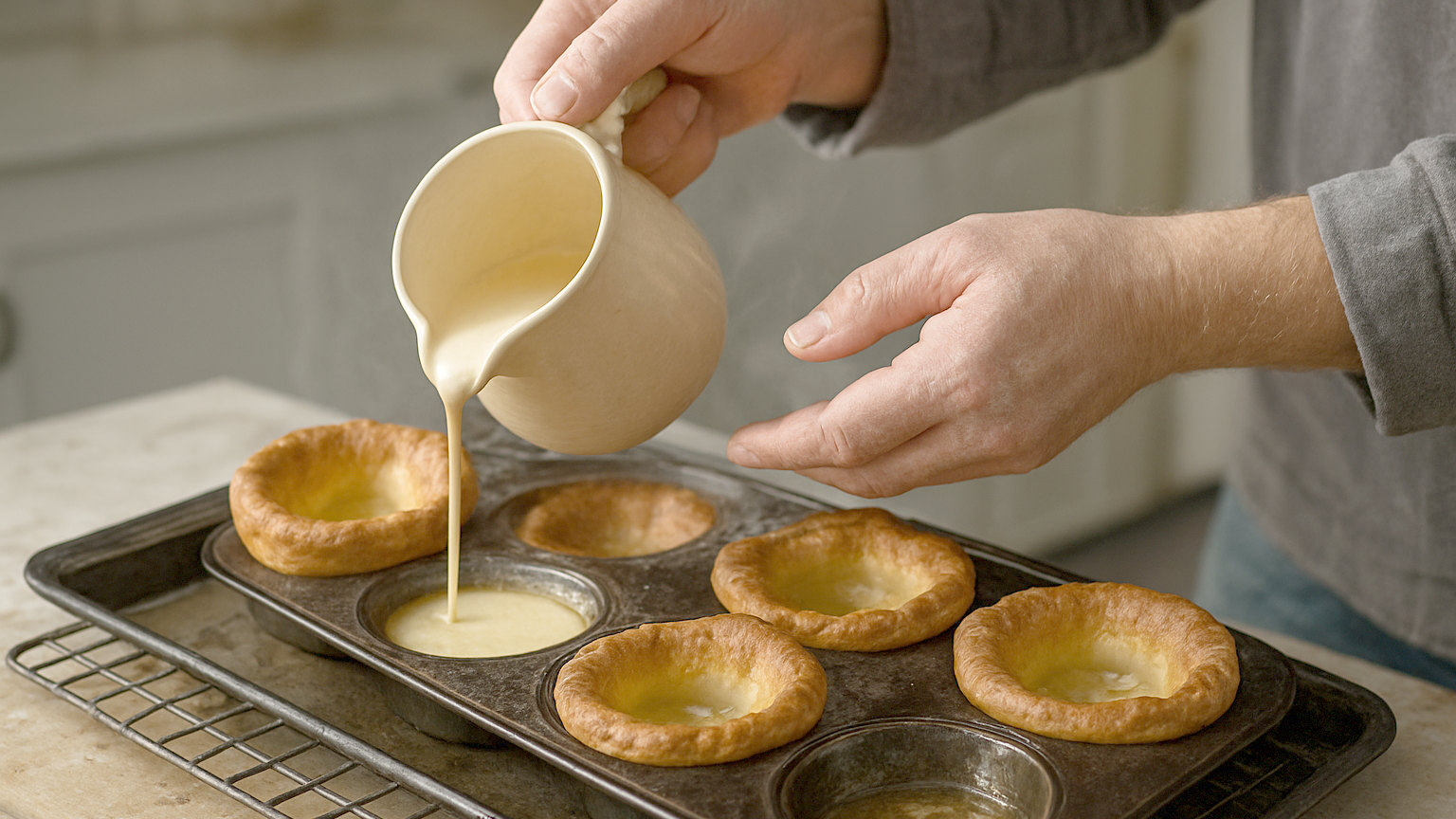
Flat Yorkshire puddings are almost always a heat problem rather than a recipe problem. The rise depends on water in the batter turning to steam very fast, and anything that slows that down produces a dense disc instead. There are six usual causes and they can be worked through in about a minute.
Was the fat hot enough?
This is the most common cause by a wide margin. The fat should be visibly smoking when the batter goes in, and the batter should sizzle and begin to set on contact.
If it goes in silently, stop. Take the tin out, get the fat properly smoking and start again, because a pudding that begins in cool fat absorbs it and will be greasy and flat.
Was the oven hot enough?
Yorkshire puddings want 220C fan, 240C conventional, gas mark 9. At 200C fan they will cook but never rise properly.
Domestic ovens drift out of calibration. An oven thermometer costs a few pounds and settles the question, and many ovens run 15C to 20C cooler than the dial claims.
Did someone open the door?
Opening the oven drops the temperature by 30C or more in seconds. A pudding that has risen but not set will collapse immediately and will not come back.
Leave it shut for the first 20 minutes. Use the oven light rather than the handle.
Was the batter too thick?
It should be the consistency of single cream, thin enough to pour easily from a jug. A thick batter cannot expand fast enough to inflate.
If in doubt, add a splash more milk. A slightly thin batter rises better than a slightly thick one.
Were the holes overfilled?
Two thirds full is the limit. Overfilled holes give heavy puddings that spill over the edges and fuse into a sheet rather than rising individually.
The batter needs room above it to climb the sides of the hole, which is where the shape comes from.
Was it the wrong tin?
A heavy metal tin conducts heat quickly and gives the sharpest contact. Thin flimsy tins, silicone moulds and non stick pans with a thick coating all transfer heat more slowly.
Silicone is the worst offender, since it barely conducts heat at all and puddings made in it rarely rise properly.
Did the batter rest?
Resting is not essential but it helps. Thirty minutes lets the flour hydrate and the gluten relax, giving a better rise and a smoother texture.
An unrested batter will still produce puddings. They will simply be a little denser and less tall.
Was the tin overcrowded in the oven?
Two tins on separate shelves block airflow and slow the recovery of oven temperature. Cook one tin at a time on the top shelf if you can.
If both must go in, swap shelves at the 20 minute mark, once they have set.
Were the eggs the right size?
A recipe written for large eggs made with medium ones will be short of liquid and structure, and the batter will be too thick. Add a splash of milk to compensate.
Measuring by volume avoids the problem entirely, since you simply use whatever the eggs come to.
Was the batter cold enough?
The rise depends on the contrast between cold batter and smoking fat. Batter that has been sitting in a warm kitchen all afternoon starts from a smaller gap.
Rest it in the fridge and pour it straight from there.
Did they rise and then collapse?
That is a different fault. Collapsing usually means they came out slightly underbaked, so the walls had not set firmly enough to hold their own shape.
Give them an extra three or four minutes until they are deep golden all over rather than pale on the sides.
Can flat puddings be rescued?
Not into risen ones, no. They will still taste fine with gravy, and nobody at a Sunday table has ever refused one.
Break them up and use them to soak up gravy on the plate, or keep them for the next day, warmed through with something savoury inside.
For something along the same lines, see How to Make Yorkshire Puddings That Rise, or browse all our Roasts recipes.


