
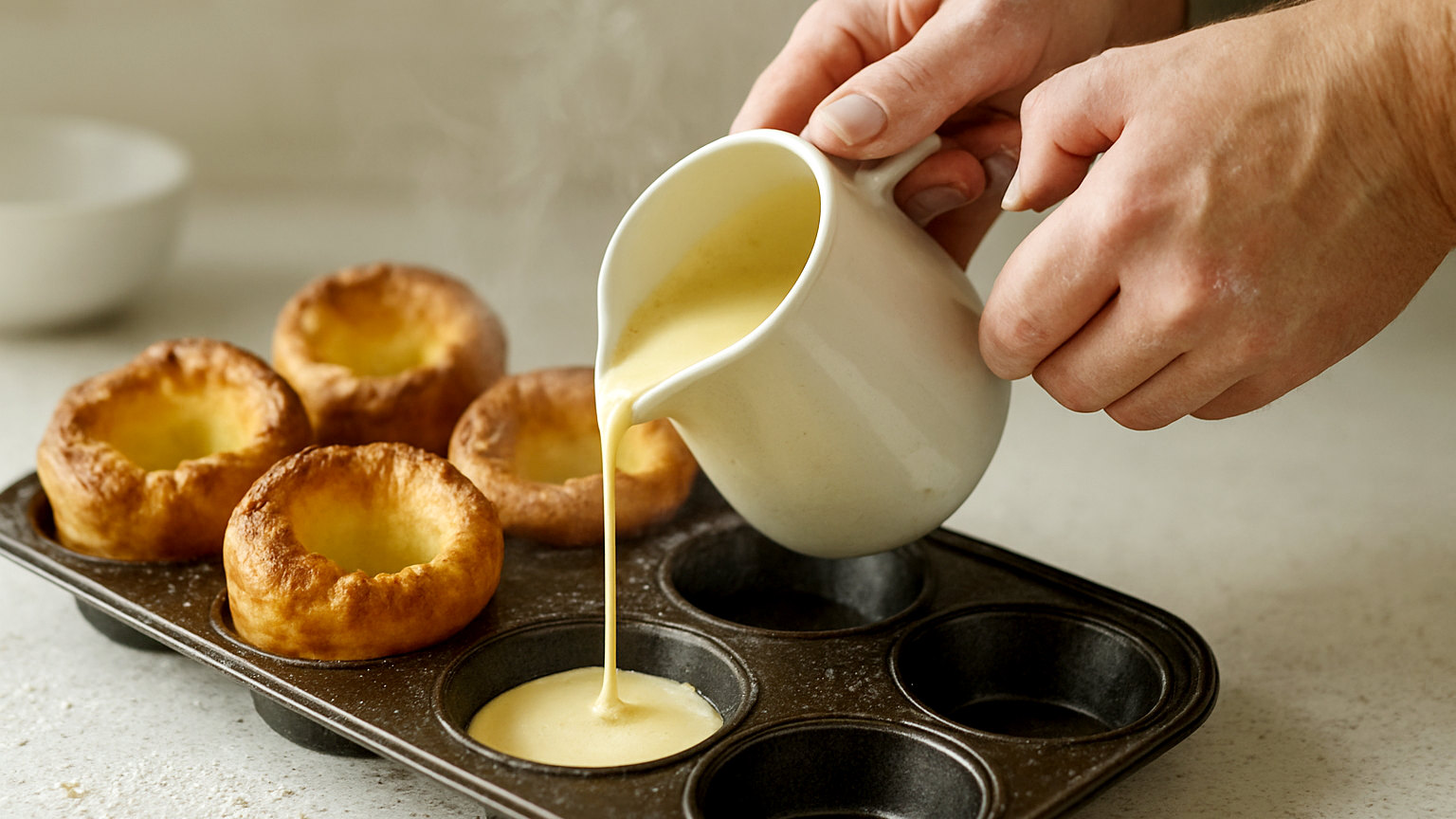
Yorkshire puddings rise because water in the batter turns to steam faster than the outside can set, and the whole thing inflates before the crust firms up. Everything in the method serves that one event. The batter needs to be thin enough to move, the fat needs to be hot enough to shock it, and the oven door needs to stay shut.
What do you need for 12 puddings?
- 4 large eggs
- 140g plain flour
- 200ml whole milk
- Half a teaspoon of salt
- Beef dripping, lard or sunflower oil for the tin
How do you make them?
- Whisk the eggs and salt until frothy, then whisk in the flour a little at a time until smooth.
- Add the milk gradually, whisking, until the batter is the consistency of single cream.
- Cover and rest for at least 30 minutes, or overnight in the fridge.
- Heat the oven to 220C fan, 240C conventional, gas mark 9.
- Put a teaspoon of dripping into each hole of a 12 hole tin and heat in the oven for 10 minutes until smoking.
- Pour the batter into a jug and fill each hole about two thirds full.
- Return to the oven immediately and cook for 20 to 25 minutes.
- Do not open the door for the first 20 minutes.
The fat must be visibly smoking. The batter should sizzle and start to set the moment it lands. If it goes in silently, the fat is too cool and the puddings will be flat and greasy.
What is the ratio?
Equal parts egg, flour and milk by volume. Crack the eggs into a measuring jug, note the volume, then use the same volume of flour and the same again of milk.
That works with any number of eggs and removes the need for a recipe entirely, which is why it is the version most people eventually settle on.
Why does the batter need resting?
It lets the flour hydrate fully and the gluten relax, which gives a smoother batter and a better rise. Thirty minutes is the minimum and overnight is noticeably better.
A rested batter also separates slightly, so whisk it briefly before pouring.
Should the batter be cold or room temperature?
Cold batter into very hot fat gives the sharpest contrast and the best rise. Batter rested overnight in the fridge goes straight in without warming up.
The important gap is between the batter and the fat, not the absolute temperature of either.
Why must the oven stay shut?
Opening the door drops the temperature by 30C or more in a few seconds. A pudding that has risen but not yet set will collapse and never recover.
After about 20 minutes the structure has firmed enough to survive a look, and that is the point to check the colour.
How full should the holes be?
Two thirds, no more. Overfilled holes produce heavy puddings that rise unevenly and spill over the edges into a single sheet.
Underfilled holes give you crisp little cups with no soft middle, which some people prefer.
Which tin should you use?
A heavy metal 12 hole bun tin, not a deep muffin tin and not silicone. Metal conducts heat fast, which is what shocks the batter into rising.
Silicone barely conducts heat at all and is the single worst choice. A well used metal tin with a dark surface performs better than a shiny new one.
What should you serve them with?
Roast beef traditionally, though most households now serve them with any roast. Plenty of gravy is the only requirement.
They can also be served first, as they were originally, filled with gravy to take the edge off appetites before the meat.
Can they be made ahead?
Yes. Cook them fully, cool and keep for a day, then reheat at 200C fan for 5 minutes. They freeze for a month and reheat from frozen in 7 minutes.
Cool them quickly, refrigerate within two hours and reheat once only until piping hot, in line with Food Standards Agency guidance.
See also Why Did My Yorkshire Puddings Not Rise?, or browse more Roasts recipes.


