
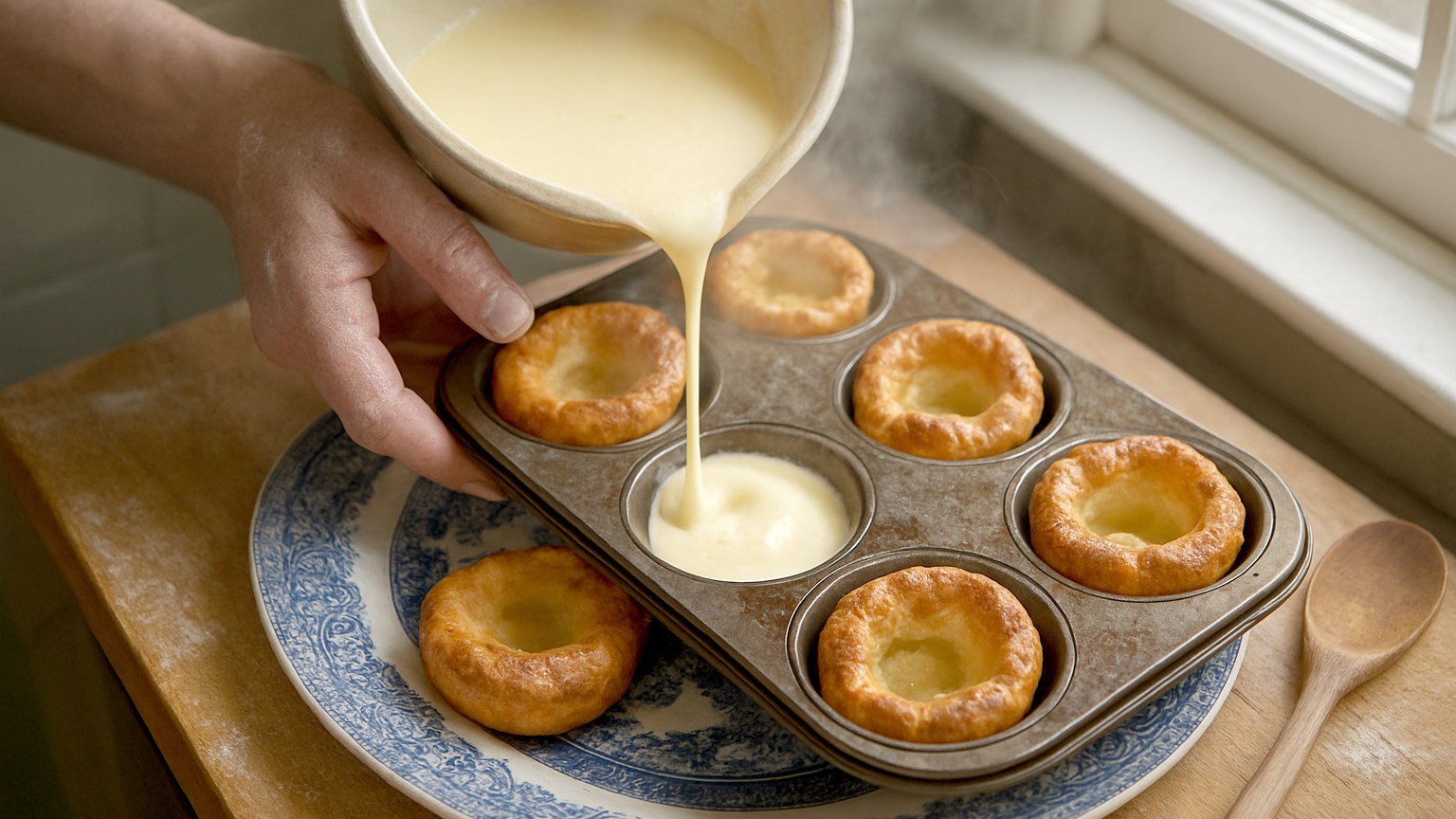
Resting Yorkshire pudding batter is treated in some quarters as an unbreakable rule and in others as a myth. The truth sits between the two. It makes a real but modest difference, and it is nowhere near as important as the temperature of the fat. If you have half an hour, rest it. If you do not, make them anyway.
What does resting actually do?
Two things. The flour absorbs the liquid fully, so the starch granules swell and the batter thickens slightly and becomes smoother. And the gluten developed by whisking relaxes, which lets the batter stretch more easily as it rises.
Any lumps also soften and disappear, which is a small practical benefit.
How long is worth it?
Thirty minutes at room temperature gets most of the benefit. An hour is better. Overnight in the fridge is better again and is the version many cooks swear by.
Beyond about 24 hours there is nothing more to gain. The batter will separate and can develop a faintly sour note, so make it the day before at the earliest.
Does it need to be in the fridge?
For anything over an hour, yes, because it contains raw egg and milk. For a thirty minute rest the worktop is fine.
Keep it covered either way, so a skin does not form on the surface.
Should the batter be cold when it goes in?
Cold batter into smoking fat gives the sharpest temperature contrast, which is what drives the initial rise. Batter straight from the fridge works well.
Some cooks insist on room temperature batter. The difference is small, and the temperature of the fat matters considerably more than either.
Does the batter need whisking again?
Yes. A rested batter separates, with flour settling towards the bottom and a thin liquid on top. Whisk it briefly to bring it back together before pouring.
Do not overwork it at this stage, since you are only redistributing rather than developing it further.
What happens if you skip resting?
The puddings will rise slightly less and may be marginally denser. Most people would not identify the difference in a side by side test.
Flat puddings from an unrested batter are almost always down to something else, usually the fat or the oven.
Can you make the batter days ahead?
A day ahead is the sensible limit. Beyond that the milk and egg mixture begins to deteriorate and the texture suffers.
If you need to work further ahead, cook the puddings fully and freeze them instead, which keeps them for a month.
Does the resting container matter?
Use a jug rather than a bowl if you can, since you will be pouring from it into a hot tin at speed and transferring batter at that point wastes seconds you do not have.
Cover it with a plate or cling film so the surface does not dry into a skin.
Can batter be frozen?
It can, for up to a month, though the results are inconsistent because the emulsion breaks on thawing. Defrost fully in the fridge and whisk hard.
Freezing cooked puddings is far more reliable and takes up less room.
Does resting change the taste?
Slightly. An overnight rest gives a marginally deeper, more savoury flavour as the flour hydrates fully, which is one reason cooks who do it insist on it.
Should it be made in a blender?
It works and it is fast, though it develops more gluten than hand whisking does, so a rest becomes more useful rather than less.
Blend for no more than fifteen seconds. Longer and the batter warms and becomes elastic, which works against the rise.
Does resting matter more for some batters?
Yes. A batter made in a blender has developed more gluten and benefits noticeably from resting, while a lightly hand whisked one needs it less.
Batters made with strong bread flour also benefit more, since there is more gluten to relax in the first place.
What is the practical answer?
Make the batter first, before anything else, then get on with the rest of the roast. By the time the fat is smoking it will have had its thirty minutes without any planning at all.
Worth reading next: Yorkshire Pudding Batter: Milk, Water or Both?. There is more in our Roasts recipes.


