
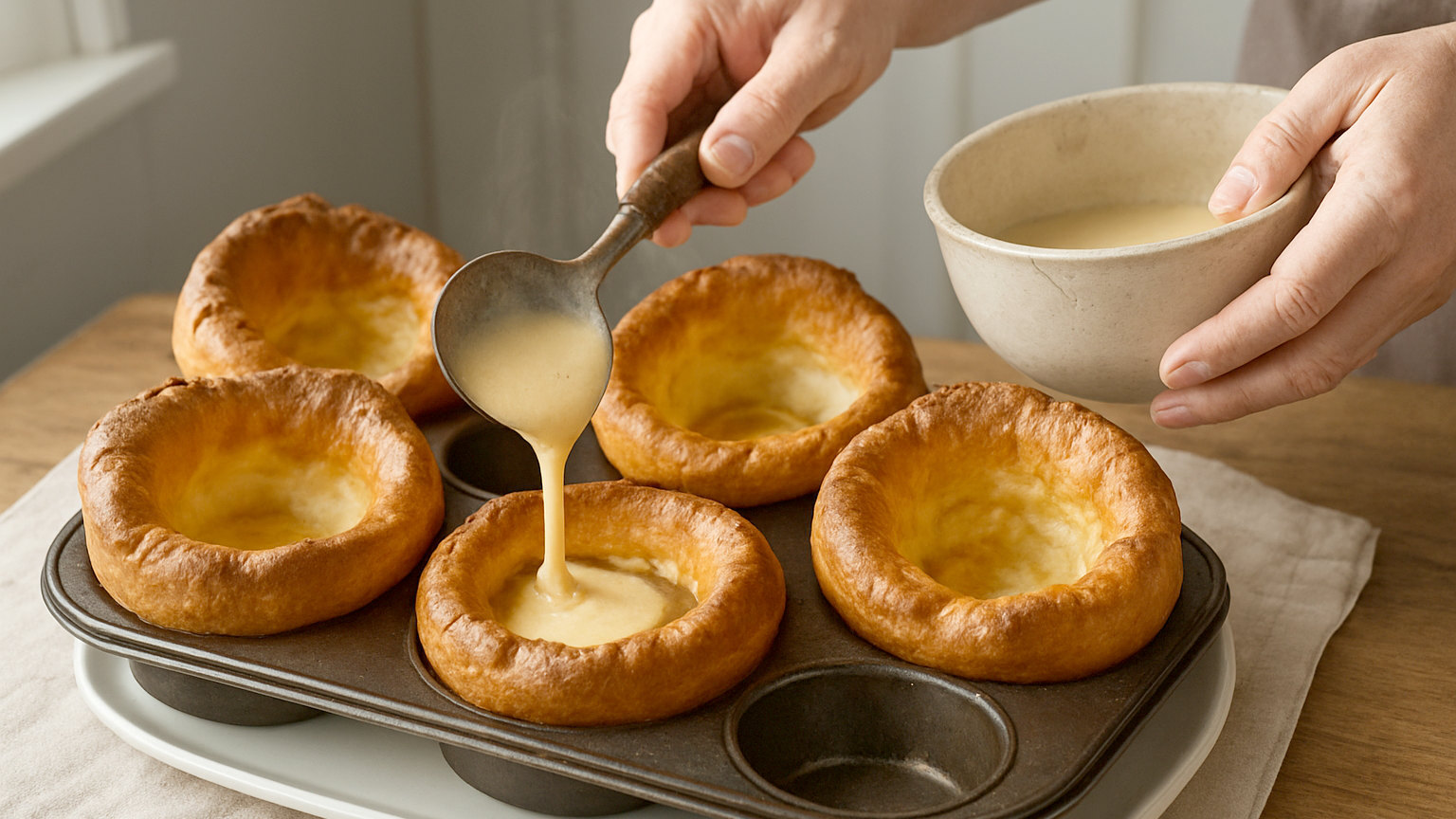
A giant Yorkshire pudding used as a bowl for stew or a full roast dinner is a pub fixture, and the home version usually fails for a predictable reason. A batter tuned for maximum rise produces thin, fragile walls, which collapse the moment anything heavy goes inside. What you want here is structure rather than height, and that means a small change to the ratio.
What do you need for 4 giant puddings?
- 4 large eggs
- 175g plain flour, slightly more than the standard ratio
- 200ml whole milk
- Half a teaspoon of salt
- 4 teaspoons beef dripping or oil
How do you make them?
- Whisk the eggs and salt, then whisk in the flour gradually until smooth.
- Add the milk slowly until the batter is slightly thicker than single cream.
- Rest for at least 30 minutes, or overnight in the fridge.
- Heat the oven to 220C fan, 240C conventional, gas mark 9.
- Put a teaspoon of dripping into each hole of a 4 hole giant Yorkshire tin and heat for 10 minutes until smoking.
- Divide the batter between the holes, filling each about half full.
- Bake for 30 to 35 minutes without opening the door for the first 25.
- They should be deep golden all over, including the sides.
Bake them longer than you think. A giant Yorkshire that looks done at 25 minutes usually has soft walls, and it will sag as soon as gravy goes in. Deep colour on the sides is the signal.
Why more flour?
A thicker batter produces thicker walls with more structure. You sacrifice a little height and gain a pudding that can hold half a pint of stew without folding.
Using strong bread flour instead of plain takes this further, giving a chewier, sturdier result.
What tin should you use?
A 4 hole giant Yorkshire tin, with holes around 10cm across and 4cm deep. These are widely sold and inexpensive.
Individual metal pie tins or small cast iron skillets work as substitutes. Ceramic dishes do not, since they conduct heat too slowly.
How full should the holes be?
Half, rather than the two thirds used for standard puddings. Giant holes give the batter more room to climb and overfilling produces a heavy base.
The batter should rise up the sides and form a well in the middle as it sets.
What can you fill them with?
Beef stew, sausages and onion gravy, a full roast dinner in miniature, or slow cooked shredded beef. Anything with plenty of sauce.
Fill them at the table rather than in the kitchen, since the walls soften within a few minutes of the gravy going in.
Can they be made ahead?
Yes, and they reheat better than small ones because the walls are thicker. Cook fully, cool, and reheat at 200C fan for 8 minutes.
They freeze for a month and reheat from frozen in about 12 minutes at 200C fan.
What should you serve inside them?
Beef in ale is the classic, since the gravy is thick enough not to soak straight through the base. Sausages and onion gravy work equally well.
A vegetarian version with a mushroom and lentil stew holds up just as well, and roasted root vegetables with plenty of gravy suit a Sunday.
Why did they collapse?
Almost always underbaking, or opening the oven door too early. A pudding that has risen but not fully set will fall and will not come back.
Too thin a batter is the other cause, which is why the flour is increased here.
Can you use a standard tin instead?
A deep muffin tin gives a halfway version, tall enough to hold a few spoonfuls of stew without being a full meal. Bake for 25 minutes.
For a single very large pudding, use a metal roasting tin and bake for 35 minutes, then cut it into portions.
How many will one tin make?
Four, which serves four as a main course with a filling. For six you will need two tins, cooked one at a time on the top shelf rather than both at once.
Cool leftovers quickly, refrigerate within two hours and reheat once only until piping hot, in line with Food Standards Agency guidance.
Next, try Can You Freeze Yorkshire Puddings?, or see the rest of our Roasts recipes.


