
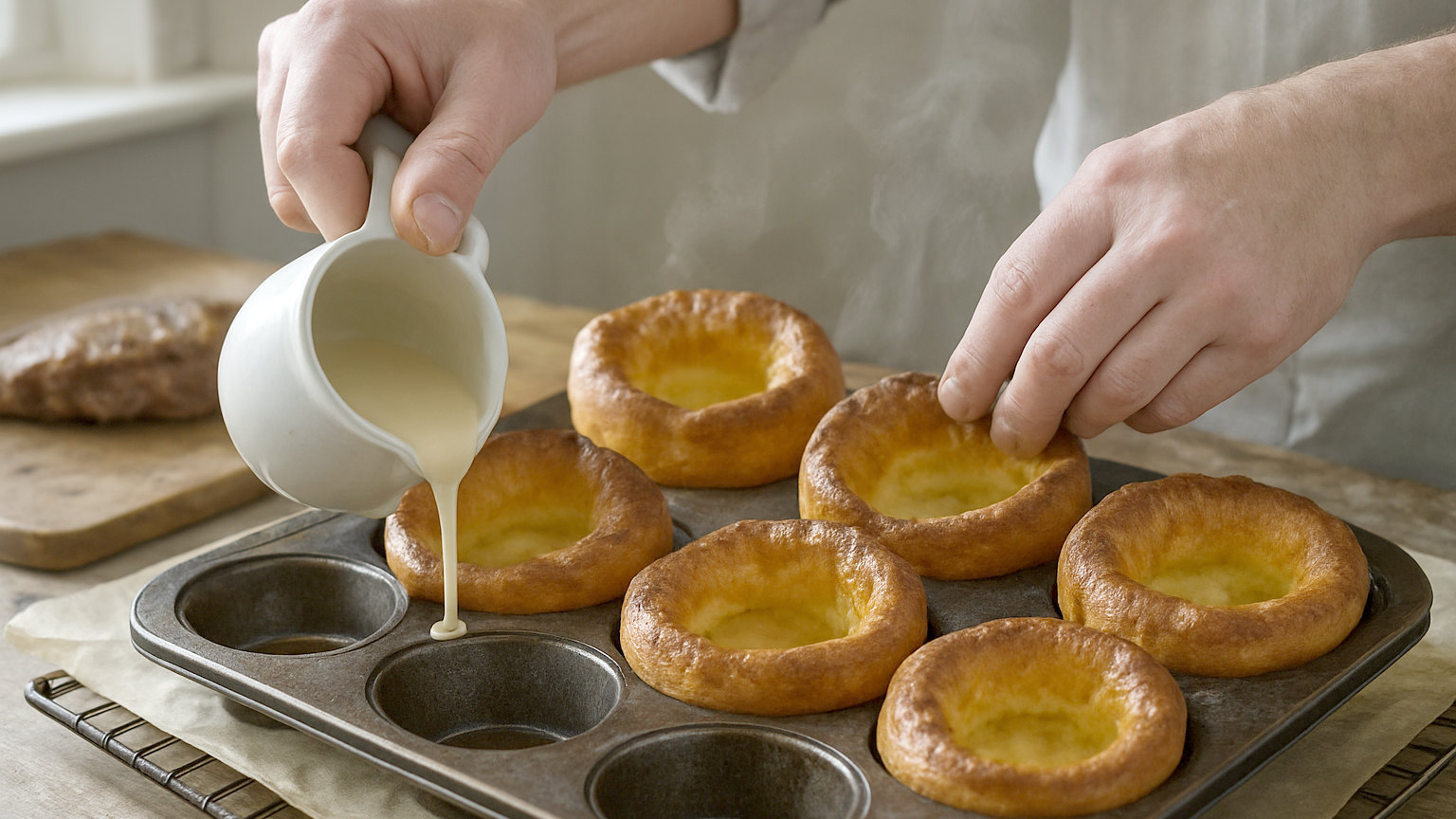
The tin matters more for Yorkshire puddings than for almost anything else you bake, because the rise depends on heat moving from the metal into the batter as fast as possible. A tin that conducts heat slowly gives a slow start, and a slow start gives a flat pudding. This is the one job where the cheap heavy tin beats the expensive coated one.
What is the best type of tin?
A heavy gauge metal 12 hole bun tin, ideally one that has been used enough to darken. Dark surfaces absorb heat better than shiny ones.
Weight is the thing to look for. A heavy tin holds its heat when cold batter goes in, while a thin flimsy one loses temperature immediately and never recovers.
Bun tin or muffin tin?
A bun tin has shallower, wider holes and produces the classic wide Yorkshire with a shallow well. A muffin tin has deeper, narrower holes and produces tall puddings with a deep cup.
Both work. Deep muffin tins need slightly longer, around 25 minutes rather than 20, and they suit filling with gravy or stew.
Why is silicone a problem?
Silicone is an insulator rather than a conductor. It cannot get the fat properly hot and it cannot deliver the thermal shock the batter needs.
Puddings made in silicone are typically pale, dense and disappointing regardless of everything else being right. It is the one material to avoid outright.
What about cast iron?
Excellent, if you have it. Cast iron holds an enormous amount of heat and gives a dramatic rise and a very crisp base.
Cast iron Yorkshire tins are uncommon, but a small cast iron skillet makes a superb single large pudding, and this is what many American popover recipes use.
Does non stick help?
Marginally, though the fat is doing that job anyway. Heavily coated non stick tins can be slightly slower to transfer heat than plain steel.
Coatings also degrade at 240C over time, so a plain steel tin will outlast a non stick one used at these temperatures.
What size should the holes be?
Standard bun tin holes of about 7cm across and 2cm deep are the traditional size and give twelve puddings from four eggs.
Four hole giant tins produce Yorkshires large enough to fill with a stew, and need about 30 minutes rather than 20.
How do you stop them sticking?
Enough fat to coat the base of each hole, and enough heat that the batter sets on contact rather than settling into the metal.
Sticking almost always means the fat was not hot enough, not that the tin was inadequate.
Should the tin be preheated empty?
Preheat it with the fat in it, for about 10 minutes in an oven already at 220C fan. Both need to be at temperature when the batter arrives.
Put the tin in only once the oven has reached temperature, not while it is still climbing.
Can you use a roasting tin for one large pudding?
Yes, and that is essentially toad in the hole without the sausages. Use a metal roasting tin rather than a ceramic dish, and expect 30 to 35 minutes.
Ceramic and glass dishes conduct heat poorly and give a pale, soggy base.
Do you need more than one tin?
For six people or more, yes. A single 12 hole tin gives two puddings each, which is the accepted minimum in most households.
Cook one tin at a time on the top shelf rather than two at once, since two tins block airflow and slow the oven recovering its temperature.
How should the tin be cleaned?
Hot water and as little detergent as you can manage, and never in a dishwasher if it is plain steel. A well seasoned darkened tin performs better each time it is used.
Dry it thoroughly and store it somewhere it will not rust, since a rusty tin will need scouring back and lose its seasoning.
See also Which Fat Should You Use for Yorkshire Puddings?, or browse more Roasts recipes.


