
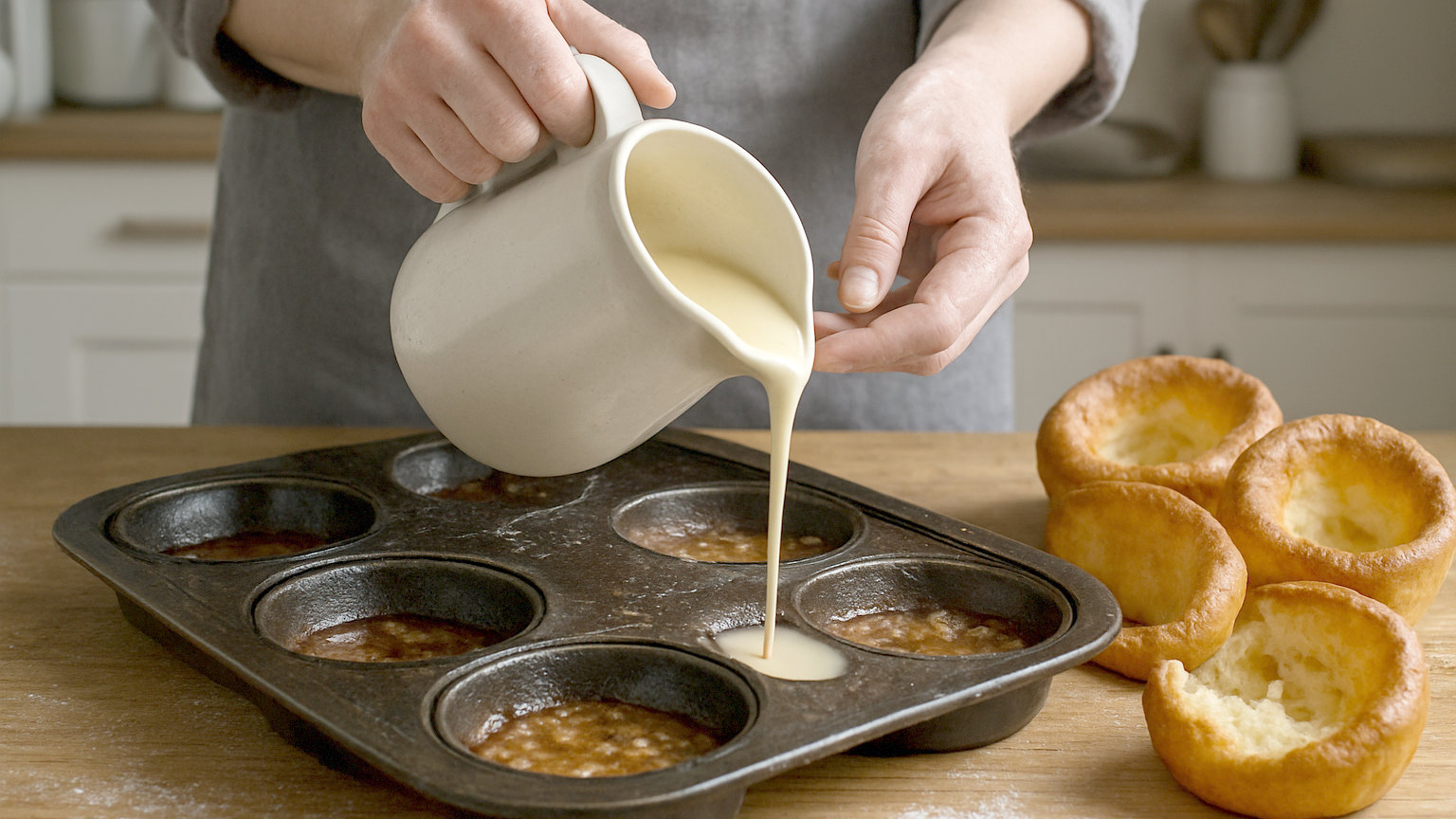
Yorkshire puddings are cooked at 220C fan, which is hotter than most things in a domestic kitchen ever get. That single fact narrows the choice of fat considerably, because anything with a low smoke point will burn before the batter goes in and taint the whole tray. Flavour is a secondary consideration and traditionally it points to beef dripping.
What is the fat there to do?
It transfers heat into the batter instantly on contact, which sets the base and starts the rise. It also stops the puddings sticking and gives the bottoms their crisp fried texture.
It must be smoking before the batter goes in. This matters more than which fat you chose, and it is the single most common reason Yorkshire puddings fail.
Is beef dripping the best?
It is the traditional choice and it has the flavour that most people associate with a proper Yorkshire. Its smoke point is above 200C so it copes with the heat.
It is cheap, sold in every supermarket, and keeps for months in the fridge. For puddings served with beef it is the obvious answer.
Does lard work?
Very well. It has a high smoke point, a milder flavour than dripping and the same practical advantages. It is the standard choice in many northern households.
Use it interchangeably with dripping, with no change to quantities or timings.
What about plain oil?
Sunflower, rapeseed and groundnut oil all have smoke points well above 220C and produce excellent puddings. They contribute no flavour of their own.
Vegetable oil is what most people actually use and there is nothing wrong with it. The rise is identical.
Which fats should you avoid?
Butter, which burns at about 150C and will be black before the batter arrives. Extra virgin olive oil, which burns and turns acrid.
Low fat spreads contain water and will not work at all. Anything with a coating or additives is best kept out of a tin this hot.
Can you use the fat from the roast?
Yes, and it is free and full of flavour. Spoon it off the roasting tin while the joint rests and use it straight away.
Strain out any solids first, since browned bits of meat and vegetable will burn at 220C and taste bitter.
What works for a vegan or vegetarian version?
Rapeseed or sunflower oil, both of which behave identically to dripping in the tin. Refined coconut oil has a very high smoke point but adds a faint sweetness.
The batter itself is the harder problem for a vegan version, since the eggs are doing the structural work.
How much should go in each hole?
About a teaspoon, or enough to cover the base of each hole in a thin film. Roughly half a centimetre deep.
Too little and the puddings stick and cook unevenly. Too much and they fry rather than rise, and the fat spills over as the batter climbs.
Can you use goose or duck fat?
Both work and both have high enough smoke points, though they are expensive for a job that plain oil does equally well. Save them for the roast potatoes.
How long should the fat heat for?
Ten minutes in an oven already at 220C fan. Put the tin in as soon as the oven reaches temperature rather than while it is still climbing.
Look for a faint shimmer and the first wisps of smoke, and work quickly once you take the tin out.
Does the fat change the flavour much?
Less than people expect, because the puddings are cooked so quickly and eaten with gravy. Dripping is detectable if you look for it, and neutral oil is not.
Where it does show is in the crisp base, which takes on more of the fat than the walls do.
Can the fat be reused?
Not usually, since most of it is absorbed by the puddings. Any left in the tin will have been heated to its limit and is best discarded.
Dripping in the jar, by contrast, keeps a month in the fridge and three months frozen.
If that was useful, Which Tin Should You Use for Yorkshire Puddings? covers related ground, and there is plenty more in Roasts recipes.


