
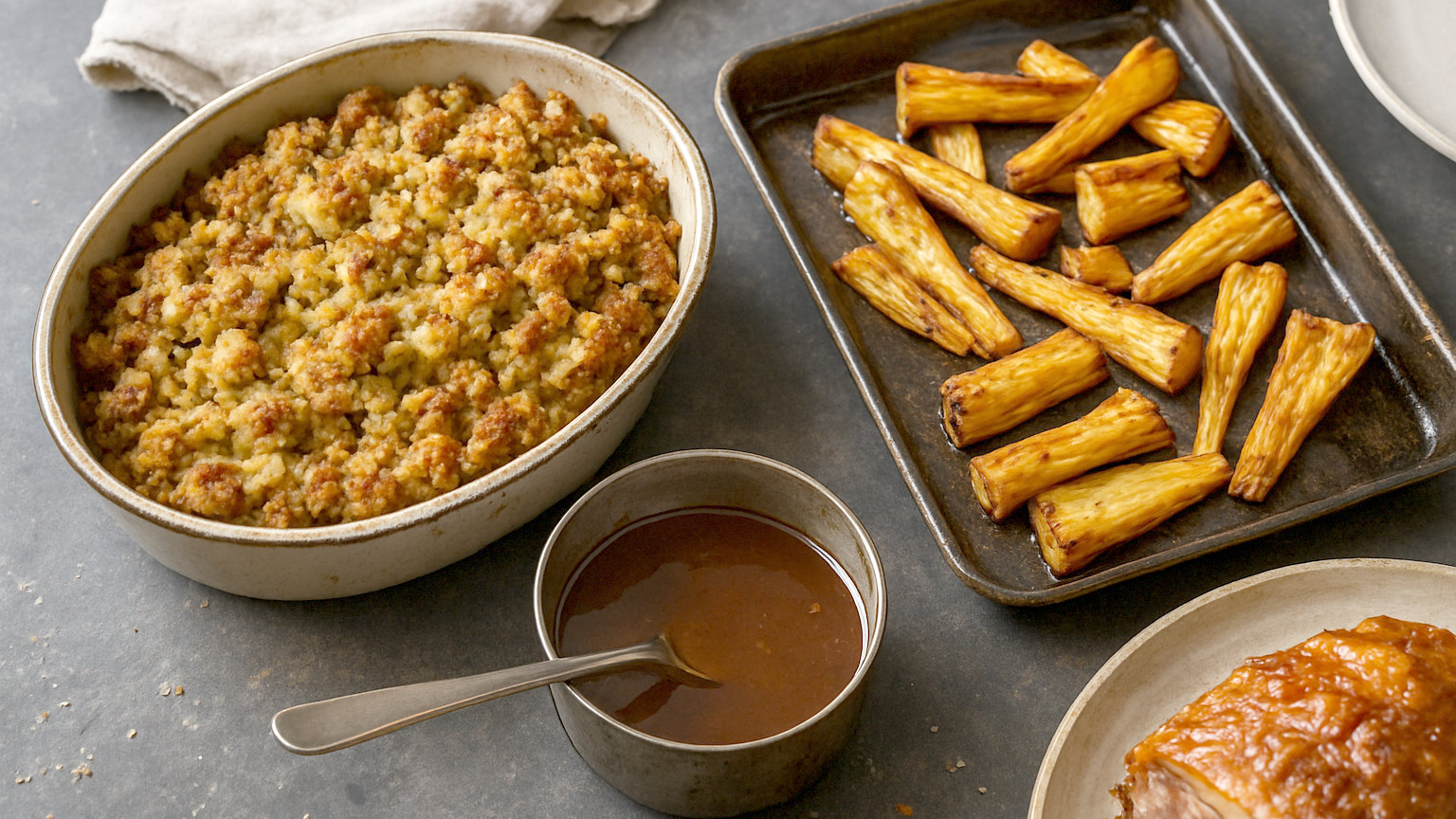
A roast dinner feels difficult mainly because it looks like eight jobs happening at once. In practice only two of them have to happen at the last minute, and almost everything else can be done a day or two ahead with no loss at all. Some things are actively better for it.
What can be made two days ahead?
- Braised red cabbage, which improves
- Cranberry sauce, which keeps two weeks
- Apple sauce
- Bread sauce, or at least the infused milk
- Gravy base from browned onions, flour and stock
- Stuffing mixture, unbaked
- Cauliflower cheese, assembled but unbaked
What can be done the night before?
Peel and cut all the vegetables and keep them in cold water in the fridge. Parboil and rough up the roast potatoes and leave them on a tray.
Parboiled potatoes are better for the wait. The surface dries out overnight in the fridge, which gives a crisper result than roasting them fresh.
What about the meat?
Salt the joint the day before and leave it uncovered on a rack in the fridge, which seasons the meat throughout and dries the surface for better browning.
For pork, this is also the step that makes crackling work. Take the joint out an hour or two before it goes in the oven.
Can Yorkshire puddings be made ahead?
Yes, and this is the most useful one. Cook them fully, cool on a rack, and keep for two days in the fridge or a month in the freezer.
They reheat at 200C fan in 5 minutes from the fridge or 7 from frozen, which removes an entire high temperature job from the day.
What has to be done on the day?
The meat, the roast potatoes going into hot fat, the green vegetables and the final gravy. That is genuinely all.
Green vegetables in particular should never be cooked ahead, since reheated cabbage or sprouts are exactly the grey vegetables people complain about.
What freezes well?
Yorkshire puddings for a month, braised red cabbage for three months, cranberry and apple sauce for three months, gravy for three months, and parboiled potatoes for three months.
Stuffing freezes uncooked for three months and bakes from frozen with an extra ten minutes.
How far ahead can gravy be made?
A base of browned onions, flour and stock keeps three days in the fridge and freezes for three months. On the day it is whisked into the roasting tin to pick up the juices.
That gives you a proper tin gravy without doing the work in the final twenty minutes.
What are the food safety rules?
Cool anything cooked within two hours and refrigerate it. Use prepared vegetables within 24 hours and cooked dishes within two days.
Reheat once only and until piping hot throughout, in line with Food Standards Agency guidance.
Does anything suffer from being made ahead?
Roast potatoes and Yorkshire puddings lose a little crispness, though both come back well with a short blast of high heat.
Anything green suffers badly, and crackling should never be made in advance and left to sit, since it softens.
Can the whole meal be cooked ahead?
Not well. The meat and the crisp elements suffer, and reheating a full plate produces something noticeably worse than a meal assembled from prepared parts.
The exception is a slow cooked shoulder or a brisket, which genuinely improves overnight and reheats without loss.
What about Christmas specifically?
The same principles apply with more of everything. Cranberry sauce two weeks ahead, red cabbage two days, Yorkshire puddings and pigs in blankets prepared and frozen, potatoes parboiled on Christmas Eve.
That leaves the turkey, the potatoes and the greens for the day itself, which is manageable.
What is the realistic plan?
Two days out, make the sauces and the red cabbage. The night before, salt the meat and prepare every vegetable. On the day, cook the meat, roast the potatoes during the rest, and do the greens last.
That turns a stressful morning into about forty minutes of actual work.
See also How to Fit a Whole Roast Dinner in One Oven, or browse more Roasts recipes.


