
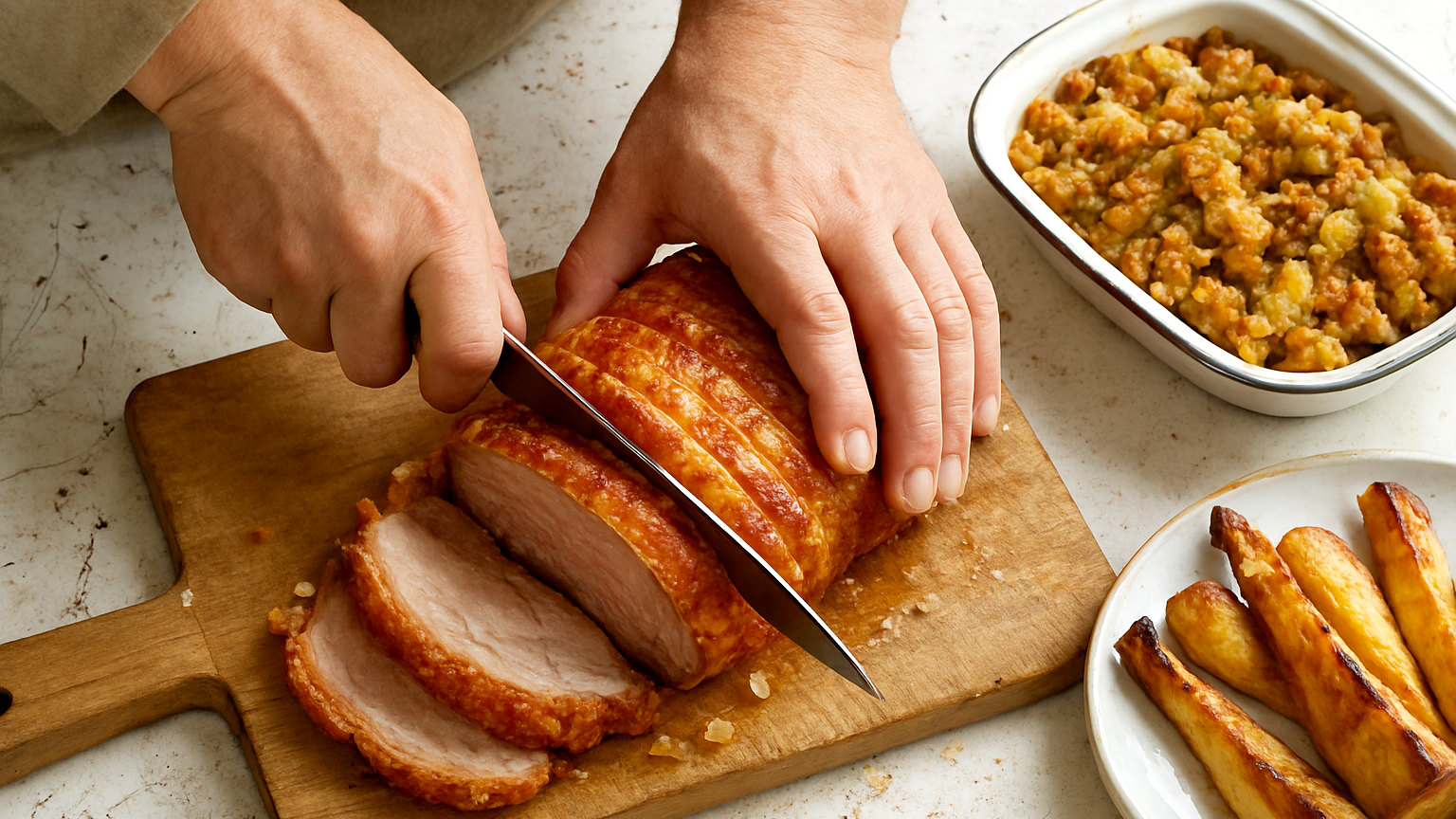
Most British kitchens have one oven and a Sunday roast asks for at least three different temperatures. The problem looks worse than it is, because the meat has to rest for between twenty and forty five minutes and that period is a free high temperature window. Almost all oven planning comes down to using it properly.
Why is the resting period the key?
A joint has to rest, so the oven is empty and can be turned up to 220C fan for the roast potatoes and Yorkshire puddings, which are the two things that genuinely need high heat.
Everything else is more tolerant than you think. Cauliflower cheese, stuffing and roasted roots will all cook at anything from 170C to 200C fan, so they can share the oven with the joint.
What order should things go in?
- The joint goes in first at its own temperature.
- Roots, stuffing and cauliflower cheese join it for the last 40 minutes if the oven is at 180C fan or above.
- The joint comes out and rests. Oven up to 220C fan.
- Potatoes go in, having been parboiled and roughed up earlier.
- Yorkshire puddings go on the top shelf for the final 25 minutes.
- Greens and peas cook on the hob in the last 8 minutes.
- Gravy is made in the roasting tin while everything browns.
What should move to the hob?
All the green vegetables, peas, carrots if you are not roasting them, braised red cabbage and any sauce. None of these needs an oven.
Mashed potato, bread sauce and onion gravy are also hob jobs and can be kept warm over a low heat.
What can be cooked the day before?
Braised red cabbage, cranberry sauce, apple sauce, bread sauce, gravy base, stuffing mixture and cauliflower cheese assembled but unbaked.
Potatoes can be parboiled and roughed up, and Yorkshire puddings can be fully cooked and reheated in five minutes.
Can an air fryer help?
Considerably. It handles roast potatoes, parsnips, pigs in blankets and Yorkshire puddings independently of the oven, and it reheats all of them.
On Christmas Day it is the single most useful piece of equipment for oven space, since it removes an entire tray from the calculation.
What about the grill?
Useful for browning cauliflower cheese or crisping crackling at the last minute, provided your grill is separate from the main oven rather than inside it.
Many British ovens have the grill in the same cavity, which makes it useless while anything is roasting.
Does shelf position matter?
Yes. A fan oven is fairly even but the top shelf is usually hottest. Yorkshire puddings go there, potatoes below them, and anything tolerant at the bottom.
Do not put a tray directly above the puddings, since it blocks the heat they need.
How do you keep things hot?
Warm the plates and the serving dishes, which matters more than most people allow. A hot plate keeps a meal warm far longer than a hot oven briefly did.
Cooked items can sit uncovered on a rack in a switched off oven for fifteen minutes. Covering with foil softens anything crisp.
What if the oven is small?
Cook the potatoes as a gratin or boulangere underneath the joint rather than as roasties, which removes the need for a second high temperature slot entirely.
Alternatively roast the potatoes in the morning until nearly done and give them fifteen minutes to finish while the meat rests.
Does the joint have to rest that long?
Yes, and it is not a compromise made for the oven. Twenty minutes for a chicken and up to forty five for a large rib is what the meat itself needs, so the window is free rather than borrowed.
What is the realistic minimum?
Meat, potatoes, one green vegetable and gravy. Four things done well beat seven done anxiously, and nobody at the table counts the dishes.
Add a fifth only if it can be made the day before or cooked on the hob.
If that was useful, What Can You Make Ahead for a Roast Dinner? covers related ground, and there is plenty more in Roasts recipes.


