
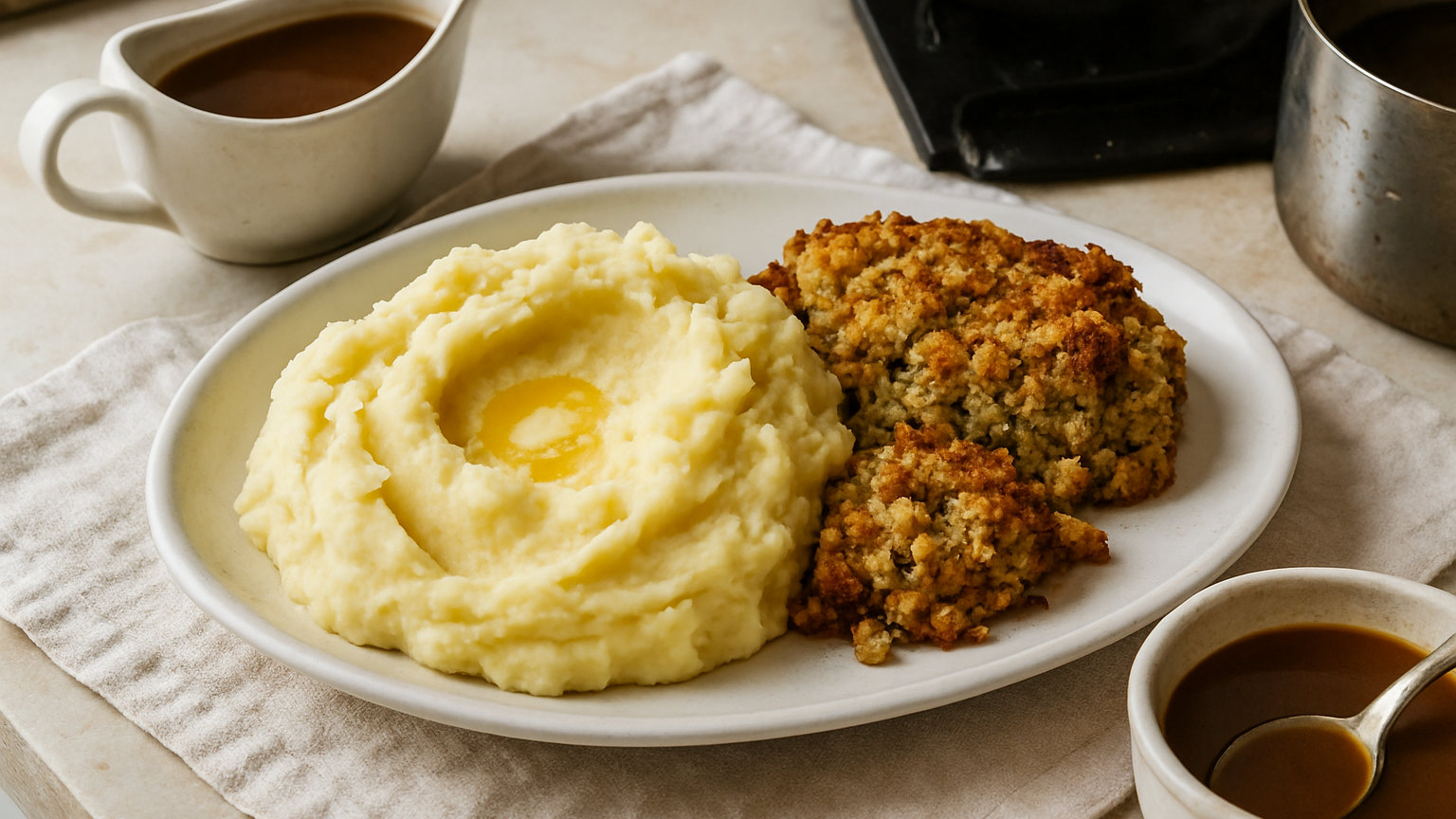
Mashed potato is not usually served alongside roast potatoes, but it belongs on the table with a slow cooked shoulder, a brisket or anything with a thin sauce that wants soaking up. It is also the trimming most often ruined by equipment, since a food processor turns potato into glue in about four seconds.
What do you need for 6 people?
- 1.2kg Maris Piper or King Edward potatoes
- 100g butter
- 150ml whole milk or single cream
- Salt and white pepper
- A grating of nutmeg, optional
How do you make it?
- Peel the potatoes and cut them into even chunks about 5cm across.
- Put them in cold salted water, bring to the boil and simmer for 15 to 18 minutes until a knife slides in easily.
- Drain thoroughly and leave in the colander for 3 minutes to steam dry.
- Warm the milk and butter together in the empty pan.
- Pass the potatoes through a ricer back into the pan, or mash them thoroughly.
- Fold the potato through the warm milk and butter with a wooden spoon.
- Season generously with salt, white pepper and nutmeg.
Never use a food processor or blender. The blades rupture the starch granules and release enough starch to turn the mash into a grey elastic paste, and there is no way back from it.
Which potatoes work best?
Floury varieties, the same ones that suit roasting. Maris Piper, King Edward, Desiree and Rooster all mash well.
Waxy salad potatoes stay firm and produce a lumpy, slightly gluey mash whatever you do to them.
Why should the milk be warm?
Cold liquid cools the potato and makes it seize slightly, so the mash needs more beating to come together and more beating means more starch released.
Warm milk absorbs instantly and the mash stays light with minimal working.
Ricer or masher?
A ricer gives the smoothest result with the least effort and is worth the drawer space. A mouli or a sieve does the same job.
A hand masher is perfectly good and gives a slightly rustic texture, which suits a mash served with sausages or a stew.
Why steam dry the potatoes?
Water left clinging to the potato thins the mash and forces you to use less milk and butter, which is where the flavour comes from.
Three minutes in the colander, or thirty seconds back in the dry hot pan, drives most of it off.
What can you add?
Wholegrain or Dijon mustard, horseradish, chopped chives, softened leeks, roasted garlic or a spoonful of creme fraiche.
Champ and colcannon are the Irish versions, made with spring onions and with cabbage or kale respectively.
What does mash go with?
Slow cooked shoulder, brisket, sausages and anything with a thin sauce that wants soaking up. It suits a stew far better than roast potatoes do.
It is not usually served alongside roast potatoes, though at Christmas a good many households manage both without complaint.
Can it be made ahead?
Yes. Make it up to a day ahead, cover and refrigerate, then reheat gently in a pan with an extra splash of milk, or in a covered dish at 180C fan for 25 minutes.
It also freezes for a month, and reheats best from frozen in a covered dish in the oven.
Why has it gone gluey?
Either a blender was used, or the potatoes were overworked, or a waxy variety was used. All three release too much free starch.
There is no way to correct it once it happens, which is why the equipment matters more here than the recipe does.
How much should you allow?
About 200g of raw potato per person, the same as for roast potatoes. Mash is rich, so this is generous rather than tight.
How do you keep it hot?
In a covered bowl set over a pan of barely simmering water, which holds it without drying it out or catching on the base.
Cool leftovers quickly, refrigerate within two hours and reheat once only until piping hot, in line with Food Standards Agency guidance.
Worth reading next: How to Fit a Whole Roast Dinner in One Oven. There is more in our Roasts recipes.


