
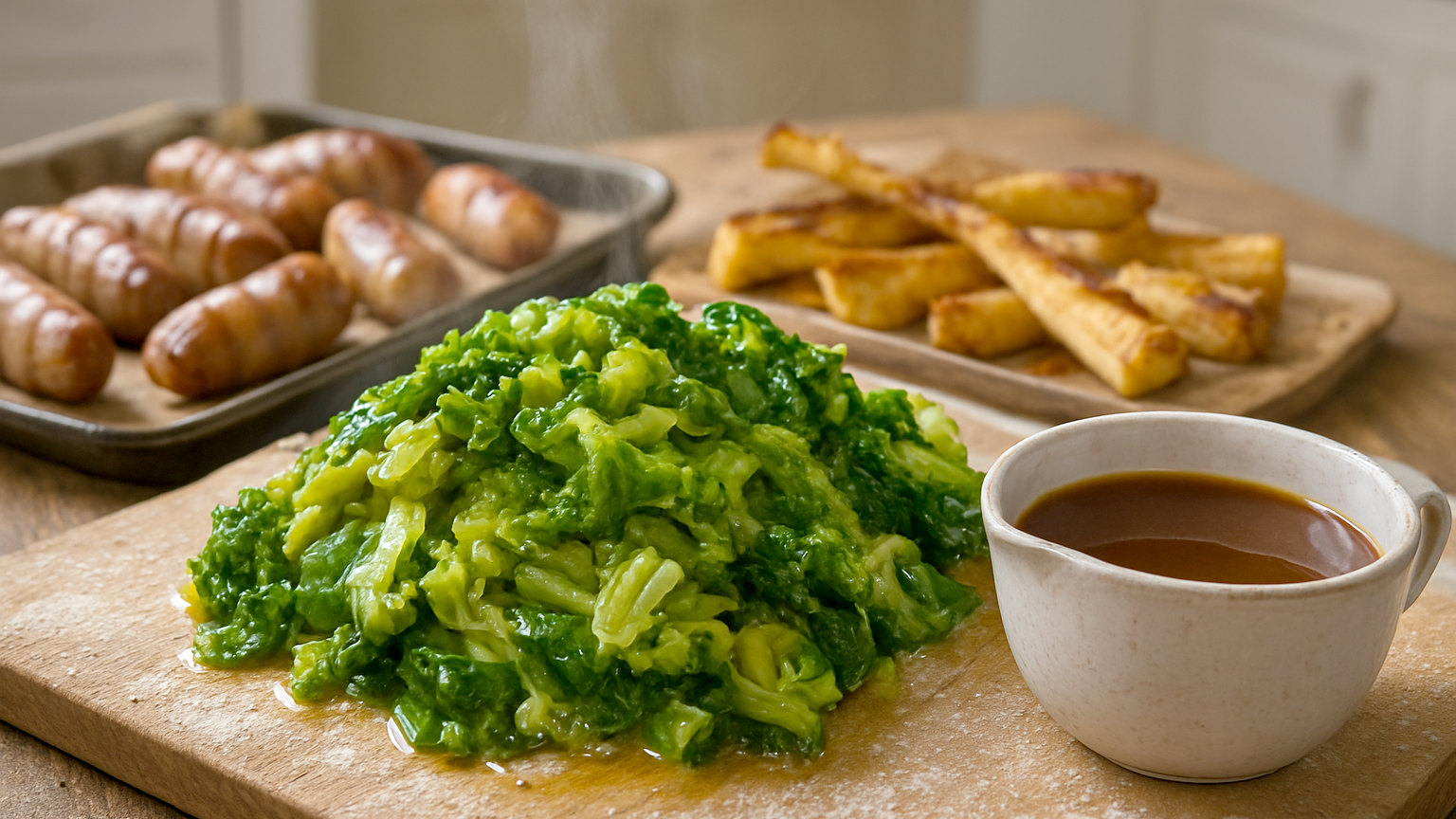
Cabbage suffers from the same reputation as sprouts and for the same reason. Boiled hard in a large pan of water it goes grey, smells strongly and loses everything worth eating into the water. Cooked briefly in a covered pan with butter and a splash of water, it keeps its colour and its texture and takes six minutes.
What do you need for 6 people?
- 1 savoy cabbage or 2 heads of spring greens, about 700g
- 50g butter
- 4 tablespoons water
- 1 clove of garlic, thinly sliced, optional
- A grating of nutmeg
- Salt and plenty of black pepper
How do you cook it?
- Quarter the cabbage, cut out the thick core and shred the leaves into ribbons about 1cm wide.
- Wash and shake dry, leaving some water clinging to the leaves.
- Melt the butter in a wide pan with a lid over a medium heat.
- Add the garlic if using and cook for 30 seconds.
- Add the cabbage and the water, season, and put the lid on.
- Cook for 5 to 6 minutes, shaking the pan once or twice.
- Uncover, raise the heat and let any remaining water boil off.
- Grate over nutmeg and season again before serving.
The lid is doing the work. The cabbage steams in a small amount of liquid rather than boiling in a large one, which is why it keeps both its colour and its flavour.
Why not boil it?
Boiling leaches out flavour, colour and nutrients into water that goes down the sink. It also takes longer, which is when the sulphurous smell develops.
If you do boil greens, save the water for the gravy, where the flavour is at least put to use.
How do you know when it is done?
It should be tender with a little bite left, and still bright green. Taste a piece at five minutes rather than relying on the clock.
Cabbage goes from perfect to soft in about ninety seconds, so this is a vegetable to cook last and serve immediately.
What can you add?
Fried bacon or pancetta, caraway seeds, a squeeze of lemon, chilli flakes, or cream stirred in at the end.
Nutmeg is the traditional English addition and suits savoy cabbage particularly well.
Does it need garlic?
No, and a traditional English plate would leave it out. It suits cabbage served with chicken or pork and is less appropriate next to beef with horseradish.
Which greens work the same way?
Spring greens, hispi or pointed cabbage, kale and cavolo nero all suit this method. Kale needs an extra two minutes.
Purple sprouting broccoli and tenderstem are better steamed or briefly boiled, since they are stems rather than leaves.
When are they in season?
Savoy cabbage runs from October to March and is at its best in the coldest months. Spring greens appear from March to May.
Kale and cavolo nero carry the winter, and hispi cabbage is around through summer.
Can it be prepared ahead?
Shred it a day ahead and keep it in a bag in the fridge. Do not cook it in advance, since reheated cabbage is exactly the grey vegetable this method avoids.
It takes six minutes, so it belongs in the last few minutes before serving alongside the gravy.
Should the core be thrown away?
No. Slice it thinly and add it to the pan two minutes before the leaves, since it takes slightly longer and is perfectly good eating.
The outer leaves are worth keeping too unless they are damaged, though they need a minute more than the tender inner ones.
What can you do with the cooking liquid?
There should be almost none left, which is the point of the method. Any that remains is buttery and well seasoned and belongs in the gravy rather than the sink.
How much should you allow?
About 100g per person. Cabbage reduces considerably in the pan, so a large head is less than it appears.
Leftovers are the basis of bubble and squeak. Cool quickly, refrigerate within two hours and use within two days, in line with Food Standards Agency guidance.
Next, try Braised Red Cabbage That Improves Overnight, or see the rest of our Roasts recipes.


