
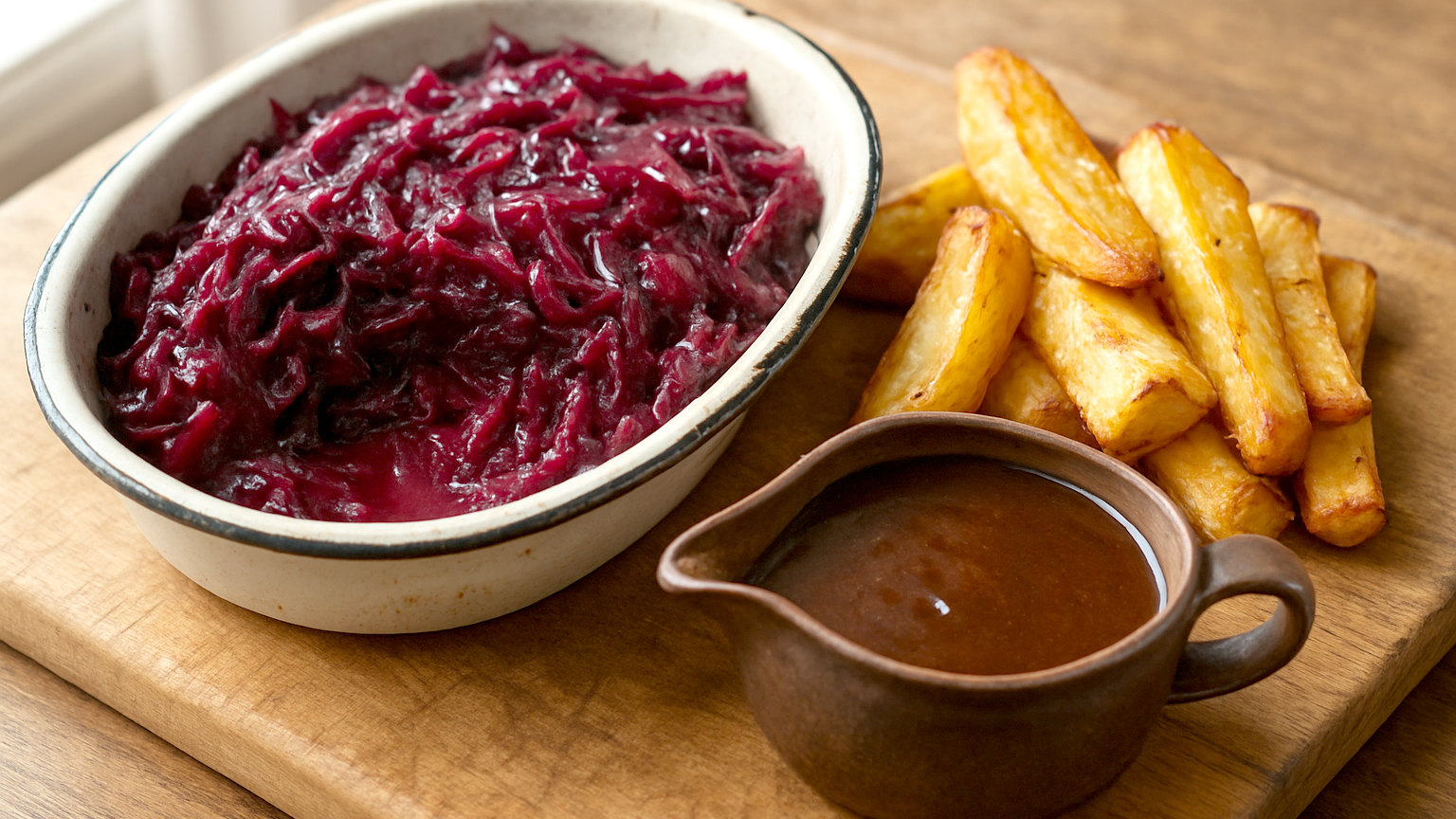
Braised red cabbage is the most useful thing on a Sunday table because it is the only element that is better made in advance. It wants an hour and a half of slow cooking, it improves for two days in the fridge, and it freezes for three months. Making it on the day is possible and slightly wasteful of the time available.
What do you need for 8 people?
- 1 red cabbage, about 1kg, quartered, cored and finely shredded
- 2 onions, thinly sliced
- 2 Bramley apples, peeled and chopped
- 50g butter or 3 tablespoons oil
- 4 tablespoons red wine vinegar
- 3 tablespoons soft brown sugar
- 150ml red wine, water or stock
- 2 bay leaves, 4 cloves and a grating of nutmeg
- Salt and black pepper
How do you make it?
- Melt the butter in a large heavy pan and soften the onions for 10 minutes.
- Add the cabbage and turn it through the butter until it starts to wilt.
- Stir in the apples, vinegar, sugar, liquid and spices.
- Season, bring to a simmer, then cover and cook on the lowest heat for 1 hour 30 minutes.
- Stir every 20 minutes and add a splash of water if it looks dry.
- Uncover for the last 15 minutes to reduce any excess liquid.
- Taste and adjust the balance of vinegar and sugar before serving.
The vinegar is what keeps it red. Red cabbage cooked without acid turns a dull blue grey, which is why every traditional recipe includes vinegar or apple and why adding it at the start rather than the end matters.
Why does it improve overnight?
The flavours settle and the sharpness of the vinegar softens into the sweetness of the apple and sugar. The texture also relaxes.
Two days is the sweet spot. It keeps a week in the fridge and gets no worse over that time.
Can it be cooked in the oven instead?
Yes, and it suits a day when the hob is busy. Cover tightly and cook at 150C fan for 2 hours, stirring once.
It can also go in a slow cooker for 4 hours on low, using half the liquid since nothing evaporates.
What can you use instead of red wine vinegar?
Cider vinegar is excellent and suits the apple. Balsamic gives a sweeter, darker result and you should reduce the sugar accordingly.
Malt vinegar works but is harsh, so use a little less and taste as you go.
What else can go in?
A handful of raisins or dried cranberries, a strip of orange peel, a cinnamon stick, or chopped streaky bacon fried with the onions.
Redcurrant jelly stirred in at the end rounds it out, and a splash of port is worth adding at Christmas.
How finely should it be shredded?
Finely, about the thickness of a pound coin. Thick shreds stay chewy even after ninety minutes and give an uneven texture.
A food processor with a slicing disc does it in seconds and is worth using for a whole cabbage.
Does it freeze?
Very well, for three months. Freeze it in portions and reheat gently from frozen in a covered pan with a splash of water.
Reheat once only, until piping hot throughout, in line with Food Standards Agency guidance.
What does it go with?
Pork above all, then goose, duck, turkey and beef. It provides the acidity a rich roast needs and doubles as a vegetable.
It is also the right thing next to a slow cooked shoulder of anything, where the plate needs cutting through.
Why has it gone blue or grey?
Not enough acid. The pigment in red cabbage changes colour with pH, turning blue in alkaline conditions and staying red in acidic ones.
Add another tablespoon of vinegar and it will come back. Hard water can be enough to tip it, which is why some kitchens have the problem and others never do.
How much should you allow?
A 1kg cabbage serves eight generously as one of several vegetables. It reduces considerably in the pan, so a large cabbage is less than it looks.
Leftovers are excellent cold in a sandwich with cold roast pork.
See also Buttered Savoy Cabbage and Spring Greens, or browse more Roasts recipes.


