
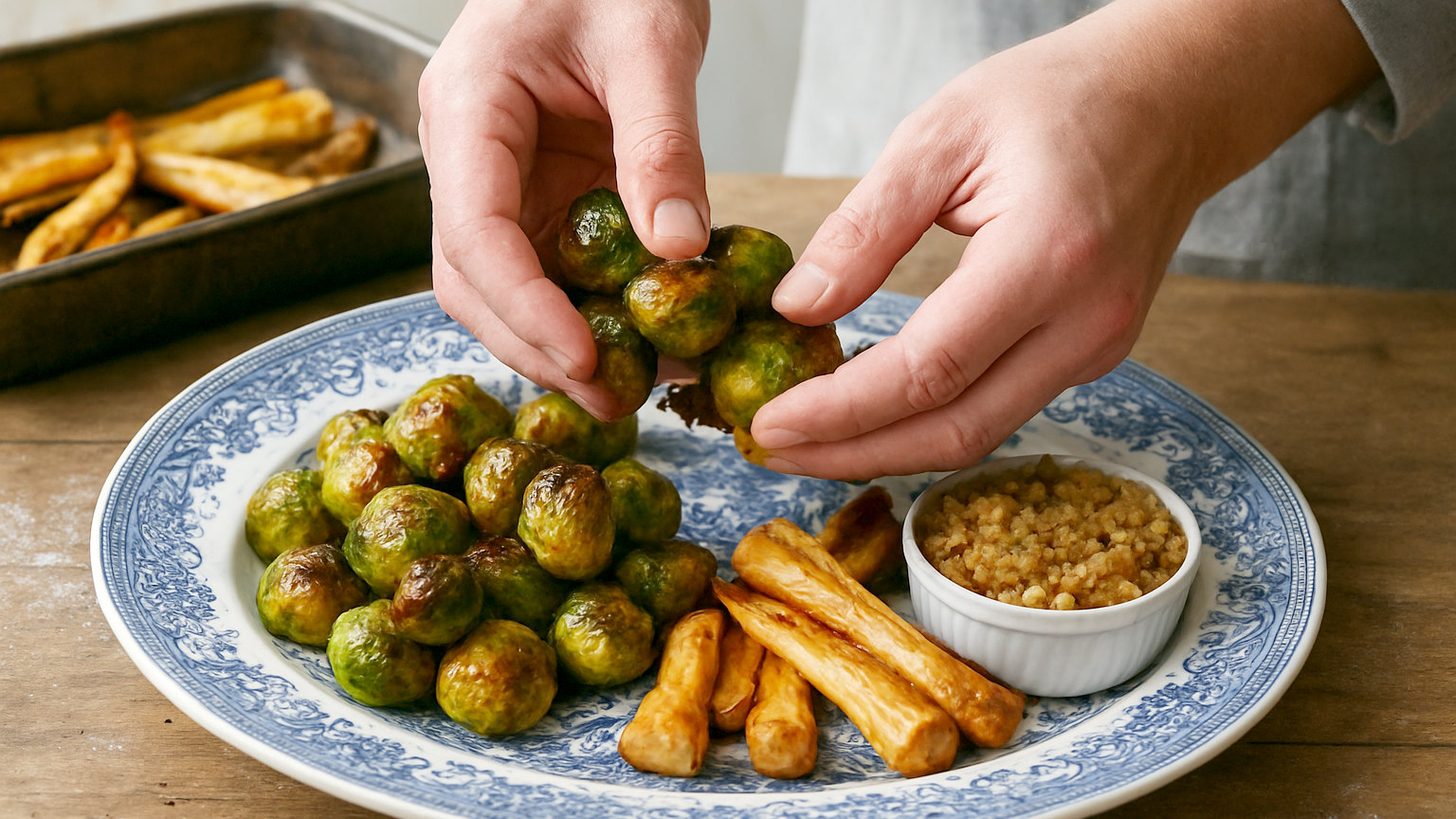
Brussels sprouts are disliked by a generation of people who were served them boiled to grey mush, and the reputation has outlived the cooking. The sulphurous smell everyone remembers comes from overcooking, and it appears after about ten minutes in water. Cooked for six minutes, or roasted, or shredded and fried, they are a genuinely good vegetable.
Why do overcooked sprouts smell?
They contain sulphur compounds that break down and become volatile with prolonged heat. The longer they cook, the more of them are released.
Cut the cooking time and the problem disappears entirely. This is the whole explanation for the reputation.
How long should they be boiled?
Five to six minutes in well salted boiling water, until a knife goes into the base with slight resistance.
Do not cut a cross in the base. This piece of received wisdom was meant to help large sprouts cook evenly, and all it actually does is let water into the middle and make them soggy.
Is roasting better?
For most people, yes. Halve them, toss with oil and salt, and roast at 200C fan for 20 to 25 minutes until the outsides are browned and the loose leaves are crisp.
Roasting caramelises the sugars and produces a nutty flavour that bears no relation to the boiled version.
What about frying them shredded?
Shred them finely and fry in butter for 4 to 5 minutes with a splash of water at the end. This is the fastest method and the one most likely to convert a sceptic.
Add bacon or pancetta, chopped chestnuts, or a squeeze of lemon at the end.
What goes well with sprouts?
Bacon, chestnuts, garlic, chilli flakes, lemon, parmesan and brown butter. All of them work because sprouts are slightly bitter and respond to fat, salt and acid.
Cream and nutmeg is the more traditional English direction and suits a Christmas plate.
When are they in season?
British sprouts run from October through to February, and they are traditionally said to be sweeter after a frost. Their peak coincides with Christmas, which is why they are on the plate.
Buy them on the stalk if you can, since they keep far longer and are usually fresher.
How do you prepare them?
Trim the base, pull off any loose or yellowed outer leaves, and halve anything larger than a walnut. Small ones can be left whole.
Keep the loose leaves and roast them alongside, since they crisp into something close to a crisp.
Can they be prepared ahead?
Trim and halve them a day ahead and keep them in a bag in the fridge. Do not cook them ahead, since reheated sprouts are exactly the grey vegetable everyone objects to.
If you must cook early, blanch for three minutes, refresh in cold water and finish in a hot pan at the last minute.
How much should you allow?
About 100g per person, or roughly six to eight sprouts. At Christmas allow a little more, since the plate is larger.
Leftover sprouts are excellent in bubble and squeak the next day, which is arguably their best use.
Can they be cooked in an air fryer?
Halved and tossed in oil, they take 12 to 15 minutes at 190C and come out with crisp outer leaves. It is arguably the best method of all and uses no oven space.
Shake the basket twice and keep them in a single layer, since crowding steams them.
Do frozen sprouts work?
For boiling and for adding to bubble and squeak, yes. They hold too much water to roast well, since they steam rather than brown.
What if people still refuse them?
Shred them raw into a salad with lemon, parmesan and toasted hazelnuts. Raw sprouts taste nothing like cooked ones and win over people who are certain they dislike them.
Cool leftovers quickly, refrigerate within two hours and use within two days, following Food Standards Agency guidance.
If that was useful, Braised Red Cabbage That Improves Overnight covers related ground, and there is plenty more in Roasts recipes.


