
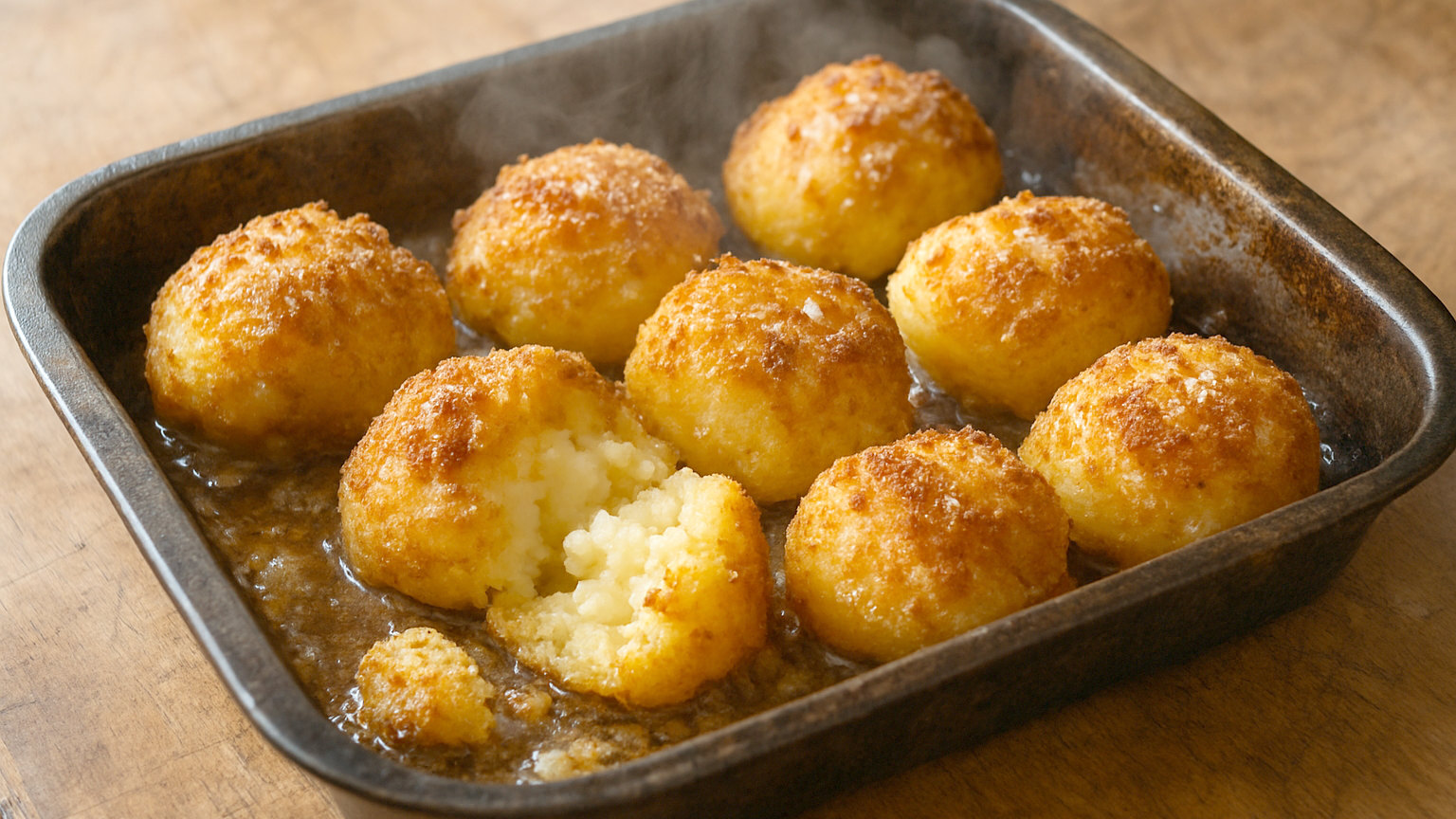
Tossing parboiled potatoes in a little semolina before they go into hot fat adds a second layer of crunch on top of the crust the potato makes for itself. It is a small trick that costs pennies and takes twenty seconds, and it is the most reliable way to improve roast potatoes that are already being made properly.
What do you need for 6 people?
- 1.5kg Maris Piper or King Edward potatoes
- 2 tablespoons fine semolina
- 5 tablespoons beef dripping, goose fat or rapeseed oil
- 1 teaspoon flaky salt
- Half a teaspoon of bicarbonate of soda, optional
How do you make them?
- Peel and cut the potatoes into even pieces about the size of a small egg.
- Put them into cold salted water with the bicarbonate of soda, bring to the boil and simmer for 8 to 10 minutes.
- Drain and steam dry in the colander for 3 minutes.
- Return them to the dry pan, put the lid on and shake hard until ragged.
- Scatter over the semolina and salt and shake again to coat.
- Heat the fat in a roasting tin at 200C fan until smoking.
- Add the potatoes carefully, turning each to coat, and roast for 50 minutes.
- Turn at 25 minutes and again 15 minutes later.
Add the semolina after roughing up, not before. It needs the damp ragged surface to cling to, and potatoes coated while smooth simply shed it into the tin where it burns.
Why does semolina work?
It is coarse durum wheat, so the grains stay separate rather than forming a paste. Each one fries individually in the hot fat and becomes a hard little nugget on the surface.
Fine flour, by contrast, absorbs moisture and can form a soft coating if you use too much.
How much should you use?
About a tablespoon per 750g of potatoes, which is a light dusting rather than a coating. The potatoes should look faintly powdered, not battered.
Too much semolina falls off into the fat and burns, which taints everything else in the tin.
What can you use instead?
Plain flour works well at the same quantity and gives a slightly finer, more even crust. Polenta gives a coarser, more granular crunch and a faint sweetness.
Cornflour produces a very light, almost glassy crust and is the best gluten free option. Rice flour behaves similarly.
Does it work without parboiling?
Not really. The coating needs the rough damp surface that only parboiling and shaking produce, so on a raw potato it just sits there and browns unevenly.
If time is very short, a six minute parboil is enough to give the semolina something to hold onto.
Can you season the coating?
Yes, and it is a good place for flavour since it is in direct contact with the fat. Smoked paprika, garlic granules, celery salt or finely chopped rosemary all work.
Keep anything sugary out of it, since it will burn over 50 minutes at this temperature.
Can they be prepared ahead?
Parboil, rough up and coat, then spread on a tray and refrigerate for up to 24 hours. They roast from cold with no change to the timing and the surface dries further, which helps.
Do not add the semolina more than a day ahead, since it gradually absorbs moisture and goes pasty.
Which fat suits a coated potato?
Any of the usual ones, though a neutral oil lets the coating brown more evenly than a strongly flavoured dripping does. The semolina is providing texture rather than taste.
Whatever you use, it still has to be smoking hot before the potatoes go in, or the coating absorbs it and turns pasty rather than crisping.
Do they reheat well?
Better than plain roast potatoes, because the coating gives them more structure. Give them 12 minutes at 200C fan, spread out on a hot tray.
Cool leftovers quickly, refrigerate within two hours and use within two days, reheating once only until piping hot, in line with Food Standards Agency guidance.
For something along the same lines, see How Long Should You Parboil Roast Potatoes?, or browse all our Roasts recipes.


