
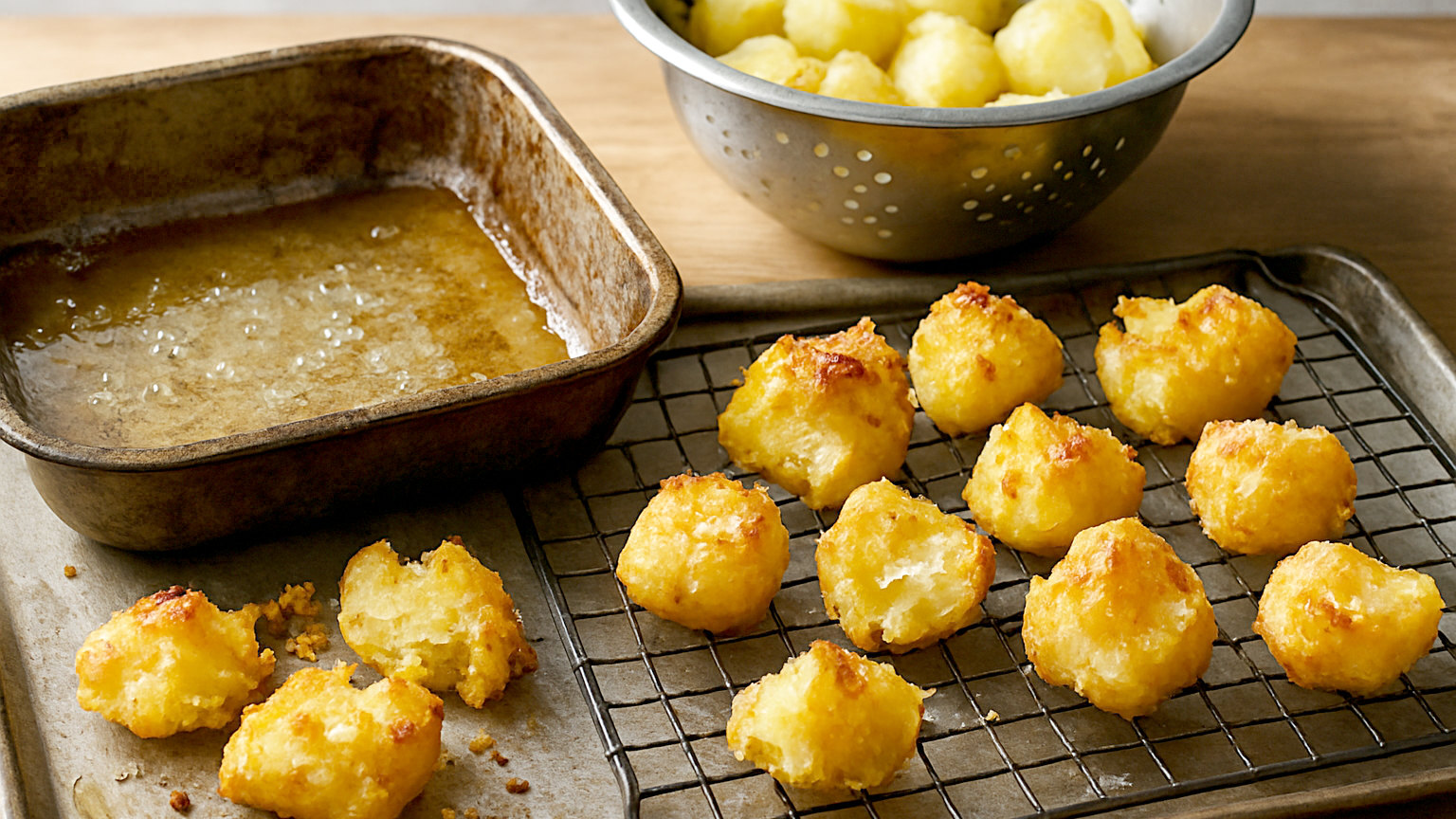
Parboiling is the step that decides whether roast potatoes will be crisp, and it is the one most often rushed. The purpose is not to cook the potatoes. It is to soften the outer few millimetres so that they break down into a rough, mealy surface when shaken, and that surface is what fries into a crust in hot fat.
How long does it take?
Eight to ten minutes at a gentle simmer once the water has come to the boil, for pieces roughly the size of a small egg.
Larger pieces need twelve. Smaller ones need six. The timing is a guide and the knife test is the actual answer.
How do you test them?
Push the point of a knife into a piece. It should slide into the outer layer with almost no resistance and then meet a firm core in the middle.
If the knife goes straight through, they have gone too far. They will still roast, but they may break apart when shaken and you will end up with more crumbs than potatoes.
Should you start in cold water?
Yes. Cold water brought slowly to the boil heats the potato evenly from the outside in. Dropping cold potatoes into boiling water cooks the surface hard before the inside has warmed.
Cover them by about 3cm and salt the water well, roughly a teaspoon per litre.
Does salting the water help?
It seasons the potato itself rather than just the surface, which makes a noticeable difference to the finished result. Unsalted parboiling water gives you potatoes that need far more salt at the end.
Be generous. Most of the salt goes down the sink with the water.
What does bicarbonate of soda do?
A teaspoon added to the parboiling water makes it alkaline, which breaks down the pectin holding the surface cells together far more aggressively.
The result is a very craggy exterior and an exceptionally crisp crust. Use no more than a teaspoon for a large pan, since too much gives a soapy taste and can turn the potatoes grey.
Should they be drained and dried?
Drain thoroughly and leave them in the colander for two or three minutes so the steam escapes and the surface dries.
Water on the potato becomes steam in the tin, and steam prevents browning. This short pause is free and it matters.
How hard should you shake them?
Hard enough that the surfaces look ragged and slightly mashed. Put them back in the dry pan, put the lid on and shake several times with real force.
The aim is deliberate damage. Every rough edge is a place where the fat will crisp the surface.
Can you parboil ahead of time?
Yes, and it improves the result. Parboil, drain, rough up and leave them on a tray in the fridge for up to 24 hours. The surface dries out further, which helps rather than hinders.
They go into the hot fat straight from the fridge with no change to the roasting time.
Does adding vinegar help?
A tablespoon of white wine vinegar in the parboiling water helps the potatoes hold their shape, which is useful if your variety tends to collapse. It works in the opposite direction to bicarbonate of soda.
Use one or the other rather than both, and pick based on whether your potatoes usually break up or refuse to fluff.
How much water and what size pan?
Enough to cover by 3cm in the widest pan you have, so the potatoes sit in a single layer and cook evenly. A crowded deep pan cooks the bottom layer faster than the top.
Can you skip parboiling entirely?
You can roast raw potatoes, and they will be perfectly pleasant, but they will not be a proper roastie. Without the softened, roughened surface there is nothing to fry into a crust.
If time is short, parboil for six minutes rather than skipping it. Even that is far better than nothing.
See also Why Are My Roast Potatoes Not Crispy?, or browse more Roasts recipes.


