
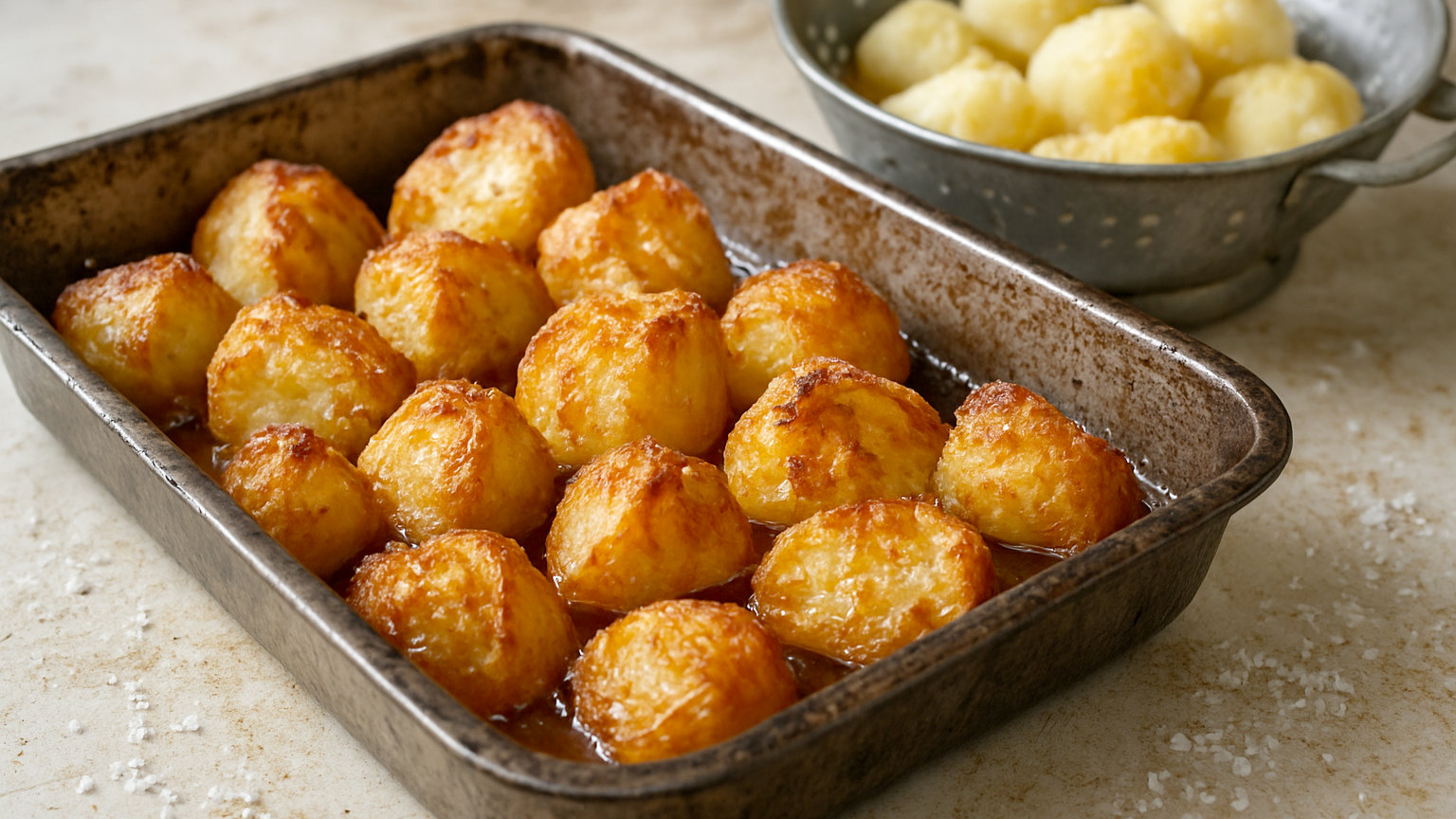
Roast potatoes that come out pale and soft are frustrating precisely because the oven part looked fine. In almost every case the problem happened earlier: the wrong variety, not enough parboiling, a timid shake, fat that was not hot, or too many potatoes in the tin. Working through them in order usually identifies the culprit within a minute.
Was it the wrong variety?
Waxy potatoes such as Charlotte, Anya and most salad varieties will not fluff up when parboiled, so there is no rough surface to crisp. They roast to a smooth, slightly leathery skin.
Maris Piper, King Edward, Desiree and Rooster are floury enough to break down at the surface, which is the whole basis of a crisp roastie.
Were they parboiled long enough?
Eight to ten minutes at a simmer, until a knife goes into the outside easily while the middle is still firm. Underdone potatoes have nothing to rough up.
Take them slightly further than feels comfortable. The most common error is caution, and a potato that has softened a little too much still roasts well, whereas an underdone one cannot.
Were they roughed up properly?
Put the drained potatoes back in the empty pan, put the lid on and shake hard several times. The surfaces should look ragged and slightly mashed.
You are deliberately damaging the outside. A gentle turn with a spoon achieves nothing, and this is the step people are most reluctant to commit to.
Were they dry when they went in?
Leave them in the colander for two or three minutes after draining so the steam escapes and the surface dries. Water on the potato turns to steam in the tin and prevents browning.
This is also why letting them cool completely, or even chilling them, produces a better result rather than a worse one.
Was the fat hot enough?
The tin and the fat should go into the oven to heat while the oven comes up to temperature, and the fat should be smoking when the potatoes go in.
They should hiss loudly on contact. If they go in silently, take them out, get the fat properly hot and start again, because cool fat is absorbed rather than repelled.
Was the tin overcrowded?
This is the most common mistake of all. Potatoes need space around them or they steam each other, and a crowded tin produces soft potatoes however good everything else was.
Use two tins rather than piling them in. Washing up twice is a better outcome than a tray of disappointment.
Was the oven hot enough?
Roast potatoes want 200C fan, 220C conventional, gas mark 7. Below about 180C fan they will cook through without ever developing a proper crust.
If the joint needs a lower oven, parboil and rough up early and give the potatoes their high heat blast during the resting period.
Were they turned too often?
Twice is enough, at about 25 minutes and again 15 minutes later. Constant turning breaks the forming crust before it has set.
Leave them alone for the first half so a surface has a chance to develop.
Were they cooked at the same time as something wet?
A tray of potatoes sharing an oven with a covered casserole or a large joint releasing steam will struggle, because the oven air is humid and browning needs dry heat.
Give the potatoes the oven to themselves during the resting period, which is the simplest fix and costs no extra time.
Did they sit too long before serving?
Crisp potatoes soften within about ten minutes under foil, since trapped steam undoes the crust. Keep them uncovered on a rack in a low oven instead.
Can soft potatoes be rescued?
Often. Spread them out on a fresh hot tray with a little more hot fat, turn the oven up to 220C fan and give them another 15 to 20 minutes without crowding.
An air fryer at 200C for 10 minutes does the same job faster if the oven is full, which on a Sunday it usually is.
If that was useful, Perfect Roast Potatoes: Crisp Outside, Fluffy Inside covers related ground, and there is plenty more in Roasts recipes.


