
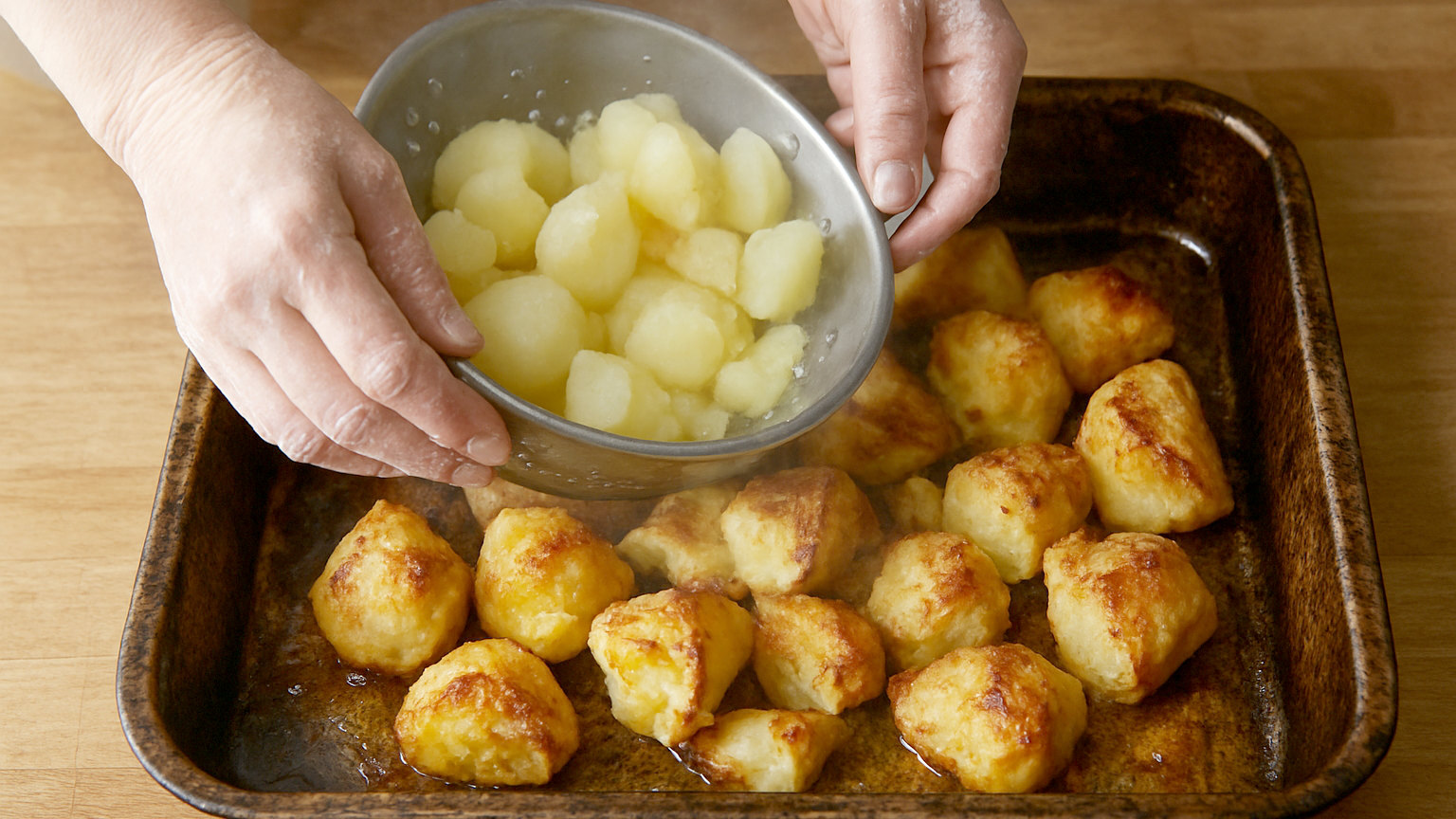
Whether to peel roast potatoes is one of those questions where both answers are correct and they produce different food. A classic British roastie, with a shattering crust and a fluffy interior, requires peeling. A tray of skin on roasted potatoes is quicker, keeps more of the nutrients and tastes good, but it is a different dish and it is worth being clear about which one you are making.
Why does the skin matter?
The crust on a roast potato comes from the outer few millimetres of flesh breaking down during parboiling and being roughed up into a ragged surface, which then fries in hot fat.
Skin holds that surface together. A potato with its skin on cannot be roughed up, so there is nothing for the fat to crisp and you get a smooth exterior instead.
When should you leave the skin on?
With new potatoes and small waxy varieties, which were never going to fluff up anyway. Halved and roasted cut side down they develop a good browned face and keep their shape.
Also when time is short, when you want a more rustic dish, or when the potatoes are going alongside something already rich enough not to need a crust.
How do you roast unpeeled potatoes well?
- Scrub them and halve or quarter so there is plenty of cut surface.
- Parboil for 6 minutes, which softens the cut faces without splitting the skin.
- Drain and steam dry, but do not shake them hard.
- Toss with oil, salt and any herbs.
- Roast cut side down at 200C fan for 35 to 40 minutes without turning for the first 25.
Why cut side down?
Direct contact with hot metal gives you a flat, deeply browned face, which is where all the texture comes from when there is no roughed up crust.
Turning them too early breaks that contact before the browning has developed, so leave them alone.
Are the skins better for you?
They contain fibre and some minerals, so unpeeled potatoes are marginally more nutritious. The difference across a portion is modest rather than transformative.
Green patches and sprouting eyes should always be cut away, peeled or not, since they contain solanine and taste bitter.
What can you do with the peelings?
Toss them in a little oil and salt and roast at 200C fan for 15 minutes, and they become crisps. It is a genuine use rather than a novelty, and children tend to eat them.
Otherwise they go on the compost. They should not go into stock, since they make it cloudy and slightly muddy.
Does it change the quantity you need?
Yes, in your favour. Peeling loses about 20 per cent of the weight, so leaving the skin on means you buy less for the same amount on the plate.
Allow 200g of unpeeled potato per person rather than 250g.
Does the skin burn at roasting temperatures?
Thin skins can catch at 220C fan over a long roast, so 200C fan is the safer setting for unpeeled potatoes and 40 minutes is usually enough.
Which potatoes suit skin on roasting?
Charlotte, Anya, Jersey Royals and other salad varieties, all of which have thin skins and hold their shape. Red skinned Desiree and Rooster also look good this way.
Jersey Royals are in season from April to July and are worth roasting whole with butter and mint rather than treating as a roastie at all.
Is it quicker to leave them unpeeled?
It saves about ten minutes for a family sized quantity, which on a busy day is not nothing. Scrubbing still takes time, so the saving is smaller than it first appears.
Peeling ahead and leaving the potatoes in cold water in the fridge removes the job from the day entirely, which is usually the better answer.
Can you mix both on one tray?
Better not. Peeled floury potatoes need 50 minutes and unpeeled waxy ones need 35, so one or the other will be wrong.
If you want both, use two tins or stagger them, adding the unpeeled potatoes fifteen minutes after the peeled ones.
Worth reading next: Which Potatoes Are Best for Roasting?. There is more in our Roasts recipes.


