
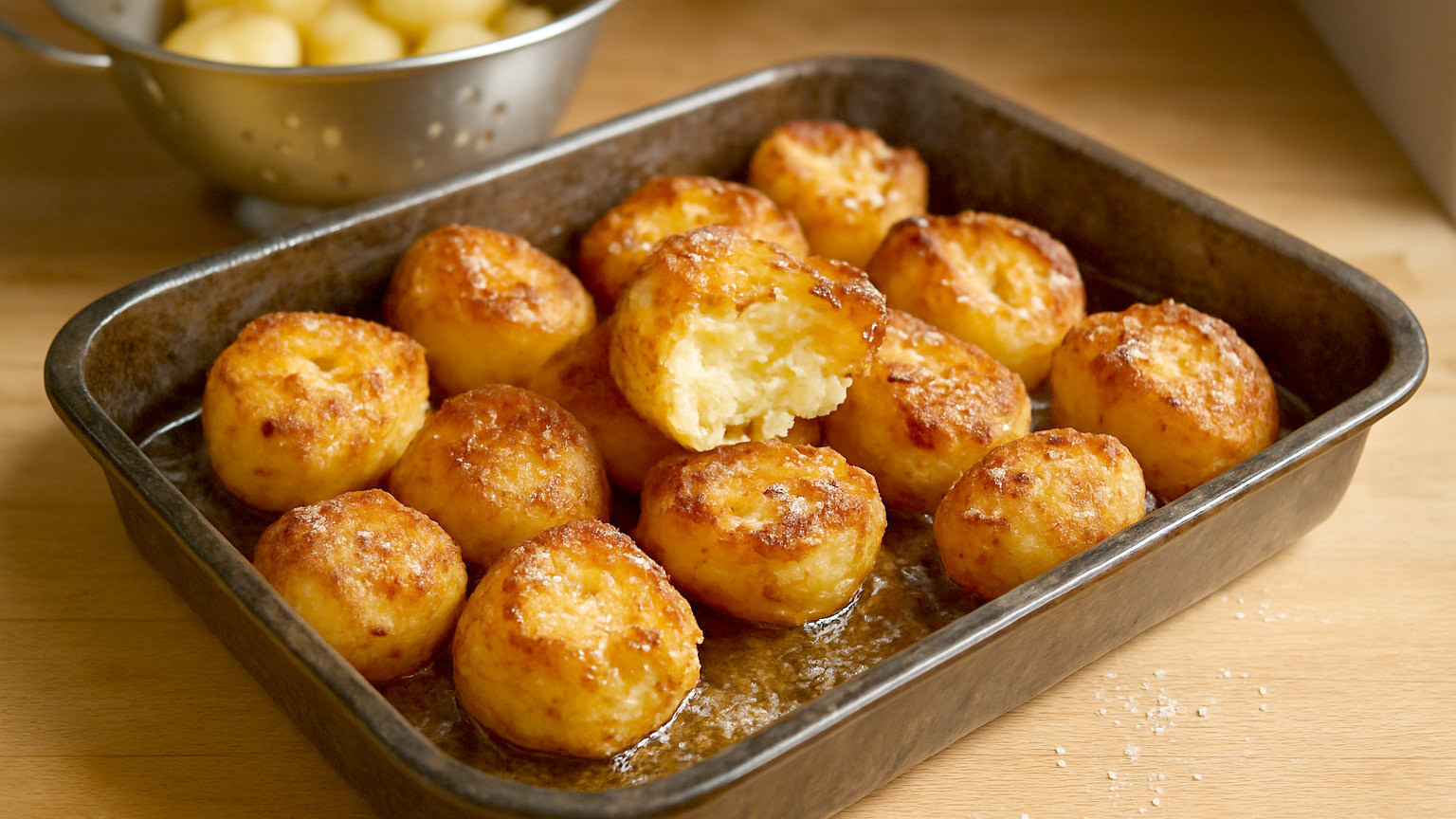
The single decision that makes the biggest difference to roast potatoes is made in the shop rather than the kitchen. Floury varieties break down at the surface when parboiled, giving you something rough to crisp. Waxy varieties hold together, which is exactly what you do not want, since a potato that refuses to fluff up can only ever roast to a smooth skin.
What makes a potato floury?
A higher starch content and lower moisture. When these potatoes are boiled, the outer layer of cells separates and turns mealy, which is the ragged surface that later crisps in hot fat.
Waxy potatoes have less starch and more moisture, so the cells stay bound together. They are excellent boiled or in salads and poor roasted.
Which variety is the standard?
Maris Piper, which is in every supermarket and is bred for exactly this. It is reliable, roasts well and is usually the cheapest of the good options.
King Edward is at least as good and arguably better. It is slightly drier and fluffier, and it browns a little faster, though it is more prone to breaking up if parboiled too long.
What else works well?
Desiree has a red skin, holds its shape better than King Edward and roasts to a very good crust. Rooster is similar and widely available.
Wilja, Cara and Vivaldi all sit between floury and waxy and give acceptable results. Marfona is fine if it is what the shop has.
Which should you avoid?
Charlotte, Anya, Jersey Royals and anything sold as a salad potato. These are firmly waxy and will roast to a smooth, slightly leathery surface no matter what you do to them.
New potatoes generally are the wrong choice for a classic roastie, though they are very good roasted whole in their skins as a different dish entirely.
What if the bag just says white potatoes?
Look for the words suitable for roasting on the packaging, which supermarkets are now reasonably good about. Failing that, check the variety on the small print, which is usually there.
Loose potatoes in a greengrocer are almost always labelled by variety, and asking is quicker than guessing.
Does size matter?
Buy medium to large potatoes, since you want to cut them into even pieces roughly the size of a small egg. Very small potatoes give you more skin and less fluffy interior.
Even sizing matters more than absolute size. Pieces that differ noticeably will be either underdone or falling apart by the time the tray comes out.
When are British potatoes at their best?
Maincrop varieties are lifted from September and store through to spring, so the traditional roasting season runs from autumn through winter, which is convenient given when people eat roast dinners.
By late spring, stored potatoes have started to lose moisture and can be sweeter and more prone to browning too fast. Turn the oven down slightly if they are catching.
Do old potatoes roast differently?
Potatoes that have been stored a long time convert some starch to sugar, which makes them darken more quickly in the oven. They can also go slightly hollow in the middle.
Keep potatoes in a cool dark place rather than the fridge, since refrigeration accelerates that sugar conversion considerably.
Should you peel them?
For a classic roastie, yes. The skin prevents the surface breaking down when you rough the potatoes up, so the crust never forms properly.
Skin on roasted potatoes are a good dish in their own right, particularly with waxy varieties halved and roasted cut side down, but they are a different thing from a proper roast potato.
What can you use if only waxy potatoes are available?
Parboil them slightly longer, rough them up harder and add a tablespoon of semolina or flour, which supplies the rough surface the potato is not providing.
Alternatively, change the dish. Waxy potatoes are excellent halved, tossed in oil and roasted cut side down until deeply browned, which is a different result but a good one.
For something along the same lines, see Do You Have to Peel Potatoes for Roasting?, or browse all our Roasts recipes.


