
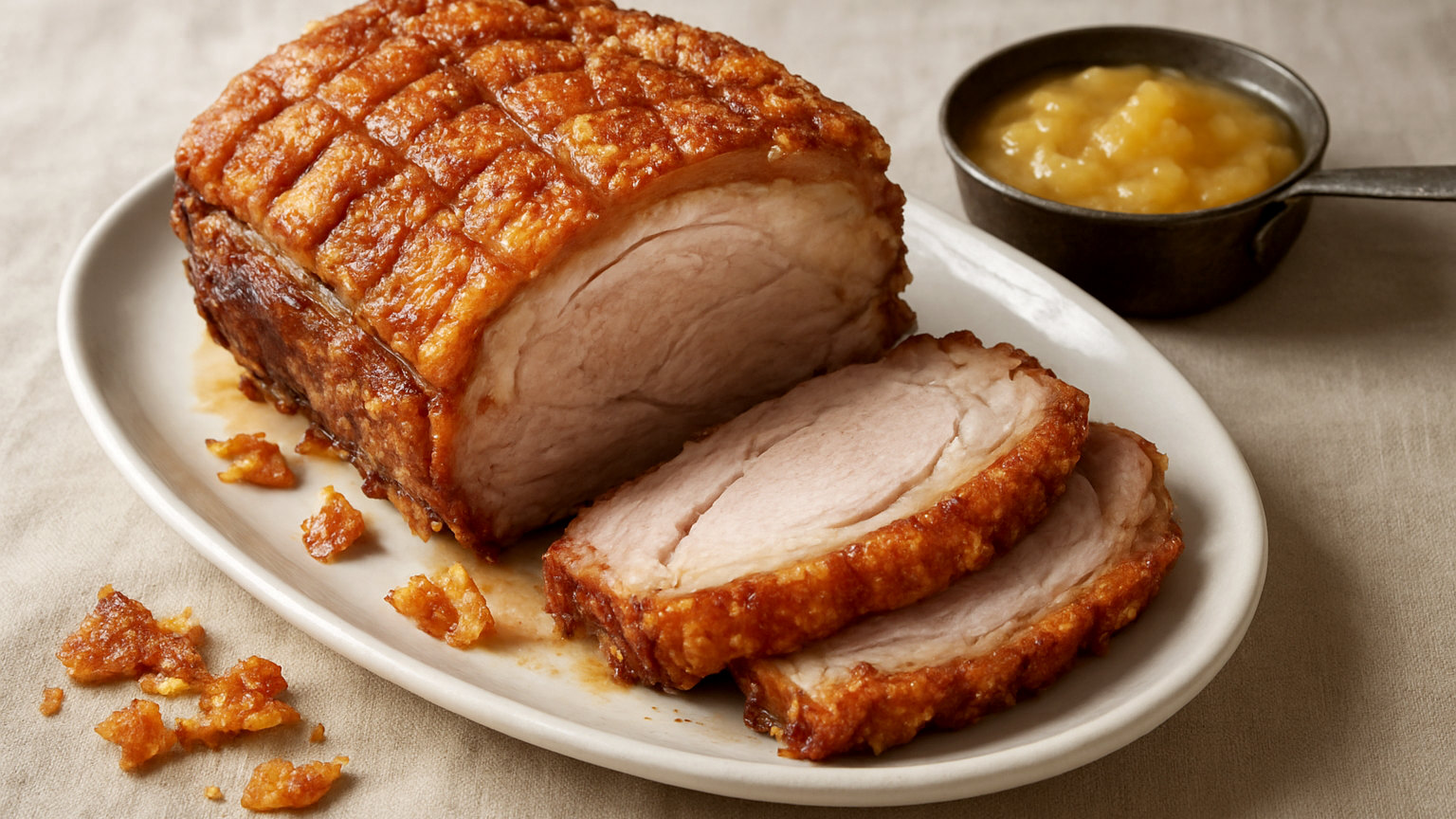
Apple sauce sits next to roast pork for the same reason mint sauce sits next to lamb. Pork is fatty and slightly sweet, and it needs acidity to cut through rather than richness to add to it. Once that is understood, the alternatives become obvious, and several of them suit particular cuts better than apple sauce does.
How do you make proper apple sauce?
Peel, core and roughly chop 500g of Bramley apples. Put them in a pan with two tablespoons of water, a knob of butter and a tablespoon of sugar, cover and cook over a low heat for 10 to 12 minutes until they collapse.
Beat with a wooden spoon and taste. It should be sharp rather than sweet, so add sugar cautiously.
Which apples should you use?
Bramleys, because they break down into a puree on their own and they are sharp enough to do the job. British Bramleys are at their best from September through to March.
Eating apples will not collapse. Braeburns and Coxes hold their shape, so you end up with stewed apple chunks rather than sauce. If that is all you have, cook them longer and mash them hard.
What can you use instead of apple?
Quince, cooked the same way, is arguably better and is in season in October and November. Gooseberry sauce is the traditional English partner for pork in early summer.
Cranberry sauce, plum sauce or a sharp rhubarb compote all do the same job. Shop bought apple sauce loosened with a spoonful of cider vinegar is a reasonable emergency option.
Is mustard a better partner?
For a plain loin, often yes. Wholegrain mustard stirred into a little creme fraiche, or English mustard on the side, gives sharpness without the sweetness.
Mustard also works stirred into the gravy, where a teaspoon lifts the whole plate without anybody identifying what it is.
What about cider gravy?
Cider and pork are a natural pairing, and gravy made with dry cider and the roasting tin juices is better than plain stock gravy. Add a spoonful of apple sauce at the end to round it.
Keep the cider dry rather than sweet, since a sweet cider reduced down turns the gravy cloying.
Does red cabbage count as a sauce?
Functionally, yes. Braised red cabbage with vinegar, apple and a little sugar provides exactly the acidity the plate needs, and it doubles as a vegetable.
It improves after a day in the fridge and freezes well, so it is worth making a large batch in the autumn.
What suits pulled pork rather than a Sunday roast?
A vinegar based coleslaw rather than a creamy one, and a sharp barbecue sauce if that is the direction you are going in.
Pickled onions, gherkins or a spoonful of piccalilli all work in a roll and take thirty seconds.
Should stuffing be on the plate too?
Sage and onion is traditional and does a different job again, adding savouriness and soaking up juices. It is not a substitute for something acidic.
A good plate of roast pork has all three: gravy for moisture, stuffing for savouriness and apple sauce for sharpness.
What about crackling as the accompaniment?
Crackling is not a sauce but it does much of the same work, adding salt and texture against soft meat. Break it into shards and pile it on the serving plate rather than trying to carve it neatly.
If the joint you have bought has no skin, a tray of pork scratchings from the butcher does the job and takes no effort at all.
How far ahead can these be made?
Apple sauce keeps five days in the fridge and freezes for three months, so making a large batch when Bramleys are cheap in autumn is worth doing.
Red cabbage keeps four days and improves. Anything containing dairy should be cooled quickly, refrigerated within two hours and used within three days, following Food Standards Agency guidance.
If that was useful, Why Is My Roast Pork Dry or Tough? covers related ground, and there is plenty more in Roasts recipes.


