
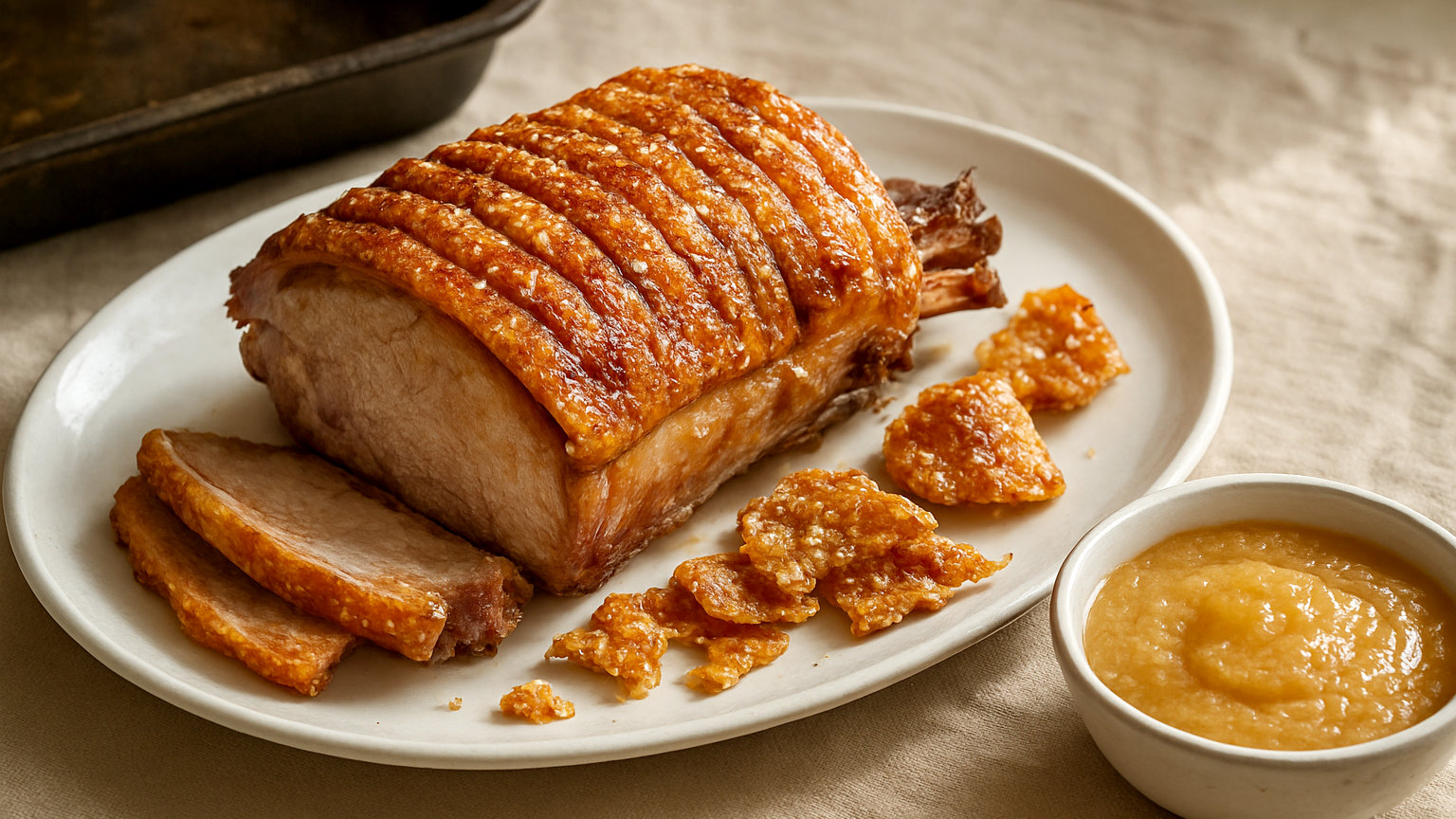
Dry pork and tough pork are different complaints with opposite causes, and telling them apart is the whole diagnosis. Dry usually means a lean joint went past the temperature it needed. Tough usually means a fatty joint did not get anywhere near long enough. The two fixes point in opposite directions, which is why general advice about roast pork so often fails.
Was it the wrong cut for the method?
Shoulder, belly and hand are full of collagen and stay chewy until several hours above 70C. Roasted for ninety minutes they are tough regardless of how carefully you watched the thermometer.
Loin, tenderloin and leg are the opposite. They have little collagen and nothing to gain from a long cook, so hours in the oven only dry them out.
Was the loin overcooked?
Almost certainly, if it was dry. Pork needs to reach 75C, or be held at 70C for two minutes, according to Food Standards Agency guidance, and that is the target rather than a minimum to be exceeded comfortably.
At 85C a pork loin is noticeably dry and slightly chalky. That is only about fifteen minutes past where it should have come out, which is why a probe thermometer solves this problem permanently.
Did carryover heat push it further?
A joint keeps cooking after it leaves the oven, rising by 3C to 5C during the rest. Taking a loin out at 72C lands it in the right place; taking it out at 75C lands it at 80C.
Slow roast shoulder is unaffected by this, since it is already far past the point where a few degrees matter.
Was the oven too hot throughout?
High heat is for the crackling and nothing else. Twenty five minutes at 240C fan, then down to 160C fan for the rest.
A joint held at high heat for its whole cooking time dries out under the skin while the middle catches up, which produces good crackling and disappointing meat.
Did it rest for long enough?
Twenty minutes for a loin and thirty for a large joint. Carving straight from the oven loses the juices onto the board rather than keeping them in the meat.
Cut the crackling off first and rest the meat under foil, keeping the crackling separately on a rack so it does not soften.
Was the joint too lean to start with?
A great deal of supermarket pork is bred and trimmed to be very lean, which leaves nothing to baste the meat. Traditional breeds such as Gloucestershire Old Spot carry more fat and are far more forgiving.
If your joint looks bare, cook it with liquid in the tin and cover it loosely with foil for the middle hour, removing the foil for the crackling blast.
Was the shoulder given enough time?
Five to six hours at 140C fan for a 2.5kg joint, and it is ready when a fork twists without resistance rather than at any particular hour.
If it is still firm at five hours, it needs longer, not a hotter oven. Raising the temperature dries the outside without speeding up the collagen.
Did the joint go in straight from the fridge?
A cold centre keeps the outside in the heat for longer while the middle catches up, which dries the meat just under the skin. An hour on the worktop for a loin makes a measurable difference.
Leave it uncovered while it sits, particularly if you have dried the skin overnight, so the surface does not pick up moisture again.
Can a dry or tough joint be rescued?
A tough one can. Cut it into chunks, put it in a casserole with stock and a lid and give it two hours at 150C fan, and the collagen will finally break down.
A dry one cannot be made moist again, but it can be carved very thinly and warmed in hot gravy, or minced with onion and stock for a pie filling. Cool it quickly and refrigerate within two hours if it is going into the fridge.
Next, try What Vegetables Go With Roast Pork?, or see the rest of our Roasts recipes.


