
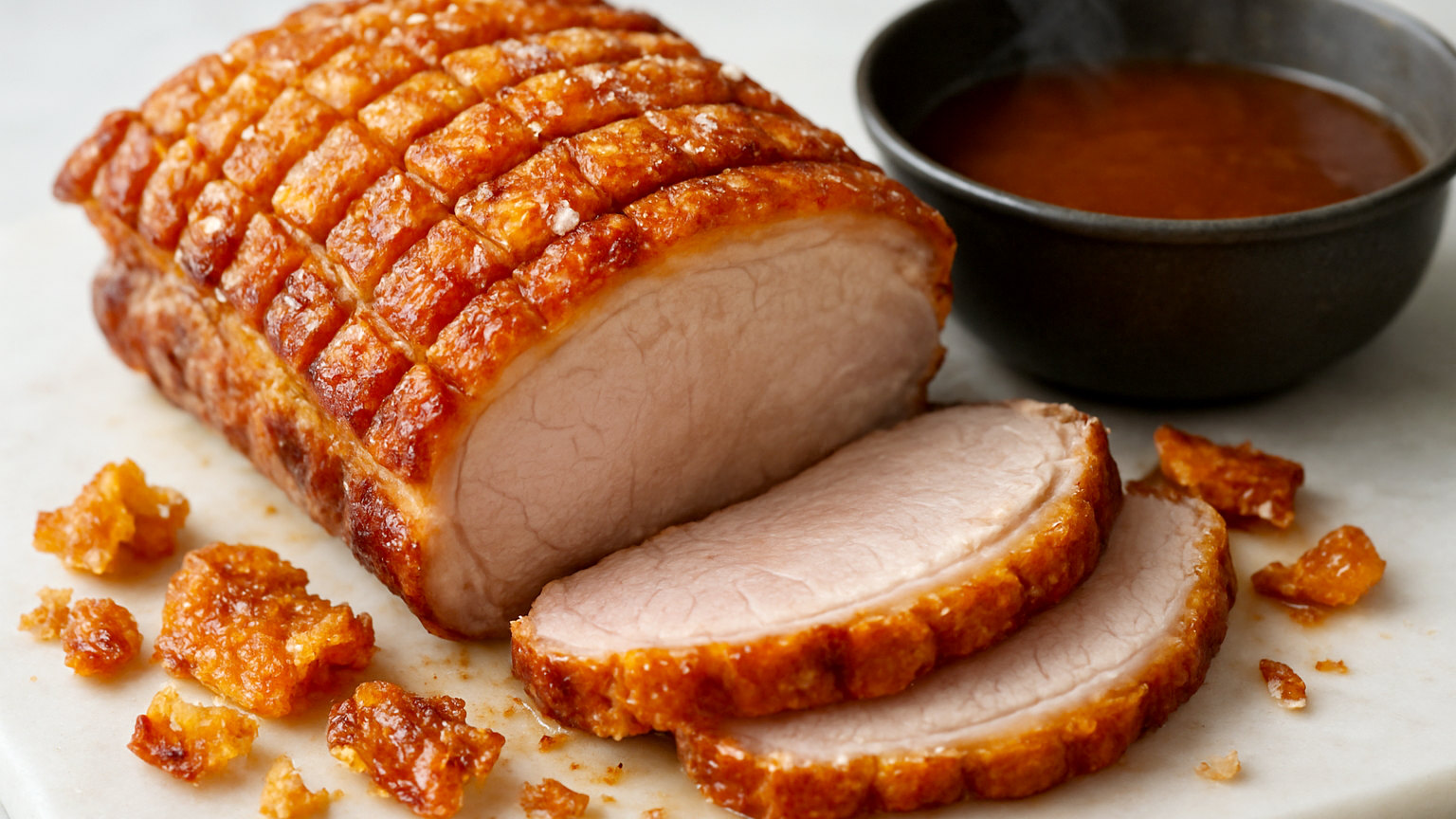
Pork loin is the neatest of the roasting joints and the least forgiving. It is lean, so it dries out if it goes much past the temperature it needs, and it carries a thinner layer of fat than belly or shoulder, so the crackling wants a little more attention. Done properly it carves into clean round slices with a sheet of crackling on top.
What do you need for 6 people?
- 1.8kg boneless pork loin, skin on and scored
- 2 tablespoons flaky salt
- 1 tablespoon oil
- 2 onions, thickly sliced
- 2 carrots and 2 sticks of celery, cut into chunks
- 4 sprigs of thyme and 6 sage leaves
- 200ml dry cider
- 400ml chicken or pork stock
- 2 tablespoons plain flour
What do you do the night before?
Pat the skin completely dry, check the scoring goes through into the fat, and rub the salt into the cuts. Leave the joint uncovered on a rack in the fridge overnight.
This single step does more for crackling than anything else. The fridge draws moisture out of the skin, and dry skin is the whole basis of crackling.
How do you roast it?
- Take the loin out an hour ahead. Wipe off any moisture and add a fresh scattering of salt and a light rub of oil.
- Heat the oven to 240C fan, gas mark 9.
- Sit the joint on the vegetables in a roasting tin, skin side up, and roast for 25 minutes.
- Turn down to 160C fan and pour the cider into the base of the tin, not over the joint.
- Cook for a further 25 minutes per 500g, so about 90 minutes for this joint.
- Check with a probe and remove at 72C in the thickest part.
- Cut the crackling off and keep it warm on a rack.
- Rest the meat under foil for 25 minutes while you make the gravy.
What temperature should pork reach?
Whole joints should reach 75C, or be held at 70C for two minutes, in line with Food Standards Agency guidance. Because the temperature climbs during resting, taking it out at 72C gets you there.
Pork loin at 85C is dry and slightly chalky, which is what has given the cut its reputation. The gap between correct and overdone is about fifteen minutes.
Why does the cider go in the tin?
Liquid poured over the joint washes off the salt and steams the skin, which is the fastest way to lose the crackling. In the base of the tin it stops the vegetables catching and builds the gravy.
Top it up with a splash of hot water if the tin looks close to dry partway through.
What can you use instead of cider?
Dry white wine, or extra stock with a tablespoon of cider vinegar and a teaspoon of honey. Apple juice works but is sweeter, so cut it with vinegar.
Perry and dry vermouth both suit pork particularly well if there is a bottle open.
How do you make the gravy?
Pour off all but two tablespoons of fat, squash the vegetables into the tin, stir in the flour and cook it for a minute. Add the stock gradually, simmer for eight minutes and strain.
A spoonful of apple sauce or a teaspoon of wholegrain mustard stirred in at the end suits pork gravy well.
Can the joint be stuffed?
Yes, if it has been boned and rolled. Spread a cold sage and onion stuffing over the opened out meat, roll it up and tie at 3cm intervals before the skin is salted.
Add the weight of the stuffing to the joint when calculating the timing, and check that the centre of the stuffing itself reaches 75C rather than only testing the meat.
How do you carve it?
Take the crackling off first and break it into pieces with your hands. Then carve the meat straight down into slices about 1cm thick, across the grain.
Trying to carve through the crackling with the joint intact tears the slices apart and sends shards across the worktop.
What should you serve with it?
Apple sauce, sage and onion stuffing, roast potatoes and something green. Braised red cabbage is the traditional partner in much of the country and cuts the richness.
Cool leftovers quickly, refrigerate within two hours and use within three days, following Food Standards Agency guidance.
If that was useful, Slow Roast Pork Shoulder That Pulls Apart covers related ground, and there is plenty more in Roasts recipes.


