
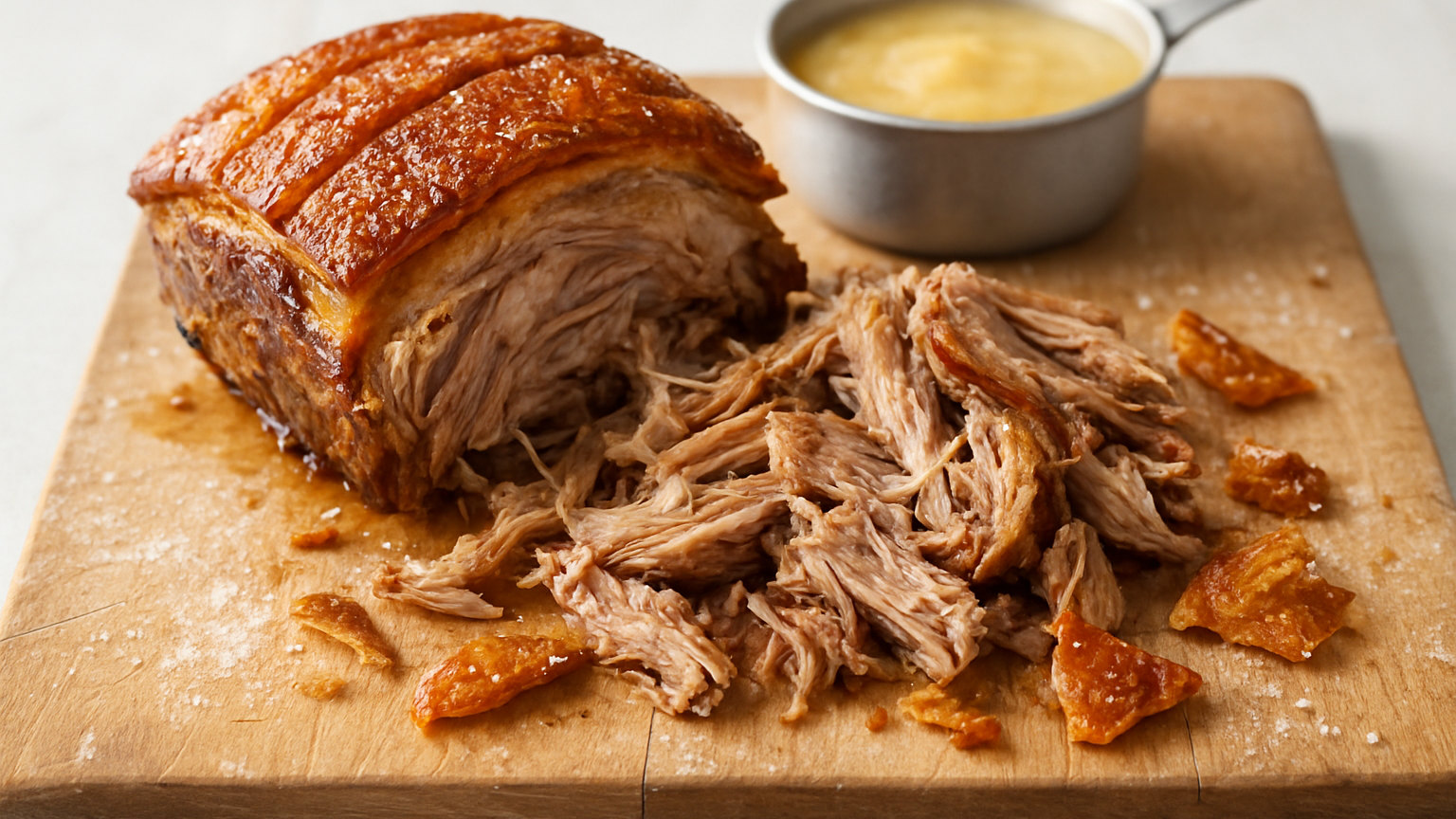
Pork shoulder is the joint to buy when you want a large amount of food for very little money and almost no attention. It is full of fat and connective tissue, which makes it a poor candidate for fast roasting and an excellent one for six hours at a low temperature. At the end it shreds with a fork, and the crackling is dealt with separately.
What do you need for 8 people?
- 2.5kg boneless pork shoulder, skin on and scored
- 2 tablespoons flaky salt
- 1 tablespoon fennel seeds, lightly crushed
- 3 onions, thickly sliced
- 1 whole head of garlic, halved across
- 500ml dry cider or stock
- 4 bay leaves and a few sprigs of thyme
How do you cook it?
- Dry the skin and salt it the night before, leaving the joint uncovered in the fridge.
- Heat the oven to 240C fan, gas mark 9.
- Add a fresh scattering of salt and the fennel seeds, and roast for 30 minutes until the skin has blistered.
- Drop the oven to 140C fan, 160C conventional, gas mark 3.
- Lift the joint out, put the onions and garlic underneath it, pour the cider into the base of the tin and tuck in the herbs.
- Return it and cook for 5 to 6 hours without covering.
- It is done when a fork twists easily, at around 92C internally.
- Rest for 30 minutes, then pull the meat apart in the tin.
Do the crackling first, not last. Six hours of gentle heat will not crisp skin that has gone soft, so the high temperature blast has to happen at the start while the surface is still dry.
Should it be covered?
No, which is the main difference from slow roast lamb. Covering traps steam against the skin and destroys the crackling, and pork shoulder has enough fat to stay moist without it.
If the meat looks like it is drying at the edges, add another 200ml of liquid to the tin rather than reaching for foil.
How do you keep the crackling crisp for six hours?
It will soften slightly. Cut it off after the first hour, once it has fully blistered, and keep it on a rack at room temperature.
Give it 10 minutes at 220C fan just before serving and it will be better than crackling that has sat on the joint all afternoon.
What can you use instead of cider?
Chicken stock, dry white wine, or apple juice cut with a tablespoon of cider vinegar. For a different direction, use orange juice with cumin and oregano, which turns the joint towards a Mexican style carnitas.
Dark beer works well with fennel and gives a deeper, maltier sauce.
How do you make the sauce?
Pour everything from the tin into a jug and let it settle for five minutes, then spoon off the thick layer of fat that rises. Keep the fat, since it is excellent for roast potatoes.
Squash the softened onions and garlic through a sieve into the liquid and reduce it in a pan for ten minutes. It needs no flour at all.
What should you serve with it?
Soft rolls with apple sauce for a crowd, or mashed potato and braised red cabbage for a Sunday. A sharp coleslaw made with cider vinegar rather than mayonnaise cuts through the richness particularly well.
Can you cook it in a slow cooker?
The meat, yes. Give it 8 hours on low with 250ml of liquid, since almost nothing evaporates from a sealed pot.
The skin will not crackle, so cut it off before it goes in and cook it separately on a tray at 200C fan for 30 minutes, which produces better crackling than the oven method anyway.
How far ahead can it be made?
Pulled pork reheats so well that cooking it the day before is a genuine improvement rather than a compromise. Shred it, cover it in its own juices and refrigerate.
Reheat it covered at 160C fan for 30 minutes and crisp the crackling separately at the last minute.
Does it keep?
Better than any other pork roast. Pulled shoulder keeps three days in the fridge and freezes for three months in its own juices, which stop it drying out.
Cool it quickly, refrigerate within two hours and reheat once only until piping hot throughout, in line with Food Standards Agency guidance.
See also Can You Roast Pork in a Slow Cooker or Air Fryer?, or browse more Roasts recipes.


