
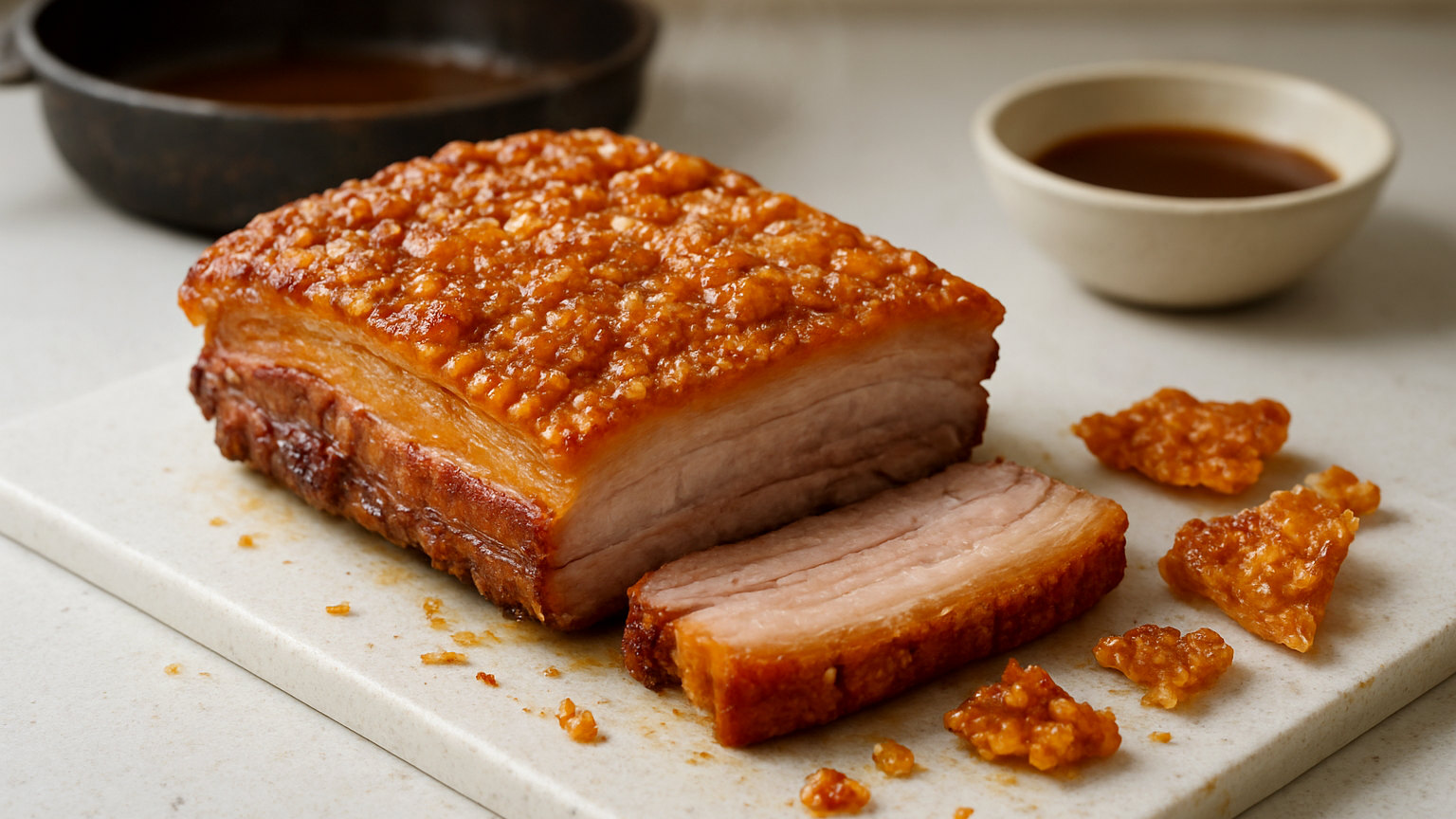
Pork belly produces better crackling than any other cut, and the reason is simple: the thick seam of fat directly beneath the skin renders during cooking and fries it from underneath. The meat needs three hours at a low temperature to become tender, so the method is slow first and hot last, which also lets you see exactly how the skin is doing before committing to the final blast.
What do you need for 6 people?
- 1.6kg pork belly, boneless, skin on and scored
- 2 tablespoons flaky salt
- 1 tablespoon fennel seeds, crushed
- 2 onions, thickly sliced
- 2 sticks of celery, cut into lengths
- 4 cloves of garlic, unpeeled
- 300ml dry cider
- 4 sprigs of thyme and 2 bay leaves
What do you do the night before?
Check the scoring runs through the skin into the fat but not into the meat. Rub salt into the cuts, then leave the belly uncovered on a rack in the fridge overnight.
Wipe the skin dry again in the morning. Salt draws moisture out overnight, and whatever has collected on the surface has to come off before the joint goes near the oven.
How do you cook it?
- Heat the oven to 150C fan, 170C conventional, gas mark 3.
- Scatter the onions, celery and garlic in a roasting tin and pour in the cider and herbs.
- Sit the belly skin side up on a rack above them, so it is never in contact with the liquid.
- Add a fresh scattering of salt and the fennel seeds.
- Roast for 3 hours.
- Turn the oven up to 240C fan and give it 25 to 30 minutes until the skin has blistered all over.
- Rest for 20 minutes without covering the skin.
Why does the belly sit on a rack?
Because any part of the skin touching liquid will steam rather than crisp, and a belly left flat in the tin ends up with soft patches at the edges.
If you have no rack, sit the joint on thick rounds of onion and carrot, which does the same job and flavours the sauce.
How do you get the skin evenly crisp?
Make sure the joint is flat. Belly often has an uneven surface, and the low spots stay pale while the high spots blister.
Crumple foil into ropes and tuck them under the dipping sections to level it. If patches are still soft at the end, cut them off and finish them under the grill for a minute.
What can you use instead of cider?
Chicken stock, dry white wine, or apple juice with a tablespoon of cider vinegar. Chinese flavours suit belly particularly well, so soy, star anise and rice wine is a good alternative direction.
For something plainer, water with a bay leaf and an onion is perfectly adequate, since the joint provides most of the flavour itself.
How do you carve it?
With a serrated knife, pressing down firmly through the crackling in one movement rather than sawing. Cut into thick slices about 3cm wide.
Turning the joint upside down and cutting up through the meat first is easier, then the crackling breaks along the score lines you made.
What should you serve with it?
Something sharp, because belly is very rich. Apple sauce, braised red cabbage, or a fennel and apple salad dressed with lemon.
Mashed potato or cannellini beans cooked with garlic soak up the juices better than roast potatoes do.
Can it be cooked ahead?
Yes, and it is a useful trick for entertaining. Do the three hour slow stage a day early, cool it, refrigerate, then give it the high heat blast for 30 minutes just before serving.
The skin dries out further in the fridge overnight, which usually improves the crackling rather than harming it.
How much should you allow?
250g per person, which is less than it sounds because of the fat content. A 1.6kg belly comfortably feeds six with a little left over.
Cool leftovers quickly, refrigerate within two hours and use within three days, in line with Food Standards Agency guidance. Cold belly sliced thinly is excellent in a sandwich.
Worth reading next: What Goes With Roast Pork Besides Apple Sauce?. There is more in our Roasts recipes.


