
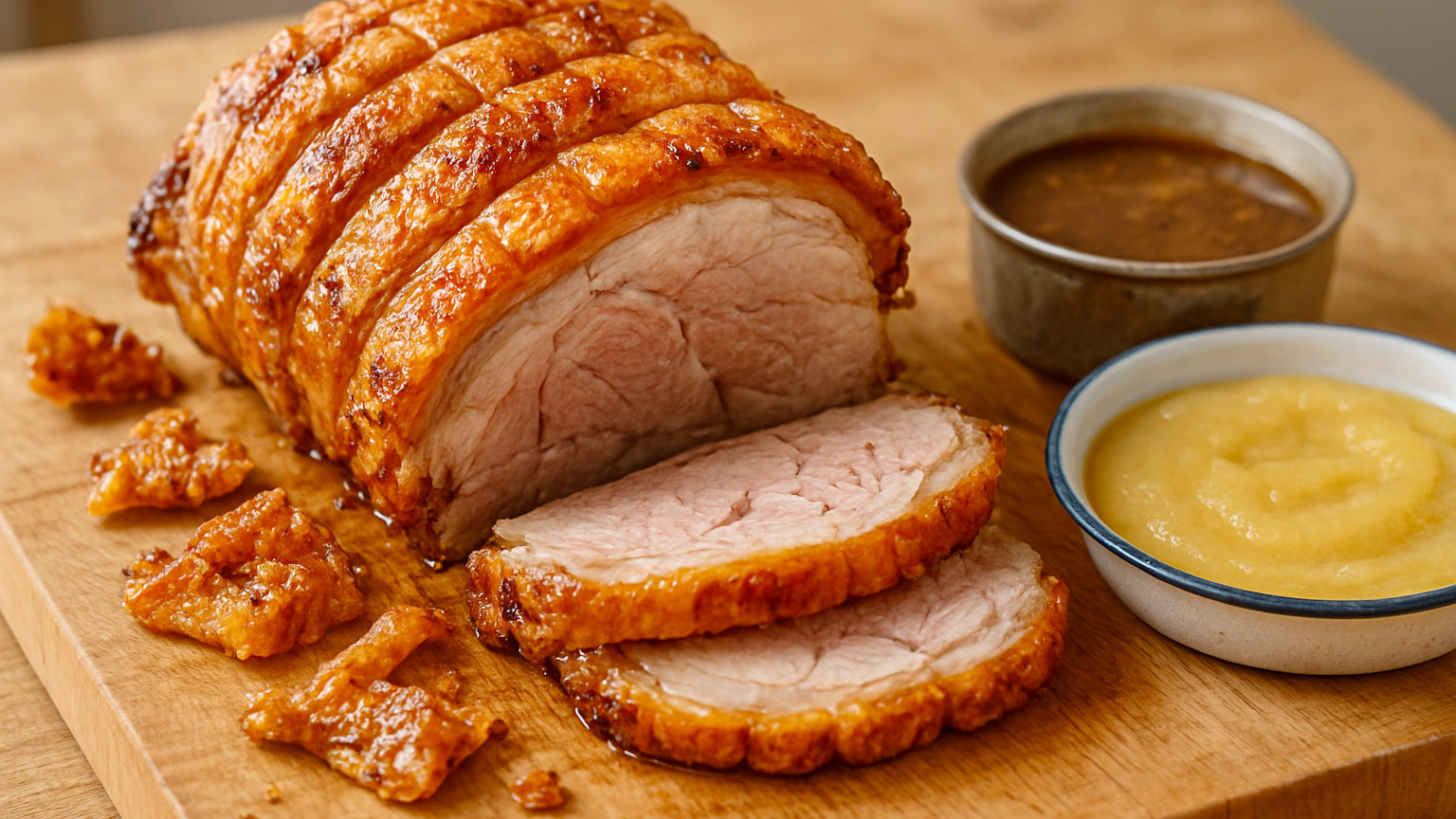
Pork gravy is naturally paler and lighter than beef gravy, and trying to force it dark with gravy browning misses the point. What it wants instead is sharpness and depth from cider, the caramelised vegetables the joint has been sitting on, and a little apple to round it off. It takes ten minutes during the resting period.
What is in the tin after roasting?
Pork releases a great deal of clear fat and a modest amount of dark juice. If you roasted the joint on onions, carrots and celery, those will have softened and browned in the base and are the main source of flavour.
Keep the fat you pour off. Pork dripping makes excellent roast potatoes and keeps for months in the fridge.
How do you make it?
- Lift out the joint and set the tin over a low hob flame.
- Tilt the tin and spoon off all but two tablespoons of the fat.
- Squash the roasted vegetables into the base with a wooden spoon.
- Scatter over 2 tablespoons of plain flour and stir it in, cooking for a full minute until it smells nutty.
- Pour in 200ml of dry cider and let it bubble down by half, scraping the tin clean.
- Add 500ml of hot chicken or pork stock a little at a time, stirring until smooth.
- Simmer for 8 to 10 minutes, then strain into a warm jug.
- Stir in a tablespoon of apple sauce and any resting juices.
Cook the flour out before the liquid goes in. That minute is the difference between gravy and something that tastes faintly of raw flour, and no amount of simmering afterwards fully removes it.
Why use cider rather than wine?
Apple and pork are a long standing pairing, and cider provides both the acidity and the fruit at once. It also matches whatever apple sauce is on the table.
Use dry cider. A sweet one reduces down into something cloying that fights with the rest of the plate.
What can you use instead of cider?
Dry white wine, dry vermouth, or extra stock with a tablespoon of cider vinegar and a teaspoon of honey. Perry works particularly well.
Apple juice can stand in but needs the vinegar to stop it being sweet, and it should be reduced hard before the stock goes in.
Which stock is best?
Chicken stock, which is light enough to let the pork and cider through. Beef stock is too heavy and dominates everything.
Pork bones roasted and simmered for three hours make excellent stock, and the bones from a rib joint are worth keeping for exactly this.
How do you add depth without darkening it?
Let the vegetables under the joint go properly brown during roasting, and cook the flour until it takes colour. A teaspoon of wholegrain mustard or a dash of cider vinegar at the end sharpens it.
Sage stalks simmered in the gravy and strained out give it a savoury backbone that suits pork better than thyme does.
Can it be made ahead?
Make a base from browned onions, flour, cider and stock up to three days ahead, then whisk it into the roasting tin at the last minute so it picks up the juices.
That removes most of the pressure from the final twenty minutes and the base improves for sitting.
What if the tin is dry?
A very lean joint sometimes leaves almost nothing behind. Fry a sliced onion and a chopped apple in the tin until properly brown, add a tablespoon of flour and proceed as normal, then strain at the end.
A spoonful of the fat you poured off gives it back some body, and a splash of the water the greens were cooked in adds a little starch.
How do you thicken or thin it?
Simmer it longer rather than adding more flour, which brings back the pasty taste. If it is too thick, add hot stock a little at a time and taste again for seasoning.
How much should you make?
Allow 150ml per person and make more than that. Leftover gravy keeps three days in the fridge and freezes for three months, and reheats once only until piping hot, following Food Standards Agency guidance.
For something along the same lines, see Roast Pork Loin with Crackling and Gravy, or browse all our Roasts recipes.


