
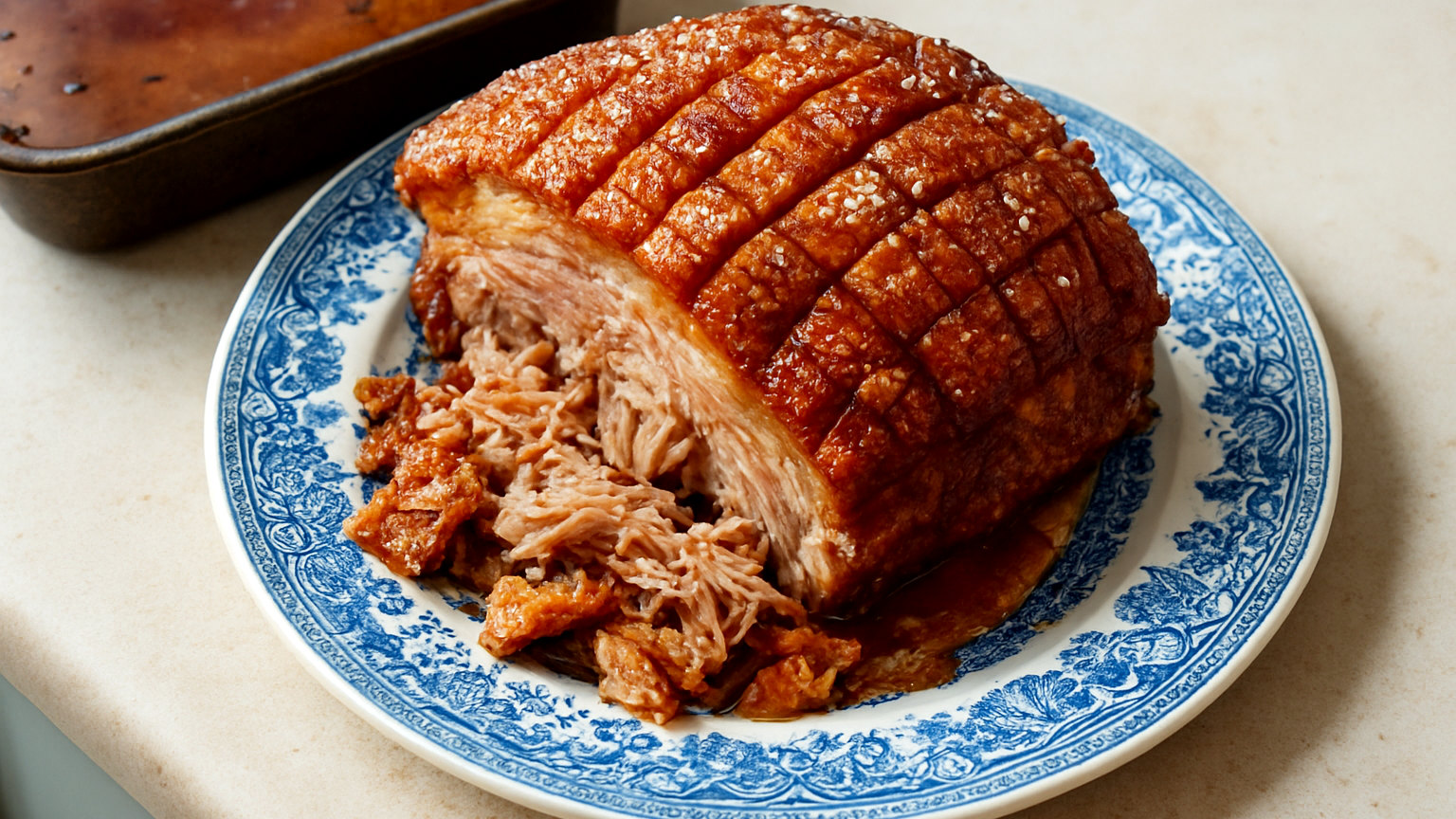
Pork is the cheapest of the four Sunday roasts and the one where the cut makes the biggest difference to how the day goes. Some joints want ninety minutes and careful timing; others want six hours and no attention at all. The one thing worth insisting on across all of them is that the skin is still attached, because a joint sold without it cannot produce crackling.
What is loin best for?
A traditional Sunday roast with neat slices. It is the leanest roasting cut, carves cleanly, and cooks in under two hours, which suits a normal Sunday timetable.
It is also the least forgiving, since there is little fat to keep it moist if it overshoots. Allow 250g per person boneless.
When should you buy shoulder?
Whenever the day allows six hours and the budget matters. Shoulder costs roughly half what loin does and is very difficult to ruin.
Shoulder cannot be cooked pink or served in slices. It needs hours above 70C for the connective tissue to soften, after which it pulls apart rather than carving, and that is the point of it.
Is belly worth roasting whole?
It gives the best crackling of any cut, because the thick fat layer underneath effectively fries the skin from below. Three hours at a low temperature after a hot start.
It is very rich, so portions are smaller than you might expect. Allow 250g per person and serve something sharp alongside.
What about leg?
Leg is lean, large and cheaper than loin, and it is the traditional joint for feeding a crowd. It is easy to dry out, so a probe thermometer matters.
It suits being cooked with liquid in the tin and a covering of foil for the middle portion of the cooking, with the foil removed for the final crackling blast.
Which cut gives the best crackling?
Belly first, then shoulder, then loin. The more fat there is under the skin, the more reliably it crisps.
Whichever you buy, check the skin is scored deeply and the joint has not been sold with a soggy plastic wrapper against the surface, which undoes the drying.
What can you use instead of a large joint?
Pork tenderloin cooks in 25 minutes and feeds two or three, though it has no skin and therefore no crackling. Thick pork chops finished in the oven behave like a very small roast.
A half shoulder is the best option for a small household wanting the slow roast experience without eight portions of it.
How much should you buy per person?
Allow 250g per person for boneless joints and 350g for anything on the bone. Shoulder shrinks more than loin, so err upwards.
Buying more than you need is rarely wasted with pork, since cold roast pork and a pork and apple sandwich are among the better leftovers of any roast.
Does breed or provenance matter?
More than with most meat. Slower grown traditional breeds such as Gloucestershire Old Spot, Tamworth and Middle White carry more fat, which means better crackling and more flavour.
Look for pork with creamy rather than white fat and a deeper pink colour. Outdoor reared pork generally has a firmer texture and releases less water in the tin.
What can you use instead of pork?
For a slow roast shoulder, a lamb shoulder behaves almost identically and takes about an hour less. For a loin, a large chicken fits the same timetable and the same trimmings.
Gammon is cured pork leg and roasts well, though it is salty and needs no extra seasoning, and it is usually glazed rather than crackled.
Which cut suits which season?
Pork is available all year and does not vary much, but what goes with it does. Apple sauce is at its best from September when the first Bramleys arrive, and red cabbage suits the winter months.
In summer, a slow roast shoulder pulled into rolls with a sharp vinegar coleslaw is a better use of the same joint than a full roast dinner.
For something along the same lines, see How Long to Roast Pork Per Kilo: A Timing Chart, or browse all our Roasts recipes.


